How a self-taught mathematician became the architect of the Spanish Empire
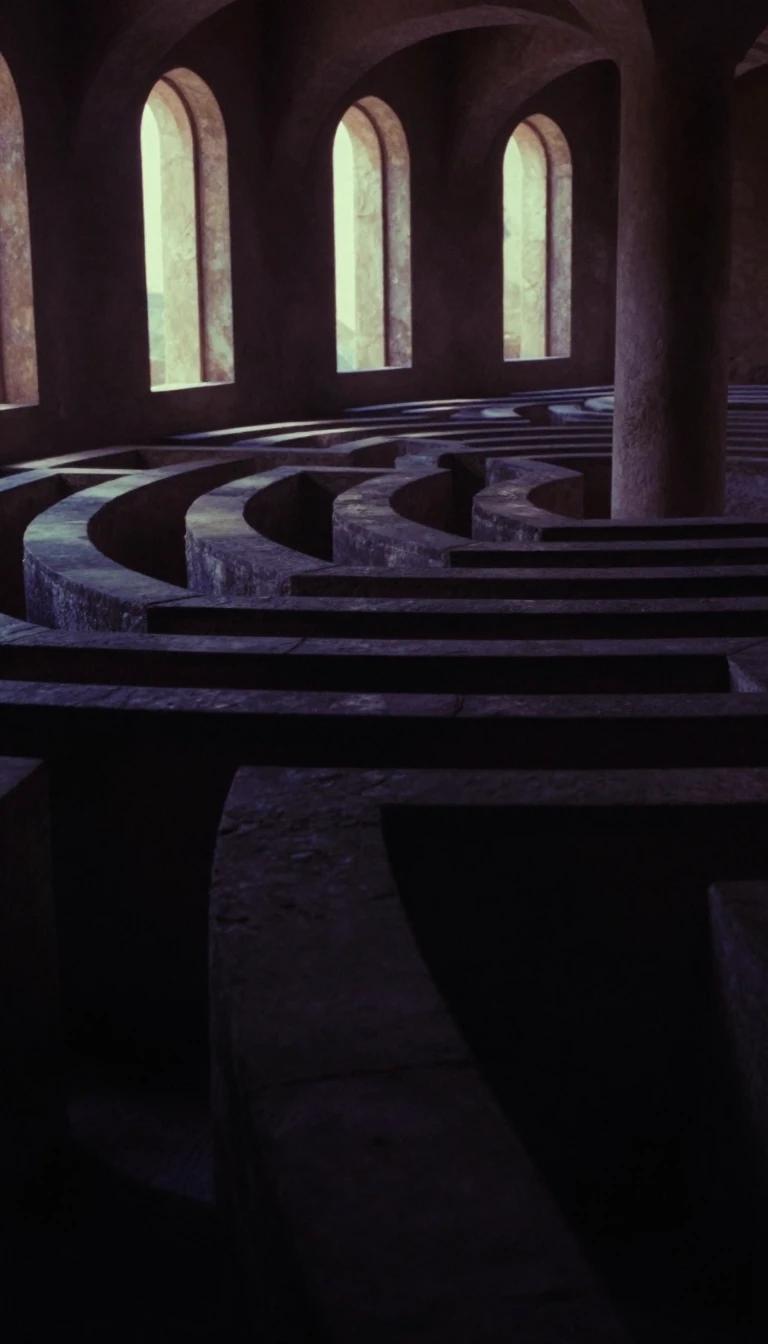
In short: Juan de Herrera was never formally trained as an architect. Instead, he was a humanist scholar and mathematician who rose to define the aesthetic of 16th-century imperial Spain. His sober, geometric style, known as Herrerian, transformed royal monuments and influenced cathedral designs from Madrid to Mexico and Lima.
Born around 1530 in Mobellán, Herrera’s path to architectural prominence was unconventional. He began his career as a courtier, traveling with King Philip II through Italy and Brussels between 1547 and 1551. His intellectual foundation was rooted in mathematics and geometry, subjects he explored deeply in his work, Discurso sobre la figura cúbica. This background allowed him to approach building design not through traditional apprenticeship, but through the lens of a scholar.
His major breakthrough occurred in 1563 when he joined Juan Bautista de Toledo at the construction site of the Monastery of San Lorenzo de El Escorial. Following de Toledo's death in 1567, Herrera assumed the role of head architect. He significantly altered the project, expanding the original plans, modifying construction techniques, and introducing a signature aesthetic characterized by bare granite and a unified, horizontal composition. His work on the west facade and the central basilica helped define the severe, academic style that would eventually bear his name.
The Herrerian style became a hallmark of the Spanish Empire under Philip II and his successors. Beyond the Escorial, Herrera’s influence extended to the summer palace at Aranjuez, the Exchange in Sevilla, and the Cathedral of Valladolid. His design for the latter became a structural model for cathedrals across the Atlantic in Mexico and Lima. Though some critics dismissed his work as monotonous, others praised his harmonious proportions and his ability to tailor his severe, sober designs to the specific requirements of each building.
Herrera died in Madrid on January 15, 1597. His legacy persisted for over a century, shaping the architectural landscape of Spain and its colonies. By prioritizing geometric precision and structural clarity over ornate decoration, he established a lasting standard for imperial architecture that prioritized the ideals of the 16th-century Spanish state.
Opens the Intellect+ feed with this card first. Swipe up for the next one.
Sources
- Summary by Intellect · source: Juan de Herrera | Renaissance, Mannerism, Royal Projects | Britannica
- Also: Juan de Herrera
To cite this card, link to https://intellectplus.co.uk/app/science-juan-de-herrera.
How we source, check and correct cards: Editorial standards.
General information, not professional advice. Spotted an error? Flag the card or see corrections and complaints.
Intellect Plus is a visual educational discovery platform for exploring fascinating facts and ideas. Brain Food, Not Brain Rot. What is Intellect Plus?
Related
More in Mathematicians · More in Science · Latest · A–Z · All topics
