Is rose a distinct color or just a bridge between red and magenta?
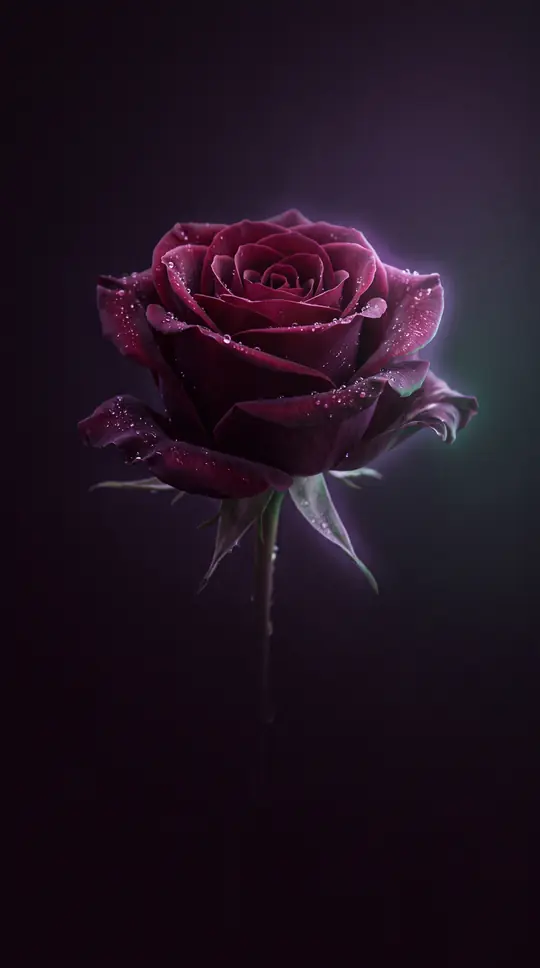
In short: Positioned at a precise 330-degree angle on the color wheel, rose occupies the vibrant middle ground between red and magenta. While often conflated with pink, this tertiary hue holds a unique place in history, culture, and even the esoteric theories of the early twentieth century, spanning from ancient linguistics to modern politics.
Defined technically as the midpoint between red and magenta, rose is a tertiary color on the HSV color wheel. Depending on the specific web-safe formulation, its hue angle can shift; it may lean closer to magenta at 320 degrees or toward red at 340 degrees. Its complementary partner is spring green, a contrast that highlights its warm, saturated character. The term itself has deep roots, tracing back to the Latin rosa, which borrowed from colonial Greek and ultimately from ancient Iranian and Assyrian linguistic ancestors. English speakers first adopted the word to describe this specific color in 1382.
Beyond its technical definition, rose carries significant cultural weight. It is the signature hue of the French Socialist Party and marks specific moments in religious and political history, such as the 2003 Rose Revolution in Georgia or the liturgical vestments worn by Catholic priests on Gaudete and Laetare Sundays. The color’s evocative power is perhaps best captured in the phrase 'rose-colored glasses,' famously popularized by Édith Piaf’s 1946 signature song, 'La Vie en rose.' This metaphorical association with optimism has persisted in art and music, including John Conlee’s 1978 debut album.
The color has also been subject to more unconventional interpretations. The clairvoyant C. W. Leadbeater claimed that rose-colored etheric atoms were the most vital of all, asserting that they flow from the sun into the spleen chakra to vivify the nervous system. Leadbeater further theorized that pine trees are uniquely beneficial to human well-being because they radiate these specific atoms. While such claims remain outside the realm of empirical science, they underscore the enduring human tendency to assign profound, almost metaphysical significance to this particular shade of pink, whether in the architecture of the 'Rose City' of Marrakesh or the gardens of Portland.
Opens the Intellect+ feed with this card first. Swipe up for the next one.
Sources
- Summary by Intellect · source: Rose (color)
To cite this card, link to https://intellectplus.co.uk/app/science-rose-color.
How we source, check and correct cards: Editorial standards.
General information, not professional advice. Spotted an error? Flag the card or see corrections and complaints.
Intellect Plus is a visual educational discovery platform for exploring fascinating facts and ideas. Brain Food, Not Brain Rot. What is Intellect Plus?
Related
More in Color · More in Science · Latest · A–Z · All topics
