Messier 24 is not a star cluster but a window into our galaxy
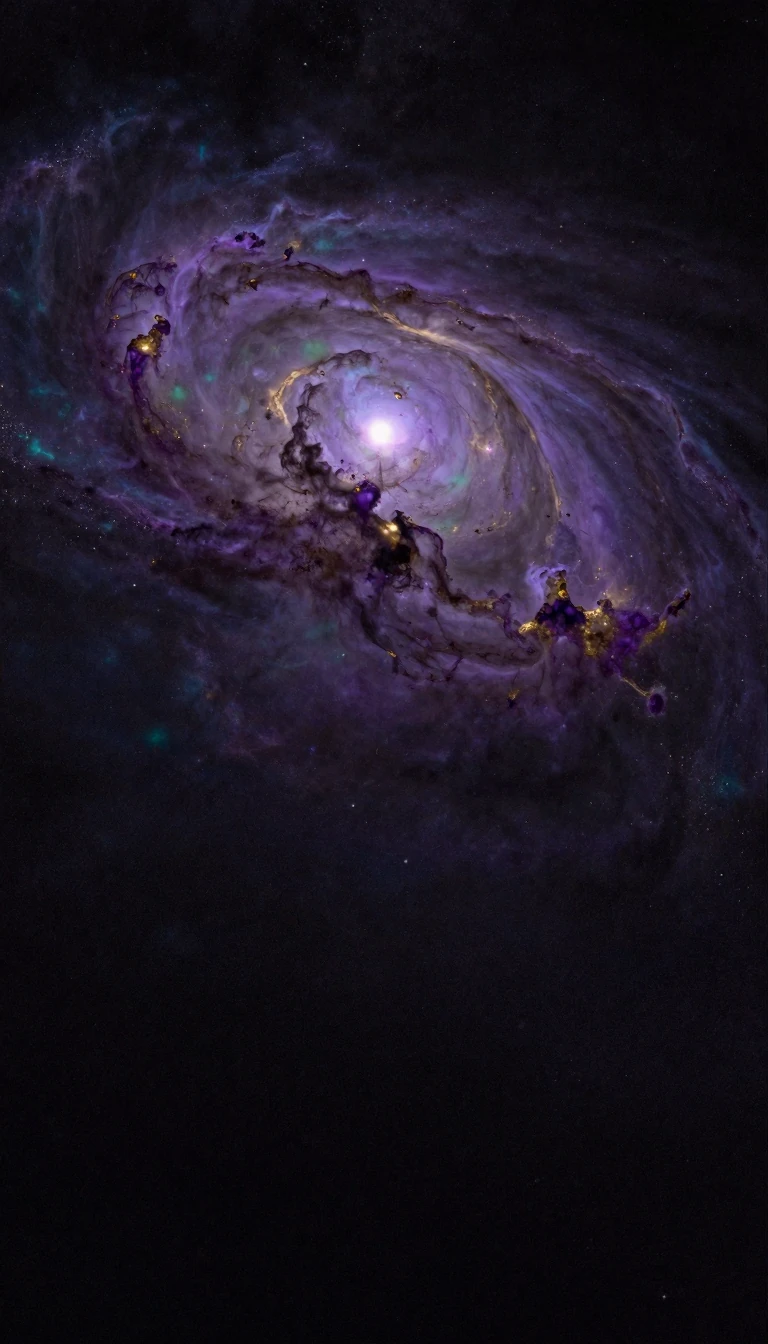
In short: Most deep-sky objects are singular entities, but Messier 24 is a cosmic illusion. It is not a cluster or a nebula, but a rare, clear tunnel through dense interstellar dust. This 600-light-year-wide gap reveals a glittering, distant portion of the Sagittarius spiral arm that is otherwise hidden from our view.
When Charles Messier added this object to his catalog in 1764, he described it as a large nebulosity filled with stars of varying brightness. Today, astronomers recognize the Small Sagittarius Star Cloud, or M24, as a unique structural feature of the Milky Way. Rather than being a physical grouping of stars, it acts as a transparent window through the Great Rift, a massive band of obscuring cosmic dust that typically blocks our line of sight toward the galactic center.
This window spans approximately 600 light-years in width and provides a view into the Sagittarius spiral arm, reaching depths of 10,000 to 16,000 light-years away. Because it is a gap rather than a single object, it contains a diverse collection of celestial phenomena, including various star clusters and nebulae. Within this field, astronomers have identified dark nebulae like Barnard 92 and Barnard 93, which appear as stark, starless voids against the backdrop of the dense stellar population.
The cloud is remarkably large, covering an area in the night sky about nine times the size of the Moon. While it appears as a hazy patch to the unaided eye, binoculars and telescopes resolve it into a dense, jewel-like collection of stars. Its visibility depends on your location; it is best observed during the summer months in the Northern Hemisphere, while Southern Hemisphere observers must wait for the winter sky. Despite its prominence, its total brightness remains a subject of debate, with older estimates citing an apparent magnitude of 4.6, while more recent assessments suggest it may be as bright as 2.5.
Beyond its role as a window, M24 serves as a laboratory for studying stellar evolution. Recent Hubble observations of the region have focused on preplanetary nebulae—the brief, dim stage where a Sun-sized star sheds its outer gas layers before its core becomes hot enough to ionize them. By peering through this clear corridor, researchers gain a rare, unobstructed look at the complex life cycles of stars located deep within our galaxy's structure.
Opens the Intellect+ feed with this card first. Swipe up for the next one.
Sources
- Summary by Intellect · source: Messier 24 - NASA Science
- Also: Small Sagittarius Star Cloud
To cite this card, link to https://intellectplus.co.uk/app/science-small-sagittarius-star-cloud.
How we source, check and correct cards: Editorial standards.
General information, not professional advice. Spotted an error? Flag the card or see corrections and complaints.
Intellect Plus is a visual educational discovery platform for exploring fascinating facts and ideas. Brain Food, Not Brain Rot. What is Intellect Plus?
Related
More in Scientific discoveries · More in Science · Latest · A–Z · All topics
