Why the sky is blue, but your eyes are a structural illusion
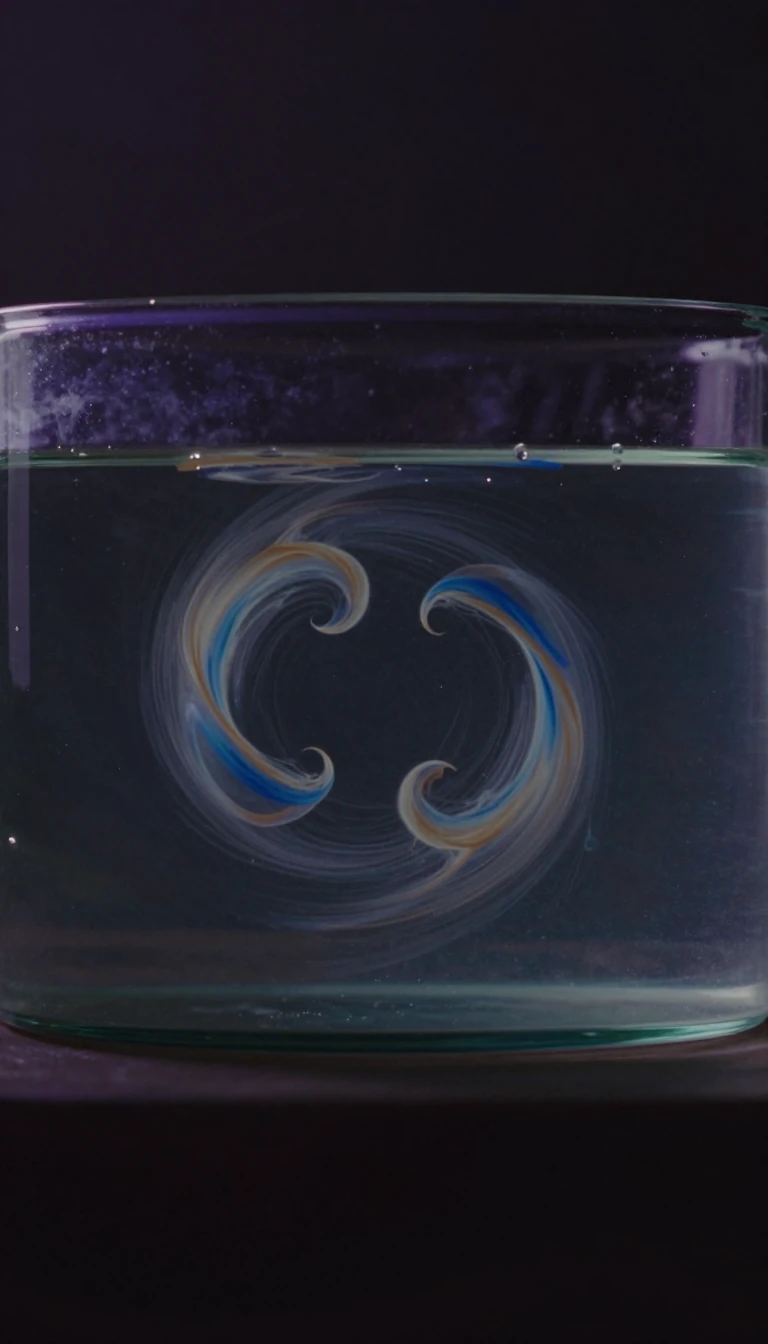
In short: The Tyndall effect explains why light beams become visible in smoke and why glacial water glows turquoise. It is a phenomenon of scattering, where particles suspended in a medium catch light. While often confused with the sky's blue hue, this effect reveals the hidden physics behind our own eyes.
Named after 19th-century physicist John Tyndall, the effect occurs when light interacts with particles ranging from 40 to 900 nanometers in diameter. Tyndall first identified this while studying radiant heat in the 1860s, noticing that light beams passing through smoke appeared blue from the side but red from the end. This happens because shorter, blue wavelengths scatter more intensely than longer, red ones, which pass through the medium more easily.
This scattering is distinct from Rayleigh scattering, which involves particles much smaller than the wavelength of light, such as atmospheric gas molecules. Because colloidal particles are larger, Tyndall scattering is significantly more intense. This principle was instrumental in the 1902 development of the ultramicroscope by Richard Adolf Zsigmondy and Henry Siedentopf, which allowed them to measure gold nanoparticles as small as 4 nanometers—a breakthrough that earned Zsigmondy a Nobel Prize.
The effect also explains the structural color of blue eyes. Unlike brown eyes, which contain melanin that absorbs light, blue eyes rely on a translucent layer in the iris containing particles about 0.6 micrometers in diameter. These particles scatter blue light back toward the observer, while longer wavelengths pass through to be absorbed by the brownish-black epithelium at the back of the eye. This creates a blue hue that is not a pigment, but a result of light interference.
Distinguishing these phenomena is vital. While the Tyndall effect explains the color of glacial meltwater or smoke, it is often misapplied to macroscopic dust or overcast skies, which exhibit Mie scattering due to larger droplets. Understanding these nuances allows us to see the world not just as a collection of objects, but as a complex interplay of light and microscopic structure.
Opens the Intellect+ feed with this card first. Swipe up for the next one.
Sources
- Summary by Intellect · source: Tyndall effect
To cite this card, link to https://intellectplus.co.uk/app/science-tyndall-effect.
How we source, check and correct cards: Editorial standards.
General information, not professional advice. Spotted an error? Flag the card or see corrections and complaints.
Intellect Plus is a visual educational discovery platform for exploring fascinating facts and ideas. Brain Food, Not Brain Rot. What is Intellect Plus?
Related
More in Scientific discoveries · More in Science · Latest · A–Z · All topics
