The sky is blue because air scatters short blue wavelengths more than red
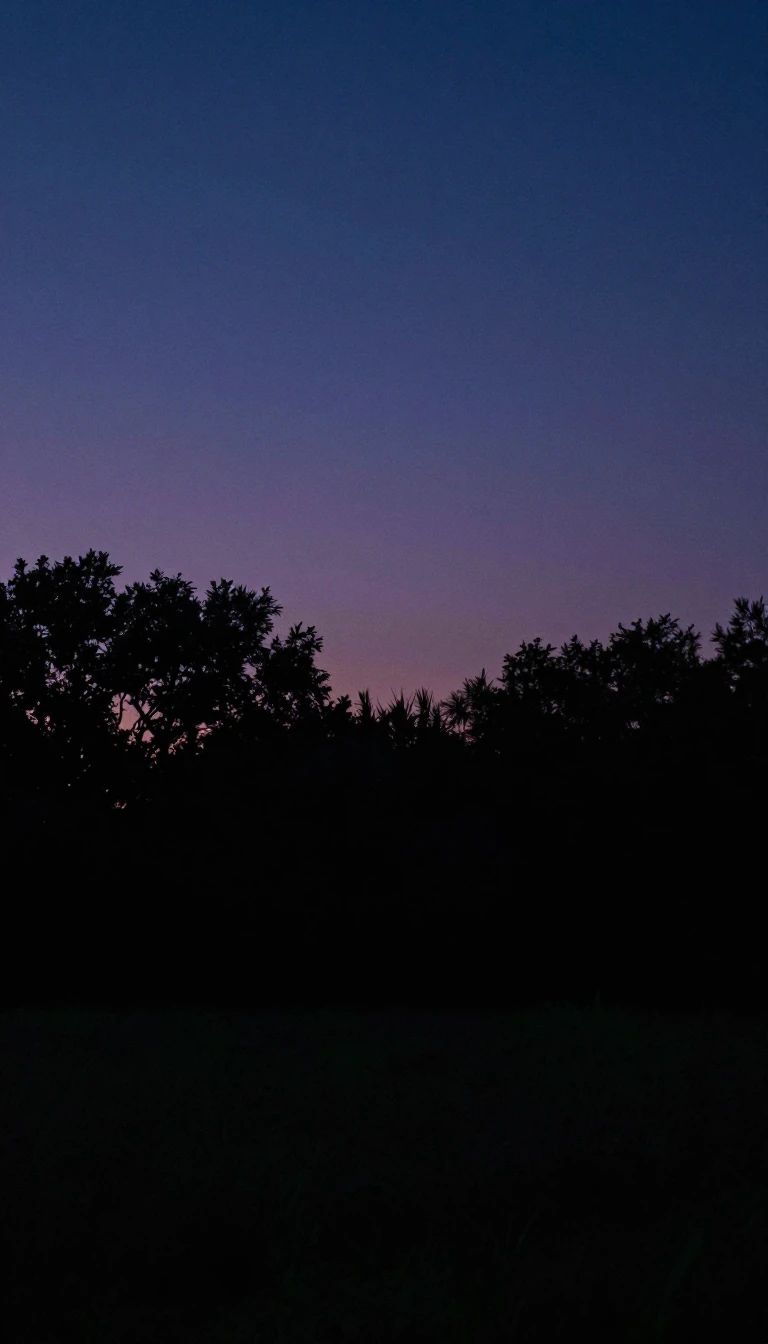
In short: Sunlight contains every visible colour, yet the daytime sky looks blue. The reason is that tiny gas molecules in the air scatter short blue wavelengths far more strongly than long red ones. Physicist Lord Rayleigh worked out the scattering law behind this in 1871, and the answer still holds today.
Sunlight already holds every colour of the visible spectrum, which is why a prism or a raindrop can split it into a rainbow. Light travels as waves, and each colour has its own wavelength. Red has the longest visible wavelengths and violet the shortest, with blue just above violet. When this light enters the atmosphere, it meets molecules of nitrogen and oxygen. Long red waves pass these molecules with little interference, while shorter blue and violet waves are scattered in many directions. Because blue is scattered so strongly, it reaches our eyes from every part of the sky, so the whole dome looks blue.
The key explanation came from Rayleigh. In 1871 he showed that the scattering of a particle much smaller than the light's wavelength depends on the inverse fourth power of that wavelength. This scattering law is a very good approximation rather than an exact law, because factors such as the refractive index of the particles also matter. Earlier thinkers had invoked water droplets, dust or salt particles. In 1899 Rayleigh argued that air molecules themselves are the source of the blue sky. John Tyndall had earlier thought air was optically empty, but his laboratory air was too small a scale to show the effect; on the scale of the atmosphere, air molecules scatter enough light to see.
The colour we perceive is more subtle than the physics suggests. Short wavelengths that scatter across the sky correspond to blue and violet, so the true colour is closer to a bluish purple. Our eyes, however, are much less sensitive to violet, so the sky appears blue. Near the horizon the sky looks paler, because sunlight there has crossed far more air and been rescattered so many times that the colours mix back toward white.
The same process explains sunsets. When the sun sits low, its light crosses far more air, so much of the blue is scattered out of the direct beam and reds and yellows reach the eye. On Mars the sky looks butterscotch or pinkish during the day because of fine reddish dust, and on Titan a hazy orange sky results from a thick nitrogen-rich atmosphere. A planet's sky colour depends on its air, its particles and the colour of its star.
Opens the Intellect+ feed with this card first. Swipe up for the next one.
Sources
- Summary by Intellect · source: OE004.pdf
- Also: Why Is the Sky Blue?
- Also: Why Is the Sky Blue?
- Also: Why is the sky blue? | BBC Sky at Night Magazine
- Also: Why Is the Sky Blue? | NASA Space Place – NASA Science for Kids
- Also: Why Is the Sky Blue? | NESDIS | National Environmental Satellite, Data, and Information Service
To cite this card, link to https://intellectplus.co.uk/app/science-why-is-the-sky-blue.
How we source, check and correct cards: Editorial standards.
General information, not professional advice. Spotted an error? Flag the card or see corrections and complaints.
Intellect Plus is a visual educational discovery platform for exploring fascinating facts and ideas. Brain Food, Not Brain Rot. What is Intellect Plus?
Related
More in Researched · More in Science · Latest · A–Z · All topics
