Antares: The Red Supergiant Rivaling Mars in the Heart of the Scorpion
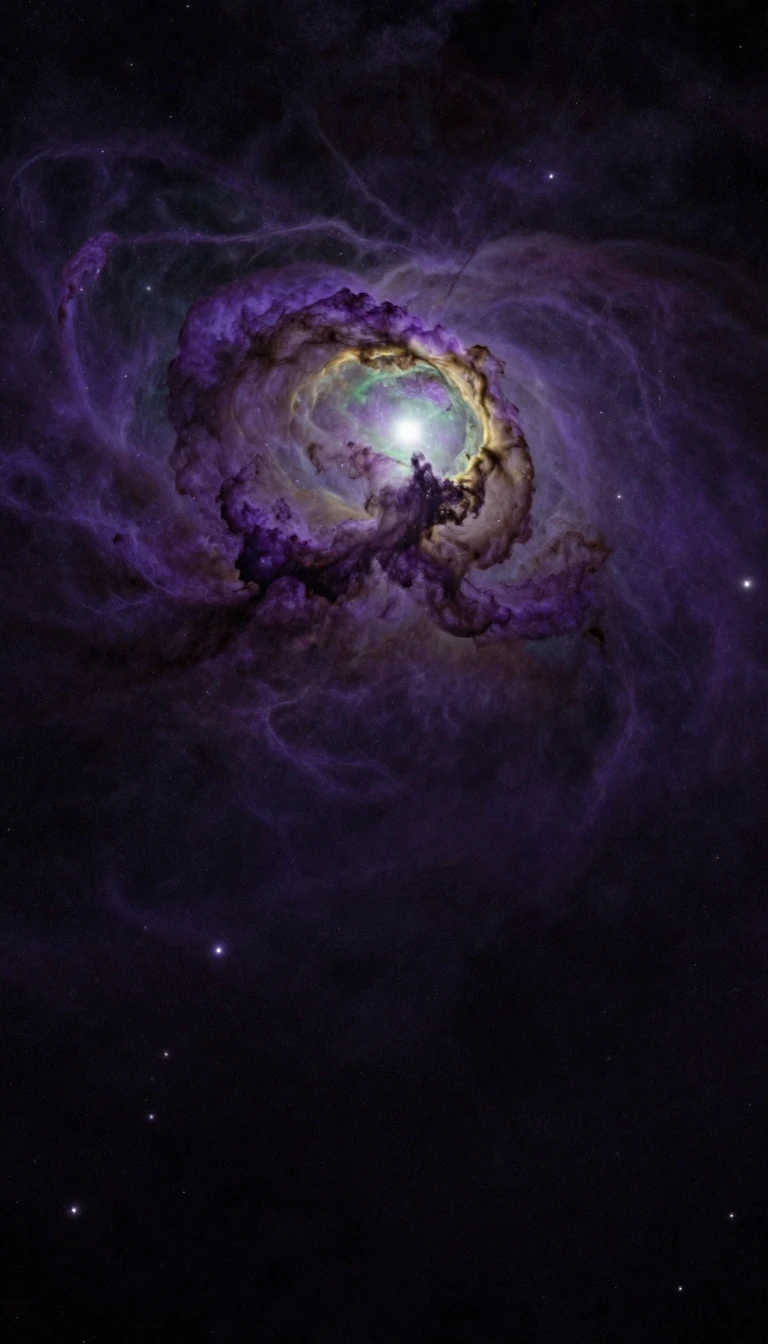
In short: Antares, the brightest star in Scorpius, is a massive red supergiant that has captivated cultures for millennia. Often mistaken for the planet Mars due to its fiery hue, this binary system is nearing the end of its life, destined to eventually explode in a spectacular supernova visible even during the day.
Located about 550 light-years from Earth, Antares is a colossal red supergiant with a spectral classification of M1.5Iab-Ib. Its name, derived from the Ancient Greek Ἀντάρης, literally means 'rival to Ares,' reflecting its striking reddish appearance that mimics the planet Mars. While it appears as a single point of light to the naked eye, it is actually a binary system. The primary star is a massive, evolved supergiant, while its companion, Antares B, is a hot, blue-white main-sequence star. The two are separated by roughly 529 astronomical units, with the companion star showing spectral evidence of pollution from the primary's outflowing matter.
The star's physical properties are notoriously difficult to pin down. Its radius is estimated at about 680 times that of the Sun, though its tenuous outer atmosphere makes precise measurements challenging. Antares is also a slow irregular variable star, with its brightness fluctuating between magnitudes +0.6 and +1.6. Because it radiates significant energy in the infrared spectrum, its true bolometric luminosity is roughly 100,000 times that of the Sun, far exceeding its visual brightness. These characteristics make it a vital subject for studying stellar evolution, as it represents a late stage in the life of a massive star.
Antares holds a deep significance in human history, appearing in the star catalogues of ancient Mesopotamia, China, and India. It was revered by the Māori as Rēhua, the chief of all stars, and observed by the Ngarrindjeri people of Australia as Waiyungari. Modern astronomers classify it as a member of the Upper Scorpius subgroup, part of the Scorpius–Centaurus association. Looking ahead, the star is expected to exhaust its fuel and explode as a supernova within the next 1.0 to 1.4 million years. When that happens, the resulting event will be so luminous that it could rival the full moon in brightness, remaining visible even in the daylight sky for several months.
Opens the Intellect+ feed with this card first. Swipe up for the next one.
Sources
- Summary by Intellect · source: Antares
To cite this card, link to https://intellectplus.co.uk/app/space-antares.
How we source, check and correct cards: Editorial standards.
General information, not professional advice. Spotted an error? Flag the card or see corrections and complaints.
Intellect Plus is a visual educational discovery platform for exploring fascinating facts and ideas. Brain Food, Not Brain Rot. What is Intellect Plus?
Related
More in Astronomical objects · More in Space · Latest · A–Z · All topics
