Acrux is not just one star, but a complex family of seven celestial bodies.
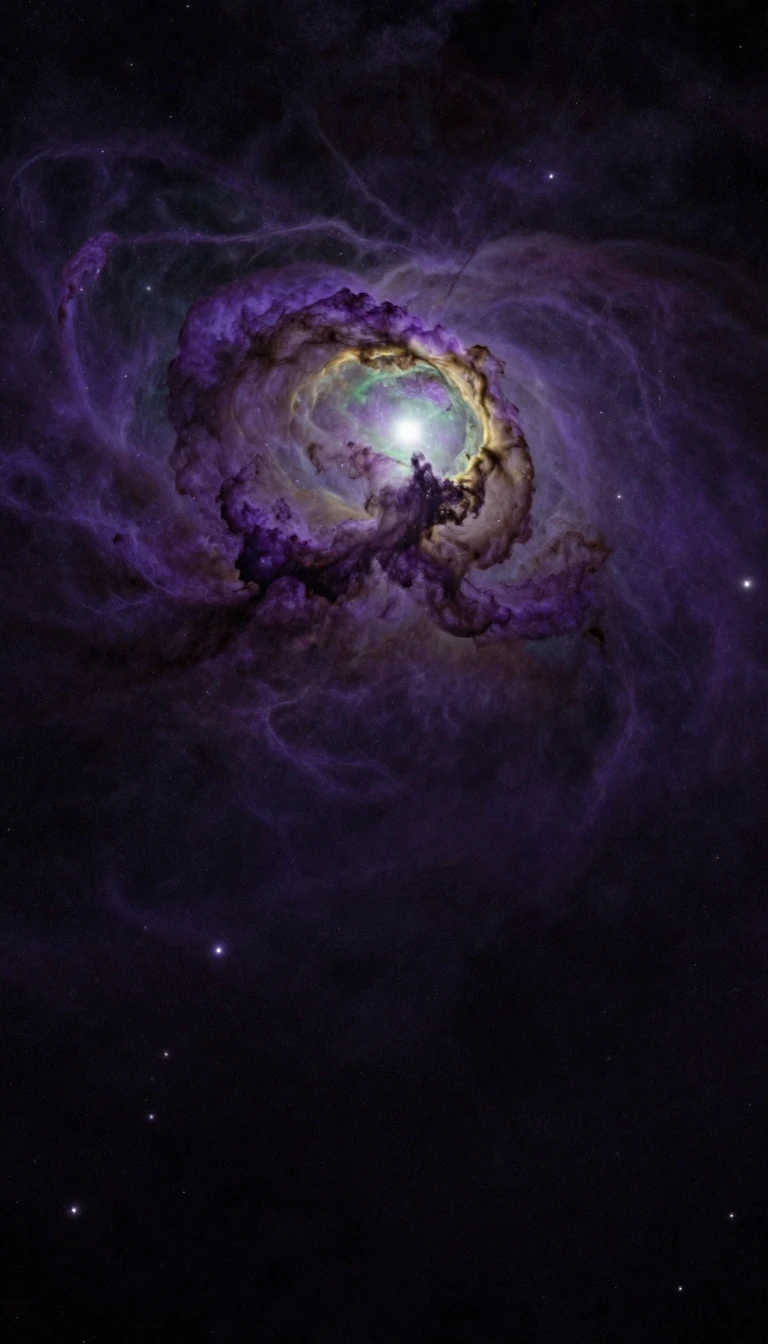
In short: To the naked eye, Acrux appears as a single, brilliant point of light in the Southern Cross. In reality, it is a massive, seven-star system located 348 light-years away. This celestial dance involves spectroscopic binaries and massive B-type stars, some destined to end their lives as spectacular supernova explosions.
Acrux, or Alpha Crucis, is the southernmost first-magnitude star in the night sky. While it appears as a single entity to observers on Earth, it is a hierarchical multiple star system. Through optical telescopes, it reveals itself as a triple system, but modern analysis confirms it contains seven distinct components. The two primary stars, Alpha Crucis A and B, are massive, hot B-type stars separated by about 4 arcseconds. These two are themselves binary systems, meaning the 'star' we see is actually four stars orbiting in two pairs.
The system's complexity continues with Alpha Crucis C, a distant companion located 90 arcseconds away from the main AB pair. This component is also a spectroscopic binary, and a seventh member, a red dwarf designated Alpha Crucis D, was discovered in 1999 using infrared adaptive optics. The entire system is gravitationally bound, with the outer components orbiting the inner ones over timescales reaching 130,000 years. The significant misalignment between the orbits of the A and B pairs suggests that the system was once unstable and underwent a process of dynamical unfolding.
The future of this system is as dramatic as its structure. The primary star of the Alpha Crucis A pair is so massive—estimated at 17 times the mass of the Sun—that it is expected to evolve into a red supergiant. Eventually, it will likely explode as a supernova. Its companion may follow a similar fate or collapse into a massive white dwarf. Because of Earth's axial precession, Acrux was visible to ancient astronomers in India and the Mediterranean, though today it is only visible from latitudes south of 27 degrees North, serving as a vital navigational and cultural marker across the Southern Hemisphere.
Opens the Intellect+ feed with this card first. Swipe up for the next one.
Sources
- Summary by Intellect · source: Acrux
To cite this card, link to https://intellectplus.co.uk/app/space-acrux.
How we source, check and correct cards: Editorial standards.
General information, not professional advice. Spotted an error? Flag the card or see corrections and complaints.
Intellect Plus is a visual educational discovery platform for exploring fascinating facts and ideas. Brain Food, Not Brain Rot. What is Intellect Plus?
Related
More in Astronomical objects · More in Space · Latest · A–Z · All topics
