Antlia: The 18th-century air pump floating in the Southern Celestial Hemisphere
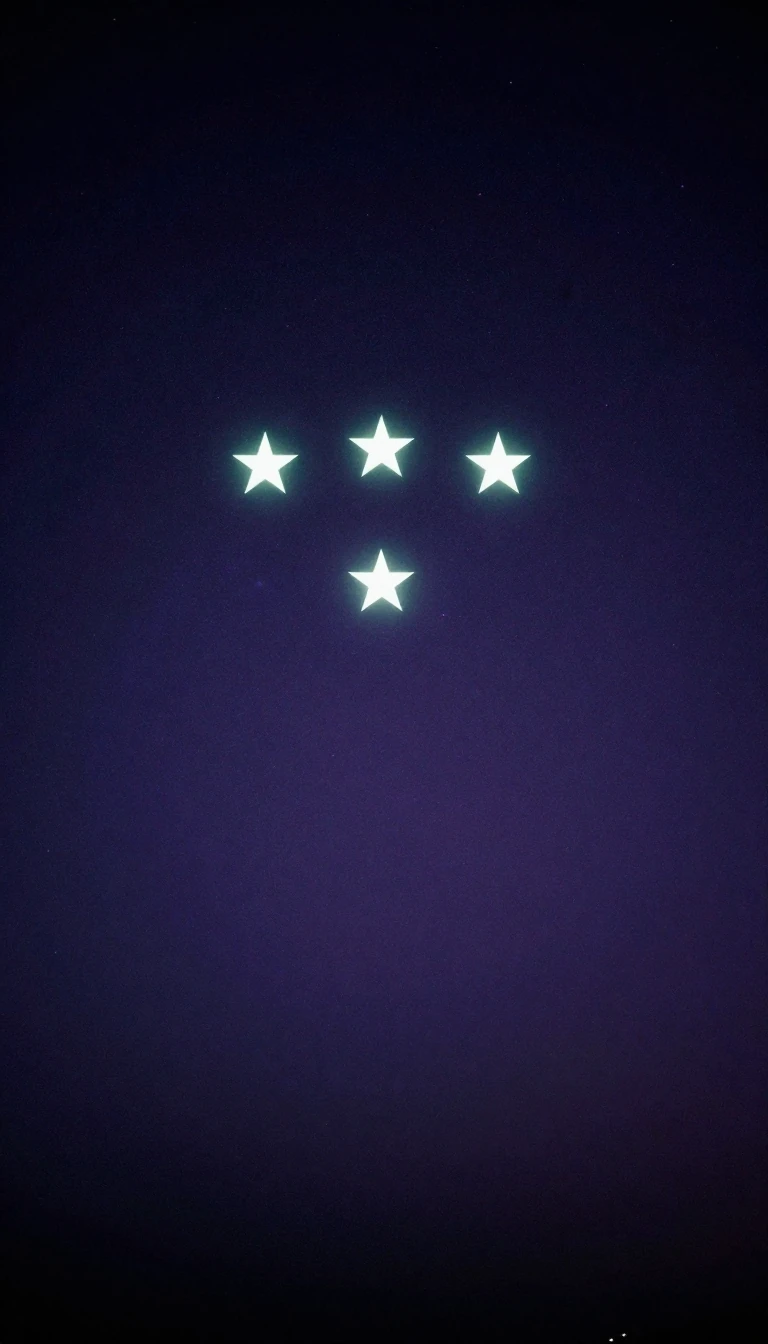
In short: Named for an air pump, the constellation Antlia is a faint collection of stars in the southern sky. Established during the Enlightenment, this celestial machine represents the scientific spirit of its era. Beyond its humble name, it hides binary star systems, distant exoplanets, and a massive cluster of galaxies.
Antlia was introduced by French astronomer Nicolas-Louis de Lacaille in the mid-18th century. During a two-year expedition to the Cape of Good Hope, Lacaille catalogued nearly 10,000 stars and devised fourteen new constellations to fill gaps in the southern sky. He named most of these after scientific instruments that defined the Age of Enlightenment. Originally dubbed Antlia Pneumatica, the constellation commemorates the vacuum pump invented by physicist Denis Papin. While Lacaille depicted a single-cylinder model, later astronomers like Johann Bode preferred a more complex double-cylinder version.
The constellation is notably faint, making it difficult to identify as a figurative object. Its stars were not part of classical asterisms, though they occupy a region of the sky historically associated with Argo Navis, the ship of the Argonauts. In 1844, astronomer John Herschel proposed shortening the name to Antlia, a change that was eventually adopted by the International Astronomical Union in 1922. Today, it covers 238.9 square degrees, ranking 62nd in size among the 88 modern constellations.
Antlia is a laboratory for stellar evolution and galactic structure. Its brightest star, Alpha Antliae, is an ageing orange giant suspected of being a variable star. The constellation also contains S Antliae, an eclipsing binary system where two stars share a common envelope and are destined to merge. Beyond individual stars, Antlia hosts the Antlia Cluster, or Abell S0636, which contains approximately 234 galaxies. Located in the Hydra–Centaurus Supercluster, this cluster is the third nearest to our own Local Group, following the Virgo and Fornax clusters.
Observers can find Antlia in the Southern Celestial Hemisphere, where it is fully visible from latitudes south of 49 degrees north. Its borders, officially defined in 1930, contain several intriguing objects, including the Antlia Dwarf Galaxy and the massive Antlia Supernova Remnant. Despite its scientific namesake, the constellation remains a subtle presence, requiring clear skies and patience to fully appreciate its complex contents.
Opens the Intellect+ feed with this card first. Swipe up for the next one.
Sources
- Summary by Intellect · source: Antlia
- Also: www.britannica.com — Antlia | Galaxy, Dwarf Galaxy & Constellation | Britannica
To cite this card, link to https://intellectplus.co.uk/app/space-antlia.
How we source, check and correct cards: Editorial standards.
General information, not professional advice. Spotted an error? Flag the card or see corrections and complaints.
Intellect Plus is a visual educational discovery platform for exploring fascinating facts and ideas. Brain Food, Not Brain Rot. What is Intellect Plus?
Related
More in Celestial sphere · More in Space · Latest · A–Z · All topics
