A constellation born from the ashes of a tragic 17th-century observatory fire
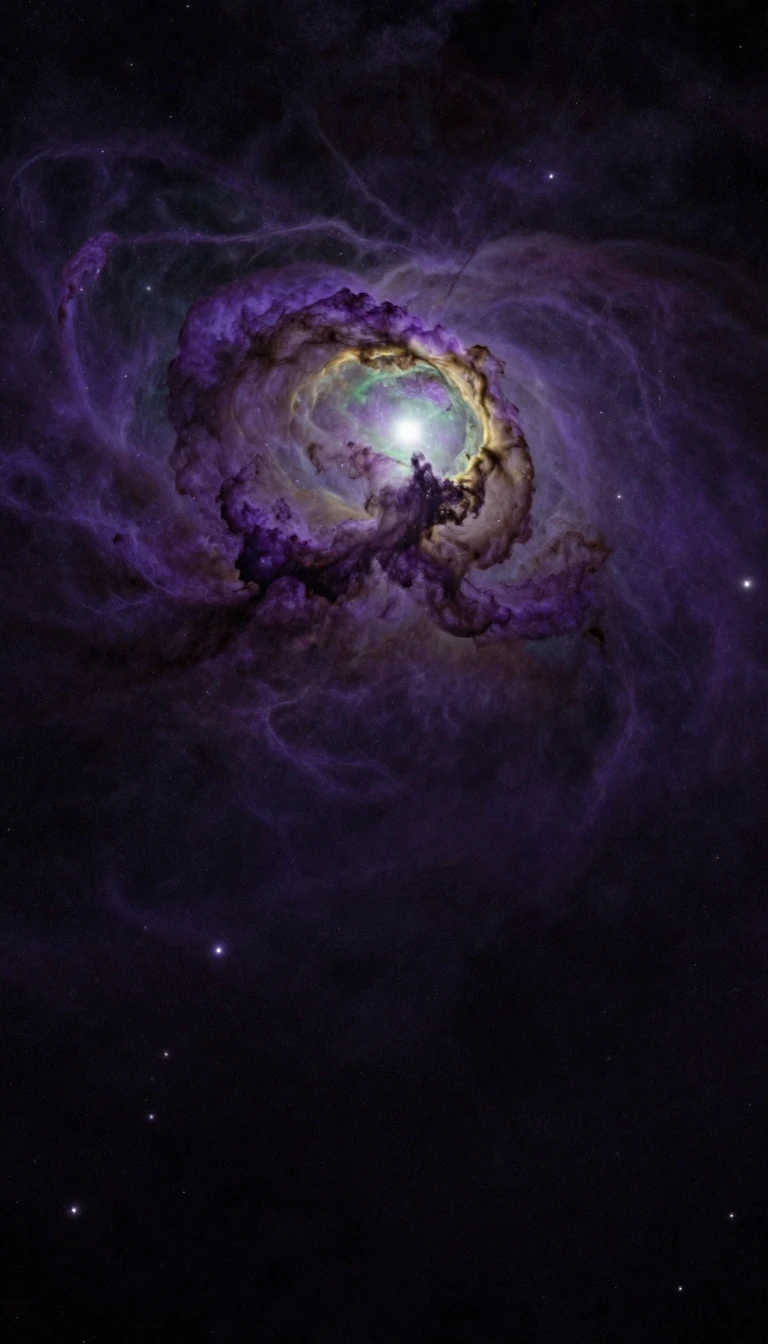
In short: In 1679, a devastating fire consumed the observatory of Polish astronomer Johannes Hevelius, destroying his prized sextant. To memorialize the lost instrument, he introduced the constellation Sextans in 1687. Today, this faint celestial region serves as a vital window into the early universe and the origins of chemical elements.
Sextans, a medium-sized constellation situated on the celestial equator, was formally introduced by Johannes Hevelius in 1687. Originally named Sextans Uraniae, the constellation was a tribute to the astronomical sextant Hevelius lost during a catastrophic fire on 26 September 1679. Despite the destruction of his equipment, Hevelius managed to continue his work, even observing the great comet of December 1680. The constellation's official boundaries, defined by a square, were established by Belgian astronomer Eugène Delporte in 1930.
While Sextans is visually faint—containing only 38 stars brighter than or equal to magnitude 6.5—it is scientifically profound. Its brightest star, Alpha Sextantis, is an ageing A-type star located approximately 280 light-years away. The region also hosts complex systems like the triple star 35 Sextantis and the edge-on lenticular galaxy NGC 3115. Because it lies near the ecliptic plane, the Moon and planets frequently transit the constellation, making it a recurring subject for observation.
Beyond its local stars, Sextans provides a deep-field view of cosmic history. It is the site of the COSMOS project, studied extensively by the Hubble Space Telescope. In 2015, astronomers identified evidence of population III stars within the Cosmos Redshift 7 galaxy located in this region. These ancient stars, existing at high redshift, are theorized to have initiated the production of heavy chemical elements essential for the eventual formation of planets and life. Additionally, the constellation contains CL J1001+0220, which, as of 2016, was the most distant-known galaxy cluster at 11.1 billion light-years away.
Opens the Intellect+ feed with this card first. Swipe up for the next one.
Sources
- Summary by Intellect · source: Sextans
To cite this card, link to https://intellectplus.co.uk/app/space-sextans.
How we source, check and correct cards: Editorial standards.
General information, not professional advice. Spotted an error? Flag the card or see corrections and complaints.
Intellect Plus is a visual educational discovery platform for exploring fascinating facts and ideas. Brain Food, Not Brain Rot. What is Intellect Plus?
Related
More in Celestial sphere · More in Space · Latest · A–Z · All topics
