Echoes of the Big Bang: How sound waves shaped the distribution of all galaxies
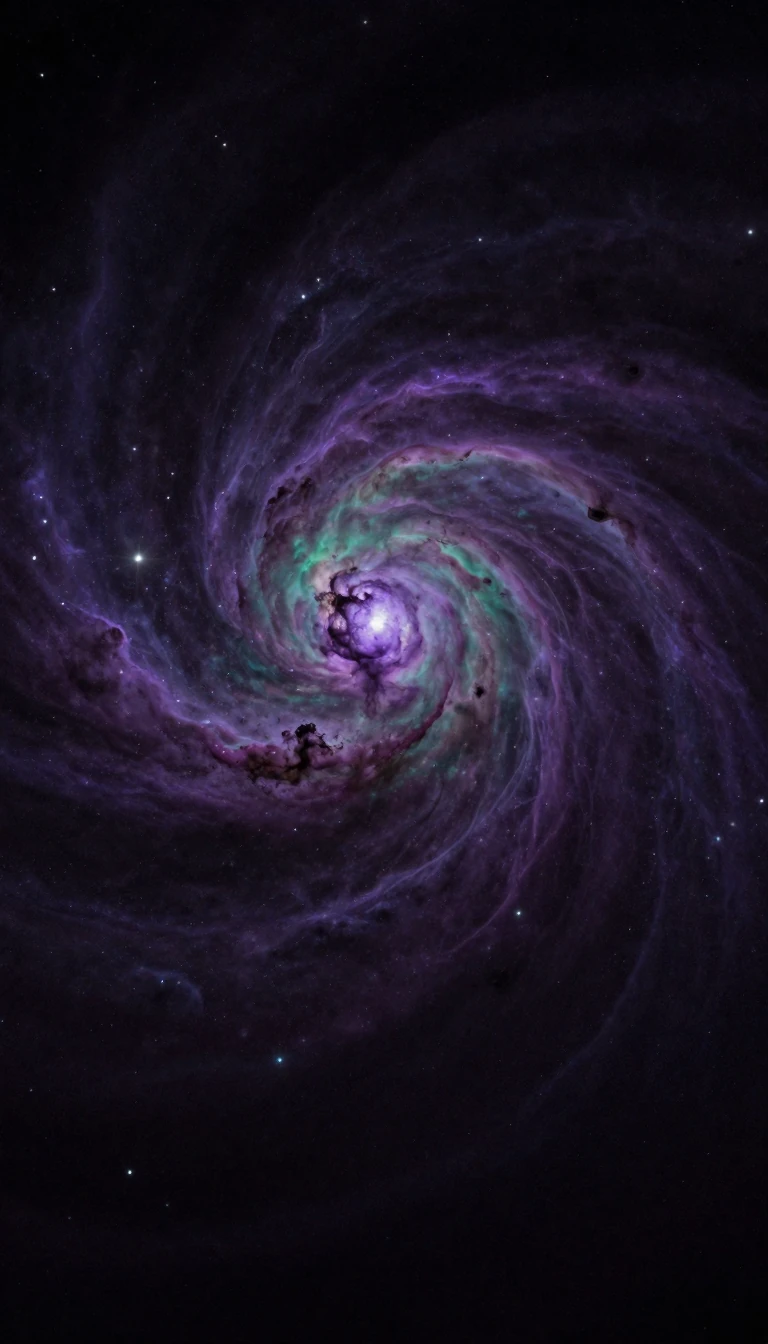
In short: Long before stars ignited, the infant universe was a roiling sea of plasma. Within this dense fluid, a cosmic tug-of-war between gravity and intense heat generated sound waves. When the universe cooled, these ripples froze in place, leaving a permanent imprint that dictates where galaxies cluster across the cosmos today.
In the universe's first half-million years, it existed as a hot, dense plasma of charged particles. Tiny density fluctuations, estimated at one part in 100,000, acted as gravitational kernels. As gravity pulled matter inward, the extreme heat generated an outward pressure, creating spherical sound waves that propagated through the primordial fluid. This interplay between gravity and pressure created a resonant pattern of matter distribution.
When the universe reached approximately 380,000 to 400,000 years of age, it cooled sufficiently for neutral atoms to form. This transition, known as recombination, allowed photons to decouple from matter, effectively ending the repulsive pressure that drove the waves. The ripples were suddenly frozen in place, leaving behind shells of baryonic matter. These shells, often called the sound horizon, acted as gravitational seeds for future structure.
Over hundreds of millions of years, these frozen ripples attracted more material, eventually forming the stars and galaxies we observe today. Because slightly more galaxies formed along these ancient ripples, they created a preferred distance between galaxy pairs. In the modern universe, this distance is approximately 500 million light-years. By measuring this statistical clustering, astronomers use the BAO signal as a standard ruler to map the expansion history of the universe.
Understanding these oscillations is critical for investigating dark energy, the mysterious force accelerating cosmic expansion. Because the BAO signal changes across cosmic time, it provides an independent method to test cosmological models and Einstein's General Relativity. Future missions, such as the Nancy Grace Roman Space Telescope, aim to map these remnants back to when the universe was only 600 million years old, helping scientists decipher how dark energy has evolved as the dominant force shaping our cosmos.
Opens the Intellect+ feed with this card first. Swipe up for the next one.
Sources
- Summary by Intellect · source: Baryon Acoustic Oscillations - NASA Science
- Also: What are baryonic acoustic oscillations? - Euclid - Science Portal
- Also: NASA Scientific Visualization Studio | Baryon Acoustic Oscillations
- Also: Baryon acoustic oscillations
To cite this card, link to https://intellectplus.co.uk/app/space-baryon-acoustic-oscillations.
How we source, check and correct cards: Editorial standards.
General information, not professional advice. Spotted an error? Flag the card or see corrections and complaints.
Intellect Plus is a visual educational discovery platform for exploring fascinating facts and ideas. Brain Food, Not Brain Rot. What is Intellect Plus?
Related
More in Physical cosmology · More in Space · Latest · A–Z · All topics
