Why astronomers once mistook these powerful galactic cores for simple variable stars
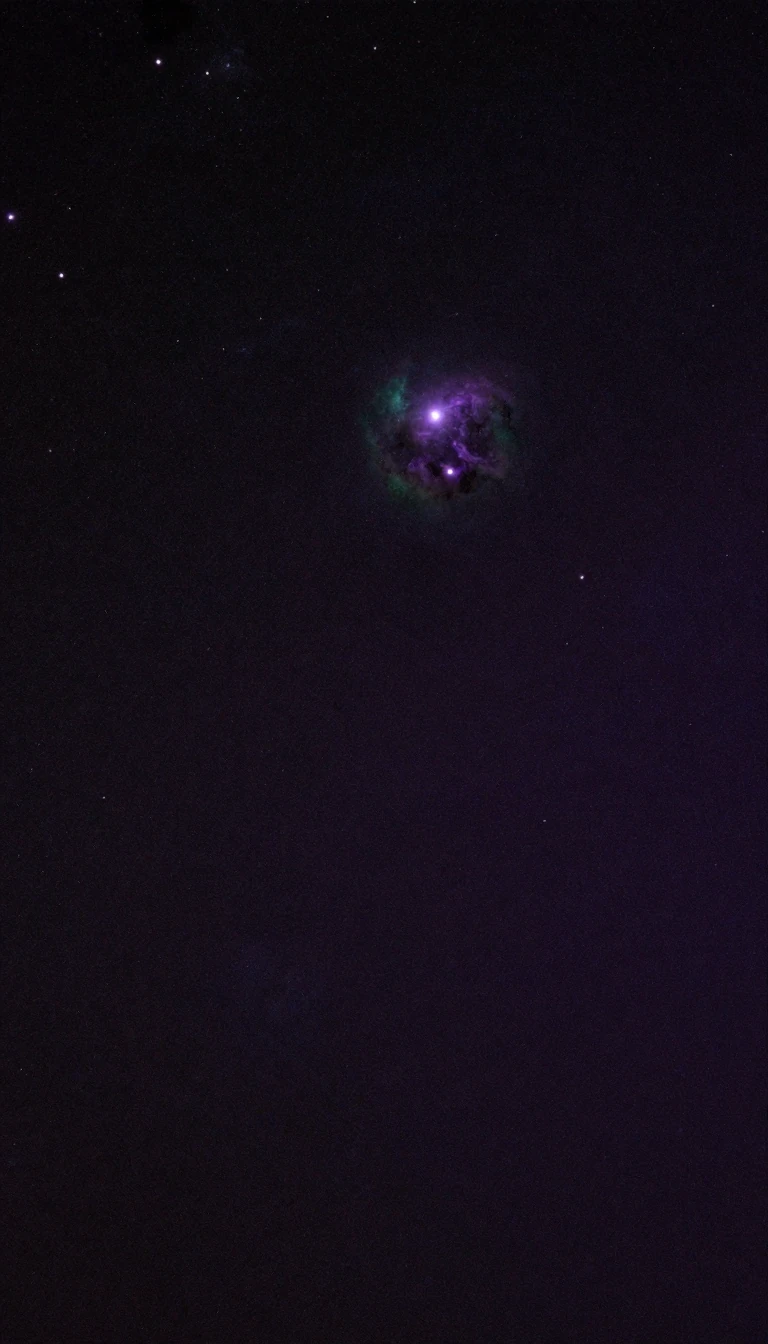
In short: BL Lacertae objects are among the most enigmatic phenomena in the cosmos. Originally misidentified as stars due to their rapid brightness fluctuations, these active galactic nuclei are actually massive elliptical galaxies firing relativistic jets directly at Earth. Their unique, featureless light spectra continue to challenge our understanding of extragalactic physics.
The story of the BL Lacertae object began with a case of mistaken identity. When first observed, the prototype, BL Lac, appeared to be a variable star because of its intense, rapid flux changes and significant optical polarization. It was not until 1968 that John L. Schmitt linked the object to a radio source, VRO 42.22.01, revealing its true, more exotic nature. By 1972, Peter Albert Strittmatter formally proposed the class, and by 1976, researchers had identified 30 such objects.
At their core, BL Lac objects are a subtype of blazars—active galactic nuclei where a relativistic jet is pointed almost directly at the observer. This alignment creates a unique observational profile: while quasars exhibit strong spectral emission lines, BL Lacs are characterized by a featureless, non-thermal emission continuum. This lack of spectral features historically made it incredibly difficult for astronomers to determine their distance or physical composition. We now understand that these objects are intrinsically identical to low-power radio galaxies, hosted within massive, luminous elliptical galaxies that rival the brightest cluster galaxies in scale.
Modern technology has finally pierced the veil surrounding these objects. In 1974, Michael John Disney used early CCD imaging to identify the faint nebulosity surrounding PKS 0548-322 as a giant elliptical galaxy. A massive 2000 survey using the Hubble Space Telescope analyzed 132 BL Lac objects, confirming that the vast majority of host galaxies follow a de Vaucouleurs brightness profile. This research suggests that disk systems are rare, with an 8% upper limit, reinforcing the theory that these engines reside exclusively in elliptical hosts. The field continues to evolve; in 2017, the IceCube project detected a high-energy neutrino originating from the BL Lac object TXS 0506+056, marking a new era in multi-messenger astronomy.
The classification of these objects remains nuanced. While they are often grouped with optically violent variable quasars under the blazar umbrella, BL Lacs are generally less luminous and lack the strong emission lines found in their quasar counterparts. Despite these differences, the terms are often used interchangeably in general practice, reflecting the ongoing challenge of categorizing the most energetic and volatile structures in the universe.
Opens the Intellect+ feed with this card first. Swipe up for the next one.
Sources
- Summary by Intellect · source: BL Lacertae object
To cite this card, link to https://intellectplus.co.uk/app/space-bl-lacertae-object.
How we source, check and correct cards: Editorial standards.
General information, not professional advice. Spotted an error? Flag the card or see corrections and complaints.
Intellect Plus is a visual educational discovery platform for exploring fascinating facts and ideas. Brain Food, Not Brain Rot. What is Intellect Plus?
Related
More in Galactic and extragalactic astronomy · More in Space · Latest · A–Z · All topics
