 Intellect Plus
Galactic and extragalactic astronomy
58 cards. Each one is a 40-second story with a five-minute read behind it.
 Mapping the invisible architecture of our expanding universeMost of the cosmos is hidden from view, composed of mysterious dark matter and dark energy. The Euclid space telescope was designed to peer through this veil, creating a massive 3…
 How telescopes turn faint light into a map of the universeBefore 1609, humanity was limited by the naked eye. Today, we use massive mirrors and complex detectors to capture radiant energy from across the cosmos. By mastering the physics …
 The $10 billion eye that sees through cosmic dustWhile human eyes see only what is illuminated, the James Webb Space Telescope peers into the infrared—the heat signatures of the universe. In just one year, it has bypassed celest…
 Why the study of stars is a law-bound pursuitThe word astronomy literally translates to 'the laws of the stars.' While it began as a way to map the heavens for calendars and navigation, it has evolved into a rigorous physica…
 The accidental discovery that proved the universe is bigger than our galaxyIn 1885, astronomers witnessed a star explode in the Andromeda Galaxy. The catch? They didn't actually know Andromeda was a separate galaxy yet. This accidental observation sparke…
 From the Big Bang to Heat Death in 20 MinutesThis video compresses the entire history of our universe into a single, rapid journey. It traces everything from the first sparks of creation to the final cooling of the cosmos.
- Why do black holes and stars grow by spinning in a cosmic dance?An accretion disk is a swirling, flattened flow of gas and dust orbiting a central object. Because this material possesses too much angular momentum to fall straight inward, it fo…
 Is the Milky Way really destined to collide with the Andromeda galaxy?For years, astronomers were certain that our galaxy and Andromeda were on a collision course, destined to merge into a single elliptical giant. However, recent data from the Gaia …
- Astrophysical jets are cosmic beams of matter fired across millions of light-years of space.Across the universe, black holes and neutron stars launch narrow, high-velocity streams of ionized matter into the void. These astrophysical jets can span millions of parsecs, cha…
 Why astronomers once mistook these powerful galactic cores for simple variable starsBL Lacertae objects are among the most enigmatic phenomena in the cosmos. Originally misidentified as stars due to their rapid brightness fluctuations, these active galactic nucle…
 Are these mysterious holes in the heavens actually the birthplaces of new stars?Once dismissed as empty voids in the night sky, these dense, frigid clouds of gas and dust are now recognized as active stellar nurseries. Astronomers call them Bok globules, and …
 Astronomers are facing a cosmic dust budget crisis, and the answer lies in stars.There is far more dust in the universe than our current models can explain. This missing material is not just space debris; it is the essential building block for stars, planets, …
 Are distant galaxy clusters being pulled by something outside our visible universe?Astronomers have observed massive galaxy clusters streaming at a million miles per hour toward a specific patch of sky. This collective motion, known as dark flow, defies standard…
- Dark matter haloes are the invisible scaffolding upon which all galaxies are built.These massive, unseen structures envelop galaxies, extending far beyond their visible edges. While we cannot observe them directly, their gravitational influence on stars and gas …
 Why spiral galaxy arms are not physical structures but cosmic traffic jamsFor decades, astronomers struggled to explain why spiral arms in galaxies do not wind up and disappear. The answer is not material, but a density wave—a phenomenon similar to a hi…
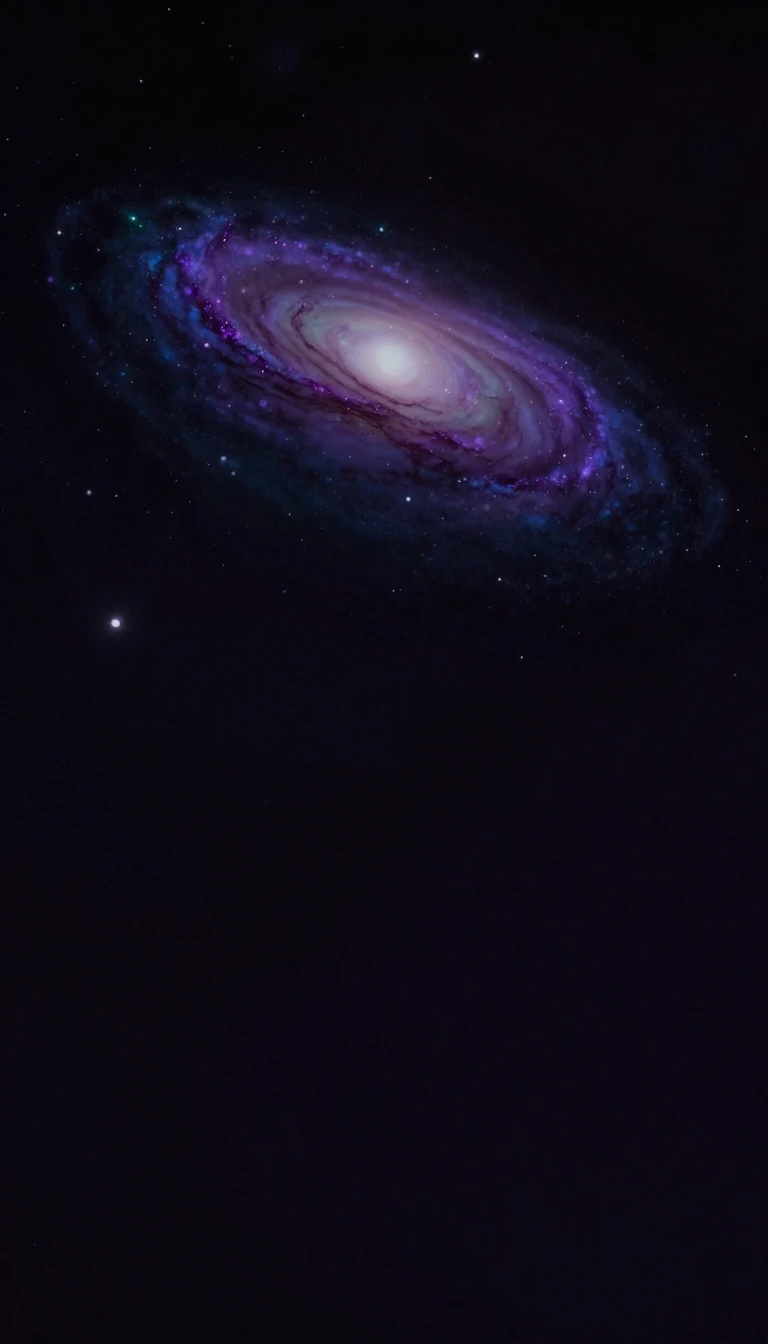 Are dwarf elliptical galaxies the primordial building blocks of our massive cosmic neighbors?Dwarf elliptical galaxies are the most common galaxy type in the nearby universe, yet their origins remain a subject of intense debate. Are these small, faint systems the ancient,…
 Why stars cannot shine infinitely bright without blowing themselves apartEvery star exists in a delicate tug-of-war between the crushing inward pull of gravity and the outward pressure of its own light. When a star burns too brightly, it hits the Eddin…
- Why the glowing clouds of space are far more chaotic than they appearEmission nebulae are not the smooth, diffuse clouds they seem. These massive regions of ionized hydrogen are actually complex, filamentary structures shaped by violent pressure, s…
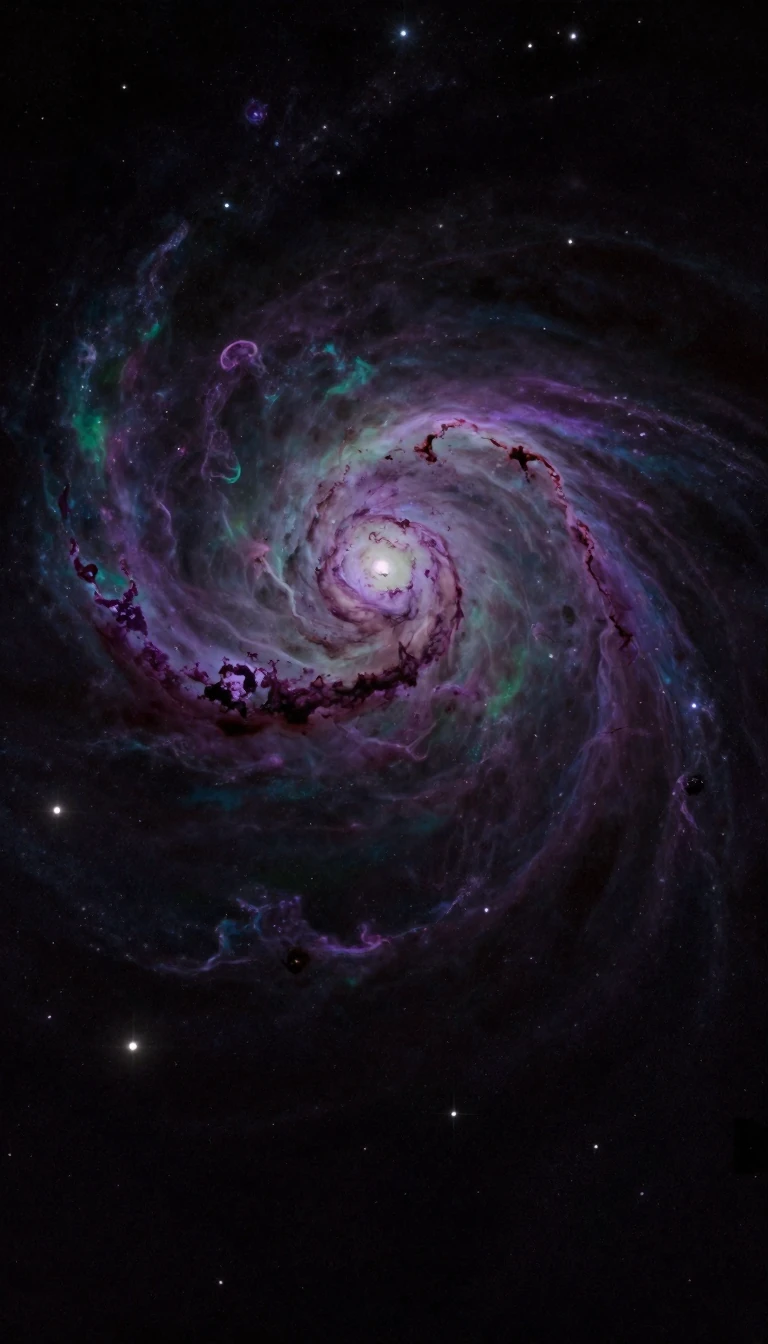 How astronomers use the speed of stars to measure the distance to galaxiesTo map the vast reaches of space, astronomers need reliable yardsticks. The Faber–Jackson relation provides one by linking the internal motion of stars within elliptical galaxies …
- Most galaxies in our cosmic neighborhood are social, but some live in total isolation.While the vast majority of galaxies congregate in crowded groups or massive clusters, a distinct population exists in solitude. These field galaxies drift through the void, gravit…
- Why some galaxies look like fluffy, patchy clouds instead of perfect, swirling spiralsWhile grand design galaxies display iconic, sweeping arms, many spiral galaxies appear fragmented and chaotic. These flocculent galaxies, named for their fluffy appearance, lack c…
- Our Milky Way is a cosmic crime scene revealing its own violent, ancient historyGalactic astronomy has transformed from static mapping into a dynamic field of archeology. By analyzing tidally shredded dwarf galaxies and stellar streams, researchers are recons…
- The Milky Way's heart is a dense, shifting thicket of stars and hidden planets.At the center of our galaxy lies the galactic bulge, a tightly packed, mysterious region teeming with old stars and supermassive black holes. New high-precision surveys are finall…
- Andromeda’s hidden gas halo is so vast it is already touching our own galaxy.Our nearest galactic neighbor, Andromeda, is surrounded by an immense, nearly invisible envelope of plasma. This halo stretches up to 2 million light-years into space, creating a …
- Why the Milky Way's galactic plane is more of a suggestion than a ruleWe often imagine our galaxy as a perfect, flat disk, but the reality is far messier. Because stars are not perfectly coplanar, defining the galactic plane is an exercise in precis…
- Galactic tides are cosmic sculptors that tear apart galaxies and trigger comet showersGalactic tides are not just ocean phenomena; they are gravitational forces that reshape galaxies and influence our own solar system. When galaxies interact, these forces pull star…
- Galaxy clusters are the largest structures in the universe held together by their own gravity.Beyond the individual galaxies we see, the universe is organized into massive, gravitationally bound architectures. Galaxy clusters act as the primary building blocks of cosmic st…
- Galaxy filaments are the massive, thread-like scaffolds defining the architecture of our universe.Imagine the universe not as a random scatter of stars, but as a vast, interconnected web. Galaxy filaments are the largest structures known, acting as the boundaries between cosmi…
- Why the most common structures in our universe are constantly merging into oneGalaxy groups are the fundamental building blocks of the cosmos, housing at least half of all galaxies in our local neighborhood. While they appear as stable collections of up to …
- Why do some galaxies display such perfect, sweeping, and majestic spiral arms?Grand design spiral galaxies are defined by their prominent, continuous arms that swirl around a central nucleus. Unlike patchy or flocculent spirals, these structures act as cosm…
- Why neutral hydrogen clouds are the secret map of our galaxy's hidden structureNeutral atomic hydrogen regions, or HI regions, are vast, invisible clouds permeating the interstellar medium. While they emit no visible light, they act as essential tracers for …
- Can a simple tuning fork diagram explain the complex evolution of the entire universe?In 1926, Edwin Hubble devised a classification scheme for galaxies that remains a cornerstone of astronomy. By organizing galaxies into a shape resembling a tuning fork, he catego…
- Galactic collisions are not crashes but slow, gravitational dances that reshape the universeWhen galaxies collide, they rarely hit each other like billiard balls. Because galaxies are mostly empty space, these encounters are actually complex gravitational interactions. T…
- Is the vast void between galaxies actually filled with invisible cosmic dust?Space between galaxies is not as empty as it appears. Scientists have long suspected that cosmic dust drifts through the intergalactic void, potentially distorting our view of the…
- Astronomers have found compelling evidence for a rare missing link in black hole evolutionIntermediate-mass black holes are the elusive middle children of the cosmos, sitting between lightweight stellar black holes and massive galactic giants. Scientists have long stru…
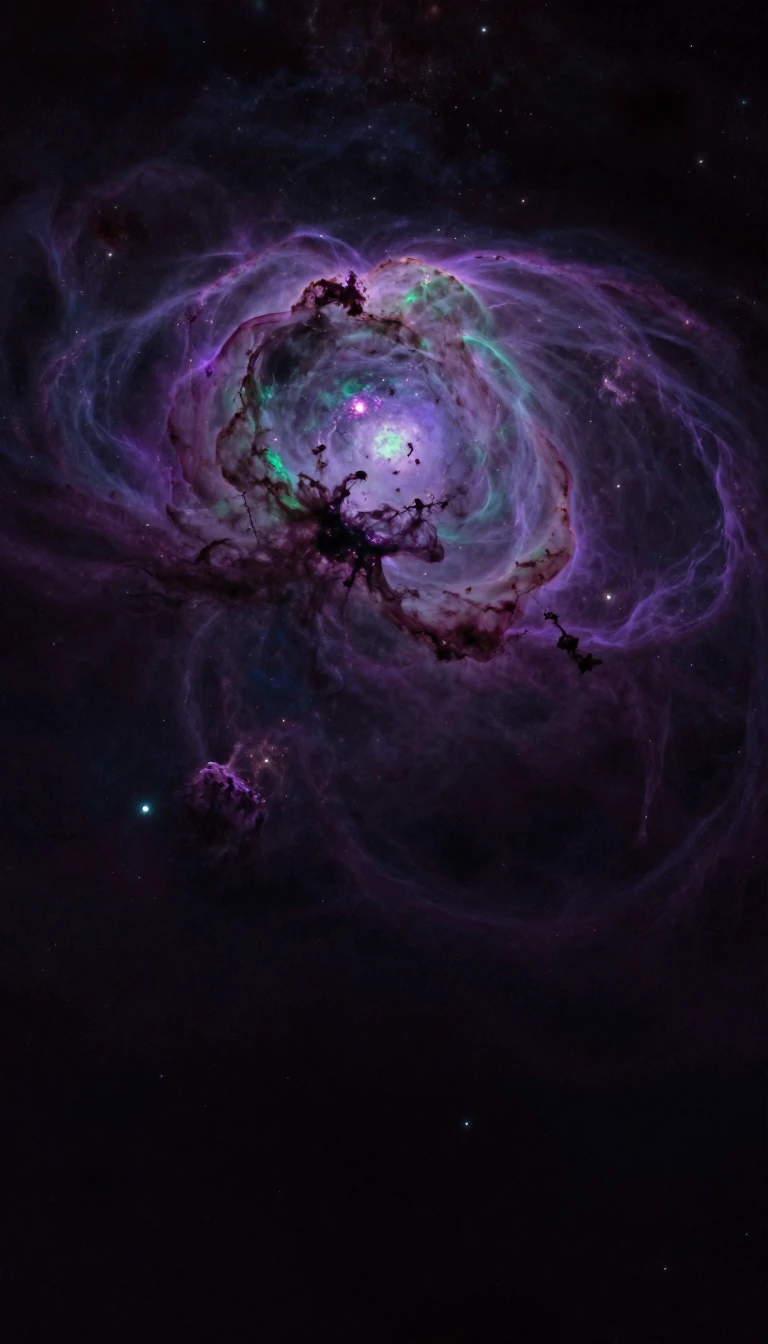 Are interstellar clouds actually flat pancakes rather than the needle-like filaments we once imagined?Interstellar clouds are the nurseries of stars, yet their true shapes have long eluded us. While we once viewed these gas-and-dust structures as serpentine filaments, new 3D analy…
 Interstellar ice may be the secret delivery system for supernova material to EarthScientists have long puzzled over why inner planets like Earth contain different isotopic signatures than outer solar system bodies. New research suggests the answer lies in inter…
- The hottest, thinnest gas in the universe holds the secret to dark matterGalaxy clusters are not just collections of stars; they are filled with a superheated, invisible plasma called the intracluster medium. This medium accounts for most of the visibl…
- Are these massive quasar clusters the largest structures in the entire observable universe?Large quasar groups are collections of supermassive black hole nuclei that may represent the universe's most expansive structures. While they are theorized to be the precursors to…
- Why do one-third of nearby galaxies host these mysterious, weakly ionized nuclear regions?A low-ionization nuclear emission-line region, or LINER, is a galactic nucleus defined by its unique spectral signature. While common in the local universe, these regions remain a…
- Why these massive, ghostly galaxies remain the universe's most elusive dark matter laboratoriesLow surface brightness galaxies are diffuse, faint systems that defy standard galactic evolution. While they can be as massive as the Milky Way, their stars are spread so thin the…
- A remote galaxy shines with the light of more than 300 trillion suns.Astronomers have discovered a new class of cosmic giants called extremely luminous infrared galaxies, or ELIRGs. These dazzling objects are so distant that their light has travele…
- Why do some galaxies shine with Lyman-alpha light during the early, opaque Universe?Lyman-alpha emitters are distant galaxies that should be invisible due to neutral hydrogen scattering their light. Yet, the James Webb Space Telescope has captured these elusive s…
 Why distant quasars look like they are hiding behind a cosmic forestWhen astronomers look at the light from distant quasars, they often see a dense series of absorption lines that resemble a forest. These lines are not part of the quasar itself, b…
- Why do stars in the Small Magellanic Cloud move in a giant, cosmic spiral?Astronomers have discovered that stars and gas in the massive cluster NGC 346 are spiraling toward its center. This river-like motion acts as a highly efficient delivery system fo…
- Could a tiny, repeating pattern in spacetime be the secret to creating black holes?Physicists have mathematically modeled a bizarre state where spacetime organizes into a crystalline structure. This delicate, repeating pattern acts as a tipping point: with just …
- Why some galaxies defy the standard shape and turn into cosmic anomaliesMost galaxies follow predictable patterns, but five to ten percent are classified as peculiar. These cosmic outliers possess irregular shapes and unusual compositions, often resul…
 A reflection nebula is a cosmic mirror, glowing only by borrowed starlight.Think of a reflection nebula as fog illuminated by a street lamp. These interstellar clouds do not produce their own visible light. Instead, they act as cosmic reflectors, scatter…
 Are polar ring galaxies more common than the rare 0.1 percent previously estimated?Astronomers have identified two potential polar ring galaxies, structures where hydrogen gas orbits at a 90-degree angle to the main disk. If confirmed, these spectacular cosmic o…
 Satellite galaxies are the fundamental building blocks of the massive structures in our universe.Smaller companion galaxies orbit massive hosts, mirroring the way planets circle the Sun. These satellites are not merely passive bystanders; they are the essential, albeit tumult…
- Are spiral galaxies just cosmic infections spreading through a rotating sea of gas?The SSPSF model suggests that star formation is not a static process but a chain reaction. Like a biological contagion, shock waves from supernovae trigger new stellar births in n…
- How massive stars carve out vast, empty voids in the heart of galaxiesIn the Large Magellanic Cloud, a sprawling nebula named N44 hides a massive, empty void. This superbubble, stretching over 200 light-years, was not always a vacuum. It was hollowe…
- Why do some galaxies contain two distinct layers of stars stacked like pancakes?Many disk galaxies, including our own Milky Way, feature a dual-layered structure: a thick, expansive outer region and a thinner, embedded disk. New observations from the James We…
- Why do spiral galaxies like our Milky Way possess two distinct, nested stellar disks?Most spiral galaxies, including our own, are not uniform. They contain a thick, older outer disk and a younger, embedded thin disk. Recent observations from the James Webb Space T…
- How astronomers use the spin of distant galaxies to map the cosmic distance ladderThe Tully–Fisher relation reveals a surprising cosmic secret: the faster a spiral galaxy spins, the brighter it shines. By measuring the width of hydrogen emission lines, astronom…
- Why some spiral galaxies lack the central bar found in our own Milky WayWhile many galaxies feature a central bar of gas and stars that funnels material toward the core, roughly one third of known spiral galaxies lack this structure. These unbarred sp…
 Astronomers have finally located the mysterious missing matter hiding in the vast cosmic webFor decades, scientists could not account for about one-third of the normal matter predicted to exist in the universe. Now, researchers using NASA’s Chandra X-ray Observatory have…
 How astronomers use invisible dark matter to map the entire history of the universeGravity bends light, but most cosmic distortions are too faint to see in a single galaxy. By statistically analyzing the shapes of hundreds of millions of distant galaxies, astron…