Are these mysterious holes in the heavens actually the birthplaces of new stars?
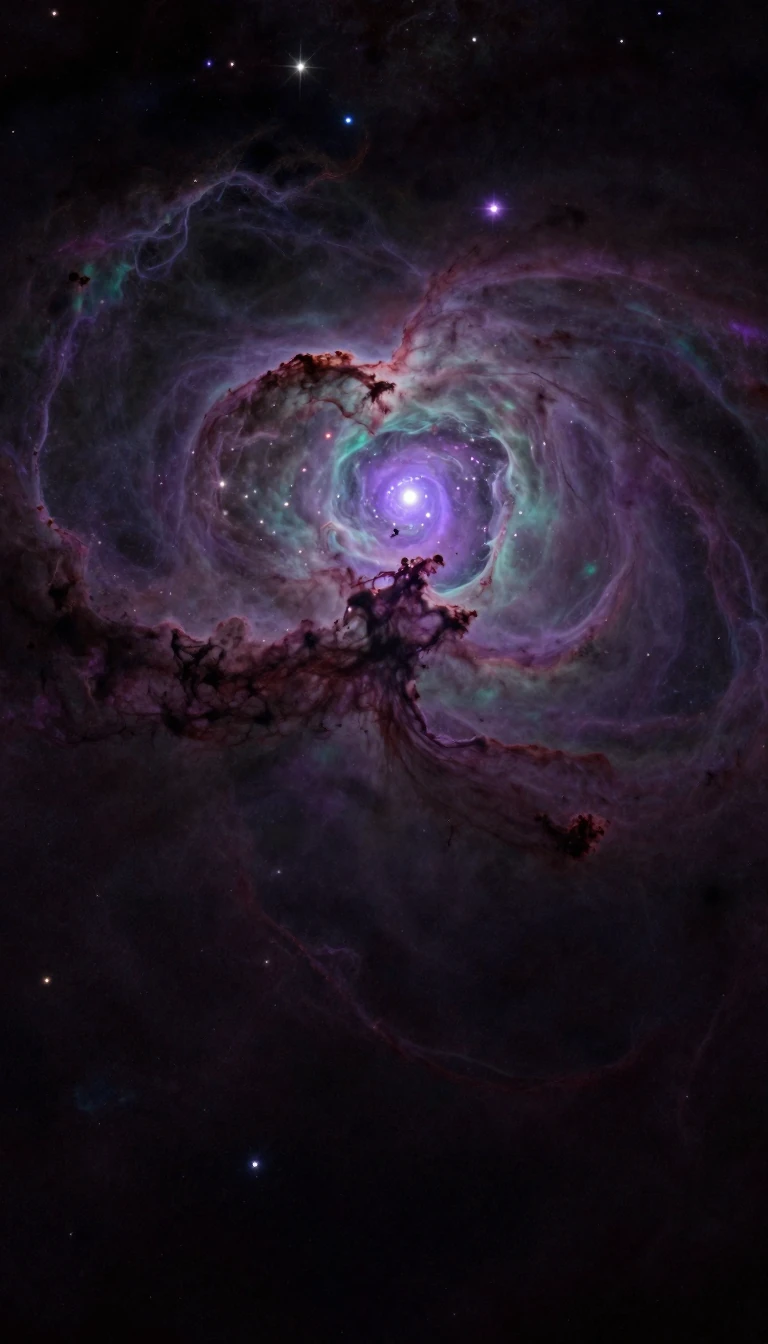
In short: Once dismissed as empty voids in the night sky, these dense, frigid clouds of gas and dust are now recognized as active stellar nurseries. Astronomers call them Bok globules, and their relative isolation makes them the perfect laboratories for studying the earliest, most delicate stages of star formation.
First identified in the 1940s by astronomer Bart Bok, these dark nebulae were initially dubbed holes in the heaven because they appeared as black splotches against dense stellar backgrounds. Because they are incredibly thick, they are opaque to visible light, which long hindered efforts to understand what lay hidden within. It was not until 1990 that near-infrared observations finally confirmed that stars were indeed being born inside these dense cocoons.
Bok globules are typically small, often containing less than 100 solar masses of material within a region roughly a light-year across. Their simplicity is their greatest scientific asset. Unlike giant molecular cloud complexes, such as the Orion Nebula, which are chaotic and crowded, Bok globules are relatively isolated. This allows researchers to examine star formation in a much less confused environment. Furthermore, because the nearest globules are significantly closer than giant complexes, astronomers can achieve a level of detail that would otherwise be impossible.
Recent research has deepened our understanding of these objects. A study of 32 globules, utilizing tools like the Spitzer Space Telescope, found that 26 contained warm cores. By analyzing dust emission, scientists estimated these cores to be between 100,000 and 2 million years old. Perhaps most surprisingly, nearly two-thirds of the globules studied showed evidence of multiple stars. In most of these systems, the stars were of different ages, suggesting that slow, sequential star formation is the norm rather than the exception. These findings challenge older assumptions and highlight that even within these small, cold clouds, the process of creating a star system is a complex, ongoing evolution.
Opens the Intellect+ feed with this card first. Swipe up for the next one.
Sources
- Summary by Intellect · source: Bok Globules | Center for Astrophysics | Harvard & Smithsonian
- Also: Bok globule
To cite this card, link to https://intellectplus.co.uk/app/space-bok-globule.
How we source, check and correct cards: Editorial standards.
General information, not professional advice. Spotted an error? Flag the card or see corrections and complaints.
Intellect Plus is a visual educational discovery platform for exploring fascinating facts and ideas. Brain Food, Not Brain Rot. What is Intellect Plus?
Related
More in Galactic and extragalactic astronomy · More in Space · Latest · A–Z · All topics
