Why do some stars display chemical compositions that defy their own birth records?
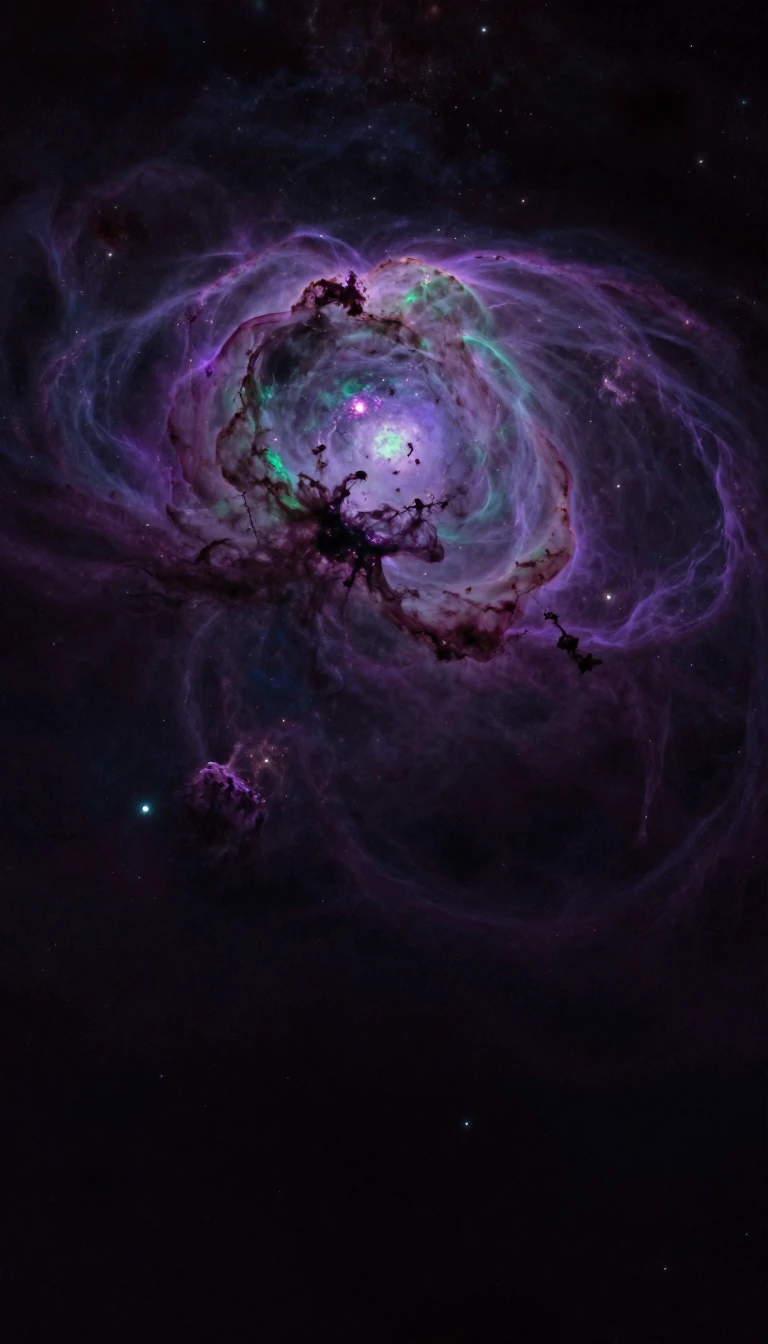
In short: Most stars reflect the chemical makeup of the gas clouds from which they formed. Yet, a small percentage of hot main-sequence stars exhibit bizarre surface abundances, appearing to levitate heavy metals while burying helium. These chemically peculiar stars challenge our understanding of stellar atmospheres and the forces shaping them.
Chemically peculiar (CP) stars are defined by distinct patterns of metal and helium abundances within their surface layers. While roughly 5% to 10% of hot main-sequence stars show these traits, they are not uniform. Astronomers categorize them into four primary groups: CP1 (Am stars), CP2 (Ap stars), CP3 (HgMn stars), and CP4 (He-weak stars). These classifications are based on spectral lines that reveal either an excess or deficiency of specific elements, such as silicon, chromium, strontium, or mercury.
The prevailing theory suggests these peculiarities are not primordial but develop after the star forms. Processes like diffusion and magnetic effects cause certain elements to settle into deeper layers, while others are levitated toward the surface. For this stratification to persist, the star’s atmosphere must remain stable, avoiding the convective mixing that would otherwise homogenize the surface. Large magnetic fields, commonly observed in Ap stars, are thought to provide the necessary stability to keep these layers intact.
While hot CP stars are the primary focus of this classification, the term is sometimes applied to cooler stars. However, the mechanisms differ significantly; cool stars often show peculiarities due to the dredging up of nuclear fusion products from their interiors or mass transfer within binary systems. Despite their oddity, these stars are not merely curiosities. Research into systems like the mercury-manganese star HIP 79098 or the λ Boötis star HR 8799 continues to provide insights into the environments surrounding these unusual stellar bodies, including the presence of orbiting planets or brown dwarfs.
Calculating the precise physical properties of these stars remains a complex task. For instance, determining the effective temperature of Ap stars is complicated by their unique atmospheric structure. Furthermore, some phenomena, such as the broad helium lines in 'sn' stars, were once thought to indicate shells of material but are now attributed to the Stark effect. These stars serve as a reminder that stellar surfaces are dynamic, active environments where internal forces can rewrite the chemical signature of a star.
Opens the Intellect+ feed with this card first. Swipe up for the next one.
Sources
- Summary by Intellect · source: Chemically peculiar star
To cite this card, link to https://intellectplus.co.uk/app/space-chemically-peculiar-star.
How we source, check and correct cards: Editorial standards.
General information, not professional advice. Spotted an error? Flag the card or see corrections and complaints.
Intellect Plus is a visual educational discovery platform for exploring fascinating facts and ideas. Brain Food, Not Brain Rot. What is Intellect Plus?
Related
More in Stellar astronomy · More in Space · Latest · A–Z · All topics
