Centaurs are cosmic drifters caught between the icy Kuiper belt and the giant planets.
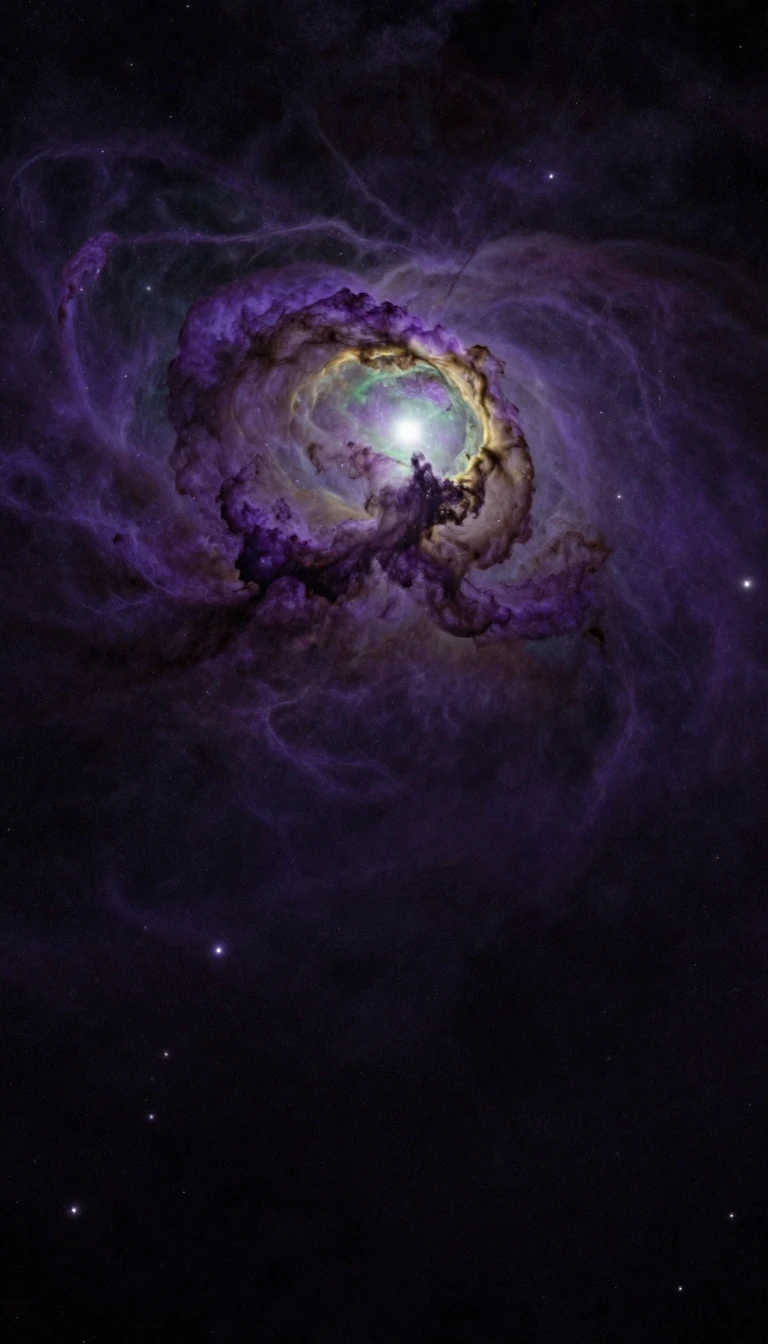
In short: Named for the mythological hybrids, Centaurs are small, unstable bodies that blur the line between asteroids and comets. They originate in the distant Kuiper belt but are nudged inward by Neptune’s gravity, embarking on a fleeting journey through the outer solar system that often ends in collision or ejection.
Centaurs represent a transient population of small bodies, typically measuring up to 250 kilometers in diameter. While they share the physical size of asteroids, their composition is closer to that of comets, containing significant amounts of frozen water and volatile compounds. Because they travel in unstable orbits that cross the paths of giant planets like Jupiter and Neptune, their existence is brief in astronomical terms. They are constantly being perturbed by gravitational forces, which either fling them out of the solar system, send them toward the inner planets, or cause them to collide with a planet.
The first recognized member of this group, Chiron, was discovered in 1977, though its true nature as an icy, comet-like body was not fully understood until over a decade later. Since the discovery of the second representative, Pholus, in 1992, hundreds of Centaurs have been identified, and researchers suspect thousands more remain undetected. Because the population is constantly being depleted by collisions or ejections, astronomers believe it must be continually replenished by objects drifting inward from the Kuiper belt, a vast disk-shaped reservoir of comet nuclei located beyond Neptune and Pluto.
Distinguishing between comets and asteroids becomes difficult at the extreme distances where Centaurs reside. Traditionally, comets are defined by their icy composition and the release of gases as they warm, but at the frigid temperatures of the outer solar system, Centaurs may remain dormant. However, if a Centaur is perturbed close enough to the Sun, the heat causes its ices to vaporize, and it begins to exhibit the classic characteristics of a comet. This dynamic transition highlights the fluid nature of these objects, which act as a bridge between the frozen outer reaches of our solar system and the active, sun-warmed inner regions.
Opens the Intellect+ feed with this card first. Swipe up for the next one.
Sources
- Summary by Intellect · source: Centaur object | Trans-Neptunian, Dwarf Planet & Kuiper Belt | Britannica
- Also: Centaur (small Solar System body)
To cite this card, link to https://intellectplus.co.uk/app/space-centaur-small-solar-system-body.
How we source, check and correct cards: Editorial standards.
General information, not professional advice. Spotted an error? Flag the card or see corrections and complaints.
Intellect Plus is a visual educational discovery platform for exploring fascinating facts and ideas. Brain Food, Not Brain Rot. What is Intellect Plus?
Related
More in Astronomical objects · More in Space · Latest · A–Z · All topics
