A star that predates our understanding of the universe's age
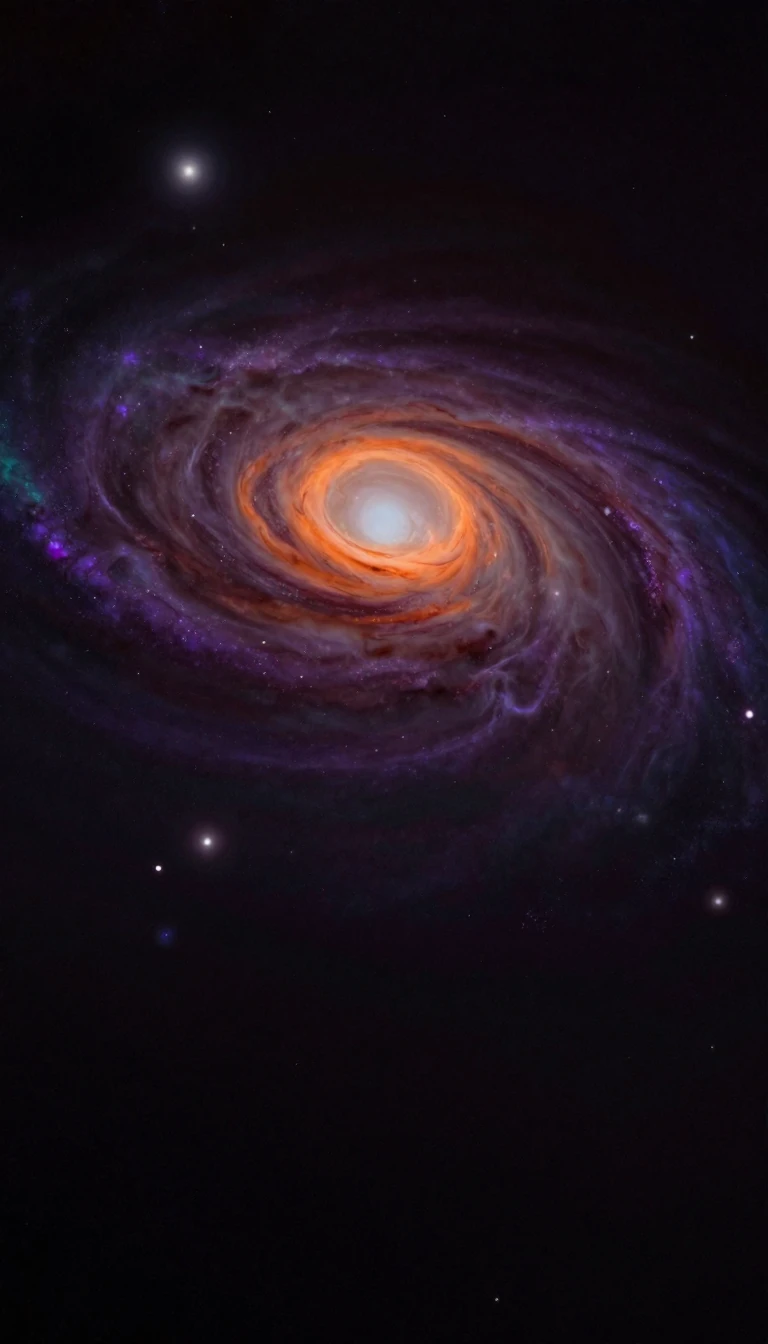
In short: For years, the Methuselah star posed a crisis for cosmology. Its estimated age suggested it was older than the universe itself. By refining its distance and chemical makeup, astronomers have finally reconciled this celestial relic with the timeline of the Big Bang.
Cataloged as HD 140283, this star is located approximately 190.1 light-years away in the constellation Libra. During more than 100 years, people identified it as a high-speed guest, travelling at 800,000 miles per hour, similar to a rocket. Its trajectory suggests it was captured by the Milky Way from a primeval dwarf galaxy that was gravitationally shredded and absorbed by our galaxy more than 12 billion years ago.
The star's age was a point of contention because early 2000s observations suggested it was 16 billion years old—exceeding the universe's age of about 13.8 billion years. To resolve this, astronomers used the Hubble Space Telescope to perform trigonometric parallax. By measuring the star's apparent shift from two different points in Earth's orbit, they established a precise distance. This allowed for a more accurate calculation of the star's intrinsic brightness, a prerequisite for determining its age.
Refined models now place the star's age at roughly 14.5 billion years, with an uncertainty of 800 million years. This figure is compatible with the universe's age as determined by the expansion of space and the cosmic microwave background. The star is a 'population II' object, possessing only 1/250th the heavy element content of our Sun. This extreme metal deficiency indicates it formed in the early universe before it was heavily polluted by the nucleosynthesis of subsequent generations of stars.
Recent updates to stellar physics have further influenced these calculations. New theories suggest that helium diffuses deeper into the star's core, leaving less hydrogen for fusion and causing it to burn fuel faster, which lowers its estimated age. Additionally, its high oxygen-to-iron ratio suggests it formed at a specific window in cosmic history when oxygen abundance was increasing.
Opens the Intellect+ feed with this card first. Swipe up for the next one.
Sources
- Summary by Intellect · source: Hubble Finds Birth Certificate of Oldest Known Star - NASA Science
- Also: HD 140283
To cite this card, link to https://intellectplus.co.uk/app/space-hd-140283.
How we source, check and correct cards: Editorial standards.
General information, not professional advice. Spotted an error? Flag the card or see corrections and complaints.
Intellect Plus is a visual educational discovery platform for exploring fascinating facts and ideas. Brain Food, Not Brain Rot. What is Intellect Plus?
Related
More in Celestial sphere · More in Space · Latest · A–Z · All topics
