Horologium: The Southern Constellation That Immortalizes the Enlightenment's Obsession with Precision Timekeeping
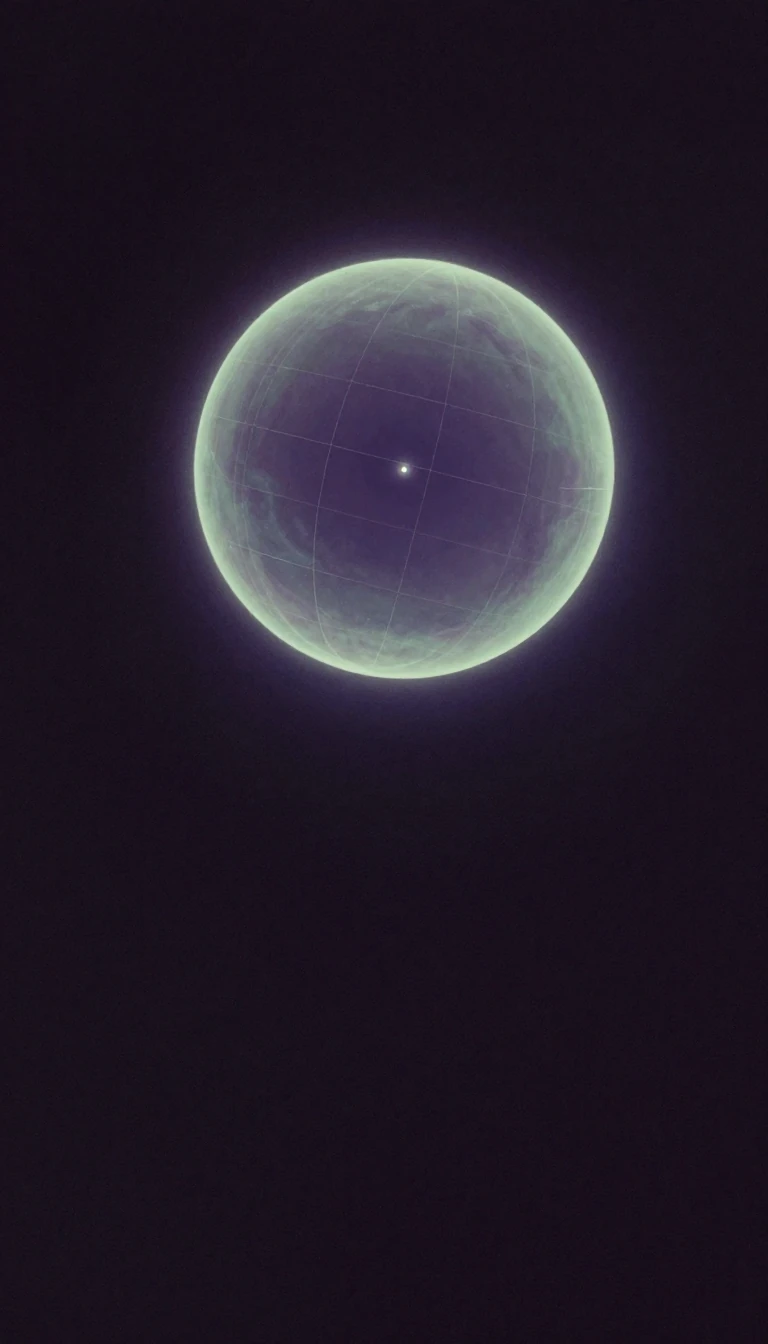
In short: In 1756, French astronomer Nicolas-Louis de Lacaille mapped the southern skies, populating them with symbols of scientific progress. Among his creations was Horologium, a faint constellation representing a pendulum clock. Though invisible from Europe, this celestial timekeeper spans 248.9 square degrees and hides profound secrets, from massive exoplanets to ancient galaxy mergers.
Nicolas-Louis de Lacaille devised fourteen new constellations during his two-year residency at the Cape of Good Hope. By naming them after scientific instruments, he sought to honor the Age of Enlightenment. Horologium, originally described as a device featuring a pendulum and a seconds hand, was officially redefined by the International Astronomical Union in 1922. It is now a designated region of the southern celestial sphere, bordered by constellations like Eridanus and Caelum, and visible in its entirety only to observers south of 23°N.
The constellation contains only one star brighter than magnitude 4: Alpha Horologii. This orange giant, located 115 light-years away, is 11 times the diameter of the Sun. The region is also home to R Horologii, a red giant Mira variable that exhibits one of the most extreme fluctuations in brightness visible to the naked eye, cycling between magnitudes 4.7 and 14.3 over roughly 13 months. Beyond individual stars, the region hosts complex systems like Gliese 1061, a red dwarf just 12 light-years away that harbors three planets, including one within its habitable zone.
Horologium serves as a gateway to deep-sky phenomena. It contains the globular cluster Arp-Madore 1, the most remote such cluster in the Milky Way at 402,000 light-years distant. Furthermore, the constellation overlaps with the Horologium-Reticulum Supercluster, a massive collection of over 20 Abell galaxy clusters. Within this cosmic neighborhood, the barred spiral galaxy NGC 1512 is currently undergoing a 400-million-year merger with the dwarf lenticular galaxy NGC 1510, illustrating the dynamic, violent processes occurring within this quiet patch of the southern sky.
Opens the Intellect+ feed with this card first. Swipe up for the next one.
Sources
- Summary by Intellect · source: Horologium (constellation)
To cite this card, link to https://intellectplus.co.uk/app/space-horologium-constellation.
How we source, check and correct cards: Editorial standards.
General information, not professional advice. Spotted an error? Flag the card or see corrections and complaints.
Intellect Plus is a visual educational discovery platform for exploring fascinating facts and ideas. Brain Food, Not Brain Rot. What is Intellect Plus?
Related
More in Celestial sphere · More in Space · Latest · A–Z · All topics
