HD 209458 b: The evaporating hot Jupiter that redefined our view of exoplanets
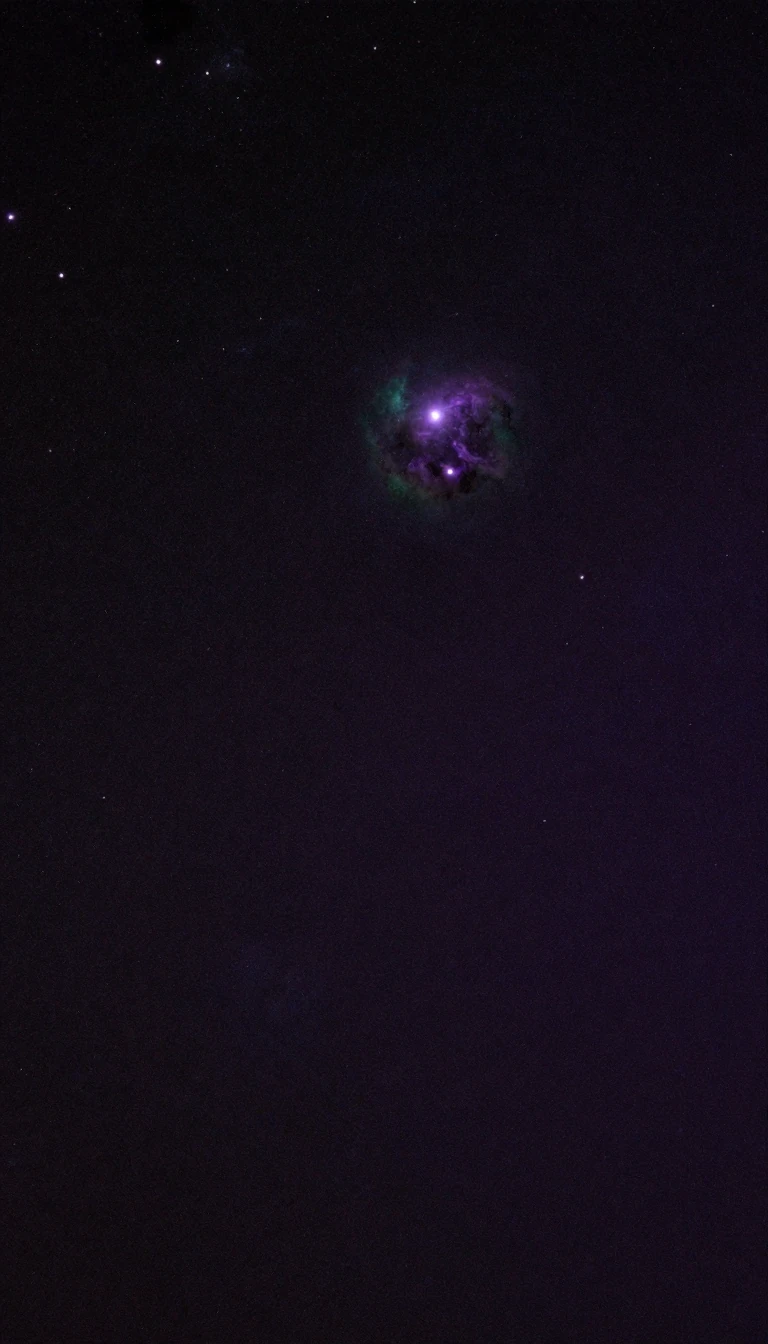
In short: Known informally as Osiris, this gas giant orbits its star in just 3.5 days. It was the first exoplanet ever observed transiting its host, the first to have its atmosphere measured, and the first to show evidence of a magnetic field. It is a laboratory for extreme planetary physics.
Located 157 light-years away in the constellation Pegasus, HD 209458 b is a hot Jupiter that has served as a cornerstone for exoplanetary research since its discovery in 1999. Its proximity to its host star—orbiting at just 0.047 AU—results in a surface temperature of at least 750 °C. This intense heat causes the planet to bloat, giving it a radius approximately 35% larger than Jupiter's, despite having only about 0.69 to 0.73 times the mass of our solar system's largest planet.
The planet is perhaps most famous for its evaporating atmosphere. Observations have revealed an enormous, ellipsoidal envelope of hydrogen, carbon, and oxygen streaming away from the planet like a tail. This 'hydrodynamic drag' strips away the planet's mass at a rate of 100 to 500 million kilograms per second. While it is unlikely to evaporate entirely, the planet may have lost up to 7% of its mass over its 5-billion-year lifetime. This process is thought to be common for planets orbiting Sun-like stars at distances under 0.1 AU.
Scientific understanding of HD 209458 b has evolved through a series of 'firsts.' It was the first exoplanet to have its orbital speed measured, its superstorm wind speeds calculated, and its atmosphere spectrally analyzed. However, the data remains complex and sometimes contradictory. Early reports of water vapor were later debated, and recent spectral analysis suggests a high carbon-to-oxygen ratio, leading some to propose it might be a 'carbon planet.' Whether it possesses a magnetic field—inferred in 2014—remains a subject of ongoing investigation, as does the exact composition of its patchy, high-altitude cloud deck.
The study of HD 209458 b highlights the rapid progression of astronomical technology. From the initial 1.7% dip in stellar brightness detected by ground-based teams in 1999 to the high-precision spectroscopy of the Very Large Telescope, each observation has forced theorists to refine their models. It remains a primary case study for how extreme radiation and tidal forces shape the evolution of gas giants in close proximity to their parent stars.
Opens the Intellect+ feed with this card first. Swipe up for the next one.
Sources
- Summary by Intellect · source: HD 209458 b
- Also: HD 209458 b - NASA Science
To cite this card, link to https://intellectplus.co.uk/app/space-hd-209458-b.
How we source, check and correct cards: Editorial standards.
General information, not professional advice. Spotted an error? Flag the card or see corrections and complaints.
Intellect Plus is a visual educational discovery platform for exploring fascinating facts and ideas. Brain Food, Not Brain Rot. What is Intellect Plus?
Related
More in Astronomical objects · More in Space · Latest · A–Z · All topics
