The Magellanic Clouds are two satellite galaxies dancing around our own Milky Way.
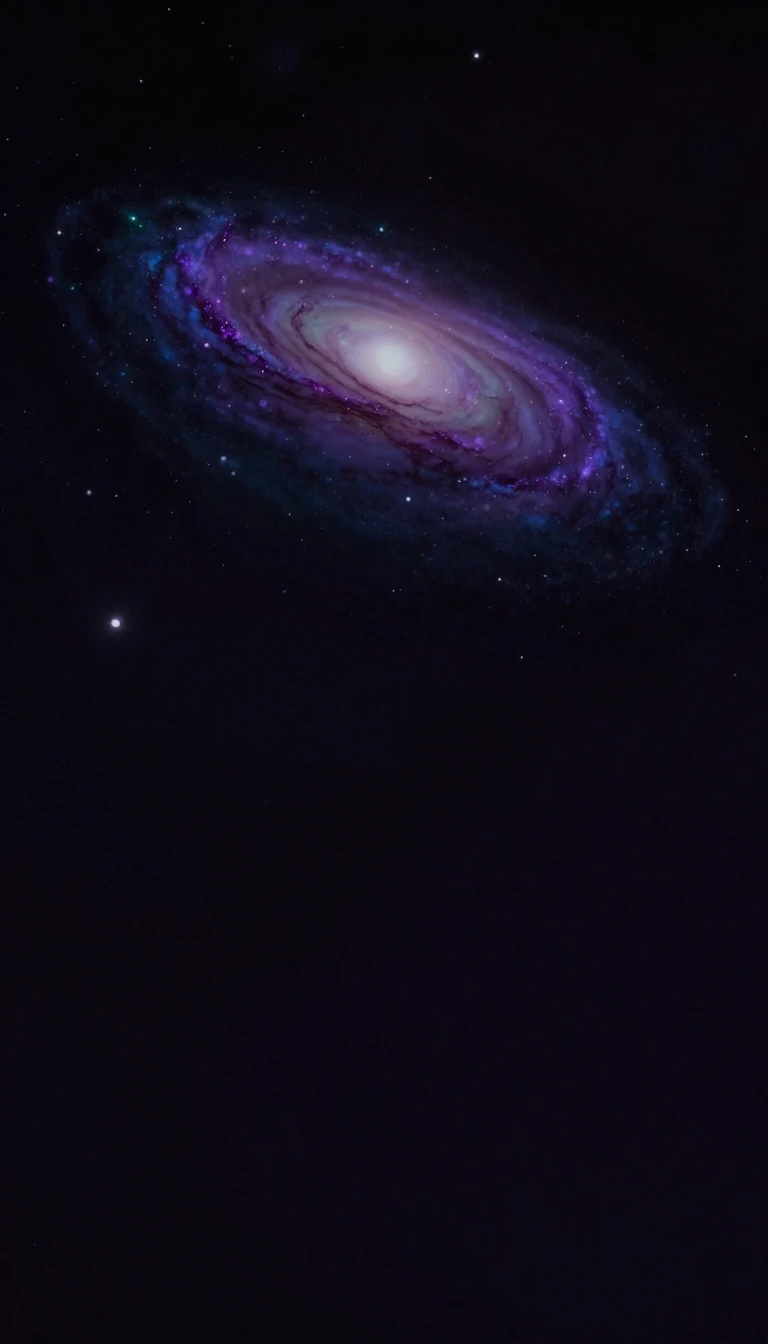
In short: Visible to the naked eye from the Southern Hemisphere, the Large and Small Magellanic Clouds appear as detached fragments of the Milky Way. These irregular dwarf galaxies are not merely passive neighbors; they are locked in a gravitational interaction that distorts their shapes and influences our own galaxy's outer disk.
Named for the Portuguese navigator Ferdinand Magellan, these galaxies were documented by his crew during the first circumnavigation of the globe between 1519 and 1522. While they appear as luminous patches in the southern sky, they are distinct, independent systems. The Large Magellanic Cloud (LMC) is roughly 160,000 light-years away, while the Small Magellanic Cloud (SMC) sits at a distance of approximately 200,000 light-years. For comparison, the Milky Way spans about 100,000 light-years across.
The LMC is a vibrant site of stellar activity, containing vast gas clouds that collapse to form new stars. This process illuminates the galaxy with brilliant nebulae, such as the Tarantula Nebula, which serves as a major stellar nursery in our cosmic vicinity. The LMC is approximately 70 percent larger in diameter than the SMC, measuring about 32,200 light-years compared to the SMC's 18,900 light-years. Both galaxies exhibit signs of a bar structure, leading some astronomers to classify them as Magellanic spiral galaxies.
These galaxies are currently undergoing significant tidal distortion due to their proximity to the Milky Way. Streams of neutral hydrogen connect the two clouds to each other and to our own galaxy, marking the physical evidence of their gravitational tug-of-war. This interaction is reciprocal; the gravity of the Magellanic Clouds has also distorted the outer regions of the Milky Way's galactic disk. While they have long been considered permanent satellites, some evidence suggests that their current close approach to our galaxy is a relatively rare event in their long orbital history.
Opens the Intellect+ feed with this card first. Swipe up for the next one.
Sources
- Summary by Intellect · source: Magellanic Cloud | Dwarf Galaxies, Star Clusters & Astronomy | Britannica
- Also: Magellanic Clouds
- Also: Large Magellanic Cloud - NASA Science
To cite this card, link to https://intellectplus.co.uk/app/space-magellanic-clouds.
How we source, check and correct cards: Editorial standards.
General information, not professional advice. Spotted an error? Flag the card or see corrections and complaints.
Intellect Plus is a visual educational discovery platform for exploring fascinating facts and ideas. Brain Food, Not Brain Rot. What is Intellect Plus?
Related
More in Astronomical objects · More in Space · Latest · A–Z · All topics
