Why Earth is the only planet in our solar system without a mythological name
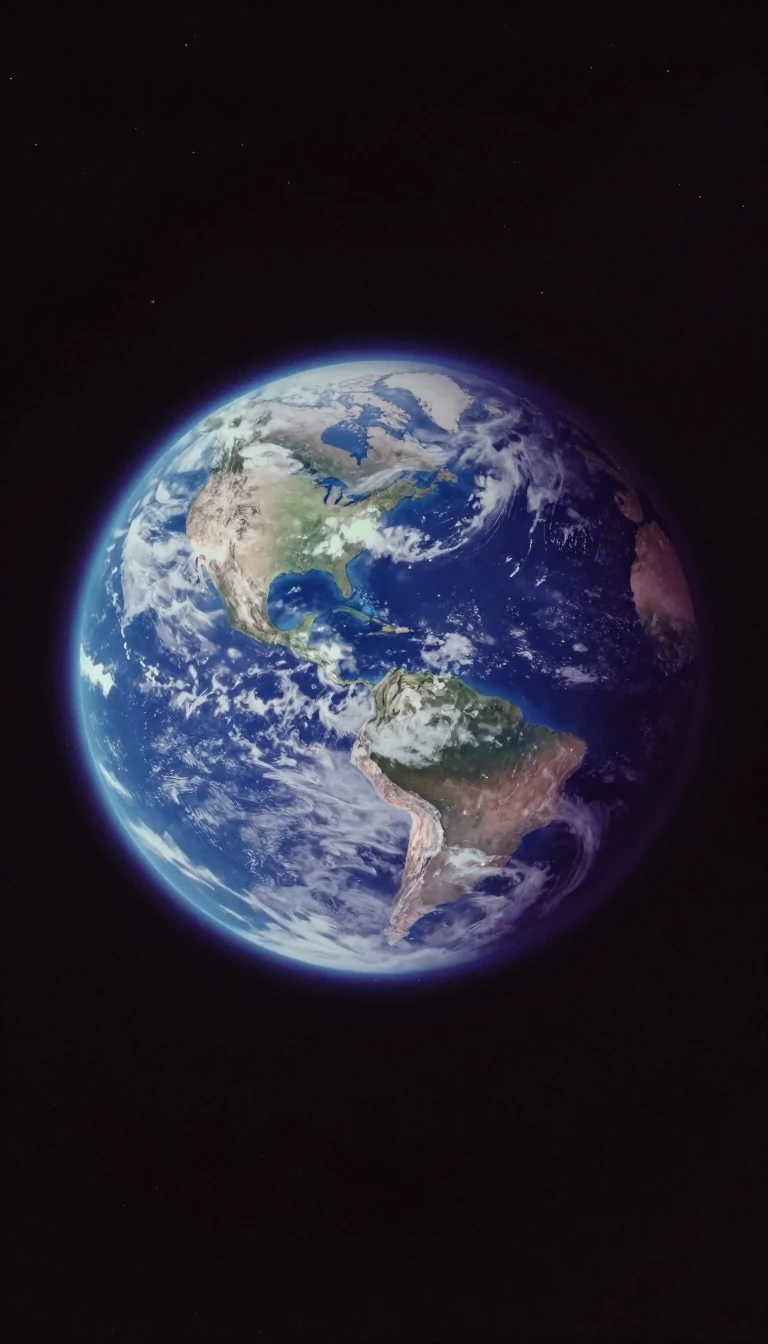
In short: While every other planet in our neighborhood bears the title of a Greek or Roman deity, Earth stands alone. Its name is a simple, thousand-year-old Germanic term for the ground beneath our feet. This linguistic outlier reflects our unique status as the only known cradle for life in the cosmos.
Positioned as the third world orbiting the Sun, Earth maintains an average distance of 93 million miles, a span defined as one astronomical unit. This placement is critical; it sits within a temperate zone that allows liquid water to persist on the surface, a feature that has sustained biological activity for roughly 3.8 billion years. Unlike the gas giants, our home is a terrestrial body composed of rock and metal, ranking as the fifth largest planet in the solar system.
Our planet's physical structure is a series of concentric layers, from a solid iron-nickel inner core reaching 9,800 degrees Fahrenheit to a viscous, caramel-like mantle and a thin, rocky crust. This interior, combined with a rapid rotation, generates a protective magnetic field. This magnetosphere shields the surface from solar wind, while our atmosphere—a mix of nitrogen and oxygen—filters harmful radiation and vaporizes incoming meteoroids. These systems, alongside a Moon that stabilizes our axial wobble, create a remarkably consistent climate.
From a cosmic perspective, Earth’s location is relative. Because the speed of light is constant, we occupy the center of our own observable universe, though the broader universe likely lacks a definitive center or edge. While we once viewed ourselves as the literal hub of existence, modern science places us within a vast, filament-like web of galaxies. Whether the universe is infinite or merely one part of a larger multiverse remains a subject of intense, often unfalsifiable, scientific debate.
Opens the Intellect+ feed with this card first. Swipe up for the next one.
Sources
- Summary by Intellect · source: NASA Science — Facts About Earth
- Also: Earth | Definition, Size, Composition, Temperature, Mass, & Facts | Britannica
- Also: Location of Earth
To cite this card, link to https://intellectplus.co.uk/app/space-location-of-earth.
How we source, check and correct cards: Editorial standards.
General information, not professional advice. Spotted an error? Flag the card or see corrections and complaints.
Intellect Plus is a visual educational discovery platform for exploring fascinating facts and ideas. Brain Food, Not Brain Rot. What is Intellect Plus?
Related
More in Astronomical objects · More in Space · Latest · A–Z · All topics
