Why did an Enlightenment astronomer place a microscope in the southern night sky?
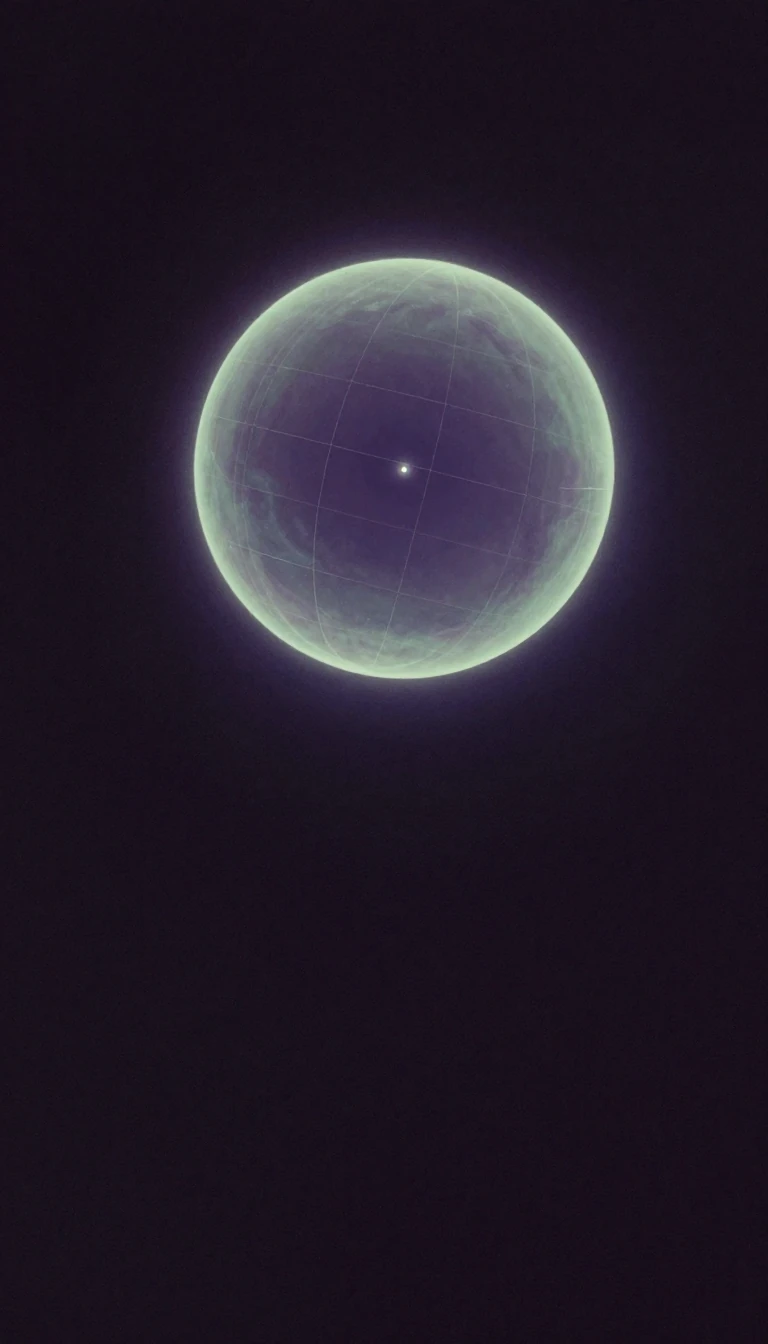
In short: In the mid-1700s, Nicolas-Louis de Lacaille mapped the southern heavens, populating them with symbols of scientific progress. Among these was Microscopium, a faint constellation representing the compound microscope. While often overlooked by amateur observers, this small patch of sky hides a complex history of stellar movement and cosmic voids.
Microscopium was introduced by the French astronomer Nicolas-Louis de Lacaille following his two-year expedition to the Cape of Good Hope, where he catalogued 10,000 stars. Between 1751 and 1752, he created fourteen new constellations to fill gaps in the southern celestial sphere, choosing scientific instruments to reflect the spirit of the Age of Enlightenment. By 1763, the name had been Latinized to its current form. The constellation occupies a region where Ptolemy once noted 'unformed' stars, though these were later omitted by Al-Sufi.
The constellation is notoriously faint, with its brightest stars reaching only fifth magnitude, making it difficult to spot without dark skies. Gamma Microscopii, a yellow giant, serves as the constellation's brightest point. Research suggests this star passed within 1.14 to 3.45 light-years of our Sun approximately 3.9 million years ago, a proximity that may have disturbed the Oort cloud. Other notable inhabitants include BO Microscopii, or 'Speedy Mic,' which rotates in just over nine hours, and the red dwarf Lacaille 8760, the brightest of its type in the sky.
Beyond individual stars, the region contains significant extragalactic structures, including the Microscopium Supercluster and the Microscopium Void, a sparse region of space. Despite astronomer Patrick Moore once dismissing the constellation as 'totally unremarkable,' it remains a subject of scientific interest. It hosts planetary systems, debris disks, and even a Type II Supernova, SN 2011ei, which was identified in the barred spiral galaxy NGC 6925 in July 2011. The constellation continues to be a point of study for its variable stars and its role in the Beta Pictoris moving group.
The constellation's official boundaries were established in 1930 by Belgian astronomer Eugène Delporte, defining a four-segment polygon. While it remains a challenge for novice observers, the area is rich in astronomical data, from the light curves of Mira variables to the complex gravitational interactions of Abell clusters. It serves as a reminder that even the most 'unremarkable' sections of the sky are teeming with dynamic, evolving systems.
Opens the Intellect+ feed with this card first. Swipe up for the next one.
Sources
- Summary by Intellect · source: Microscopium
To cite this card, link to https://intellectplus.co.uk/app/space-microscopium.
How we source, check and correct cards: Editorial standards.
General information, not professional advice. Spotted an error? Flag the card or see corrections and complaints.
Intellect Plus is a visual educational discovery platform for exploring fascinating facts and ideas. Brain Food, Not Brain Rot. What is Intellect Plus?
Related
More in Celestial sphere · More in Space · Latest · A–Z · All topics
