Is Saturn’s smallest major moon a frozen relic or a hidden ocean world?
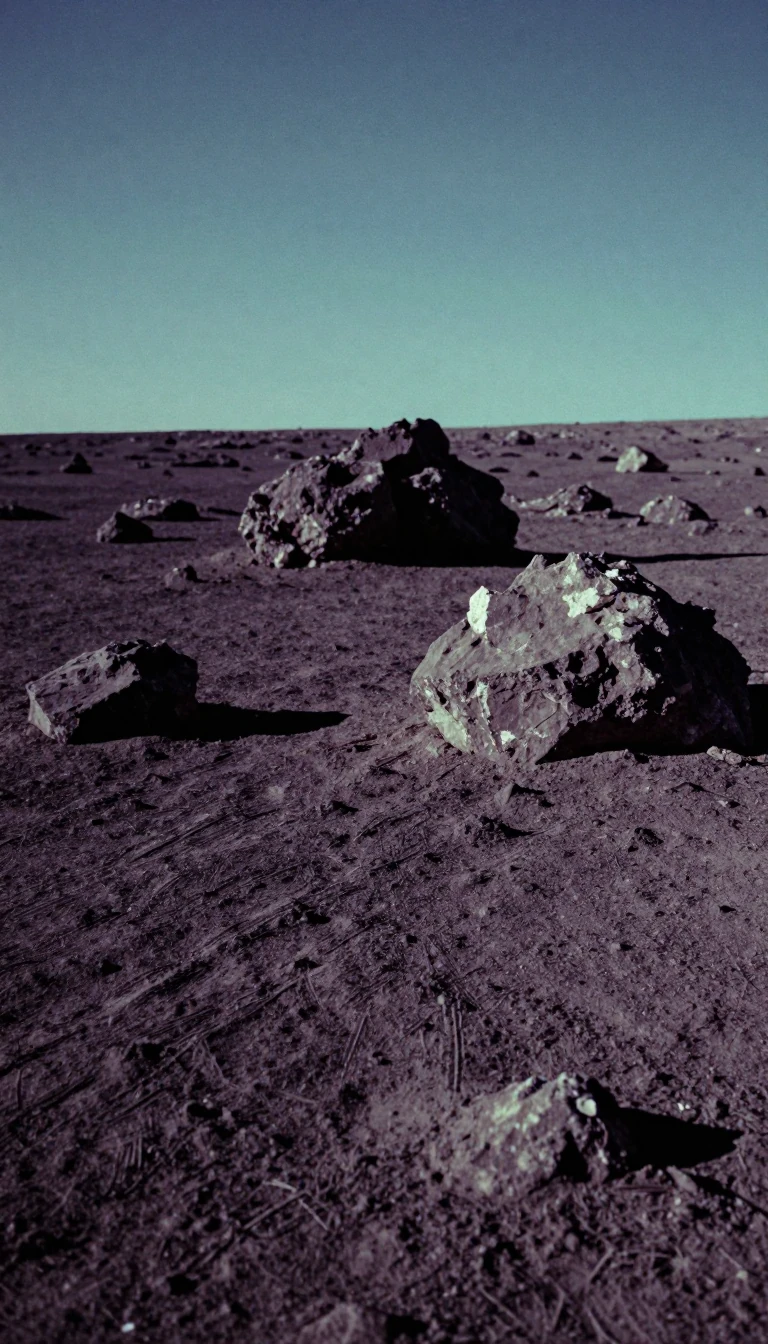
In short: Mimas looks like a scarred, icy relic of the early solar system, famously resembling the Death Star. Yet beneath its cratered, frozen exterior lies a surprising secret: a liquid water ocean. This tiny moon challenges our understanding of how tidal forces can sustain life-supporting environments in the deep outer reaches.
Discovered by William Herschel in 1789, Mimas is the innermost of Saturn’s major moons. It is a small, low-density body composed primarily of water ice, measuring about 397 kilometers in diameter. Its most iconic feature is the Herschel crater, a massive impact structure 130 kilometers wide that spans nearly one-third of the moon's diameter. The impact that created this crater was so violent that it likely nearly shattered the entire moon, leaving behind shock waves that disrupted the surface on the opposite side.
For years, Mimas was considered a geologically dead, frozen world. Unlike its neighbor Enceladus, which displays active geysers, Mimas appeared to be a static, crater-saturated sphere. This created a scientific paradox: Mimas orbits closer to Saturn and possesses a more eccentric orbit than Enceladus, which should theoretically generate more internal tidal heating. Yet, while Enceladus shows clear signs of internal activity, Mimas remained stubbornly frozen, leading to the 'Mimas Test'—a benchmark requiring any theory explaining Enceladus’s warmth to also account for Mimas’s apparent coldness.
Recent research has upended this view. By analyzing the moon's orbital motion, scientists have identified evidence of a subsurface ocean hidden beneath 20 to 30 kilometers of surface ice. Unlike other ocean worlds, Mimas shows no surface fracturing, suggesting this internal sea is remarkably young, having formed within the last 25 million years—and potentially as recently as 2 to 3 million years ago. This ocean is thought to be warmed by tidal interactions, likely triggered by a more eccentric orbit in the moon's past.
Mimas also exerts a profound influence on Saturn’s ring system. Through orbital resonance, it helps clear the Cassini Division, a prominent gap in the rings. Its 22.6-hour orbit is precisely half that of the moon Tethys, a resonance that ensures the two bodies always make their closest approach on the same side of Saturn. This intricate gravitational dance, alongside the moon's hidden ocean, reveals Mimas to be far more dynamic than its scarred, static appearance suggests.
Opens the Intellect+ feed with this card first. Swipe up for the next one.
Sources
- Summary by Intellect · source: Mimas | Definition, Features, & Facts | Britannica
- Also: Mimas
To cite this card, link to https://intellectplus.co.uk/app/space-mimas.
How we source, check and correct cards: Editorial standards.
General information, not professional advice. Spotted an error? Flag the card or see corrections and complaints.
Intellect Plus is a visual educational discovery platform for exploring fascinating facts and ideas. Brain Food, Not Brain Rot. What is Intellect Plus?
Related
More in Astronomical objects · More in Space · Latest · A–Z · All topics
