Are the moons of Mars captured asteroids or fragments of a shattered ancient world?
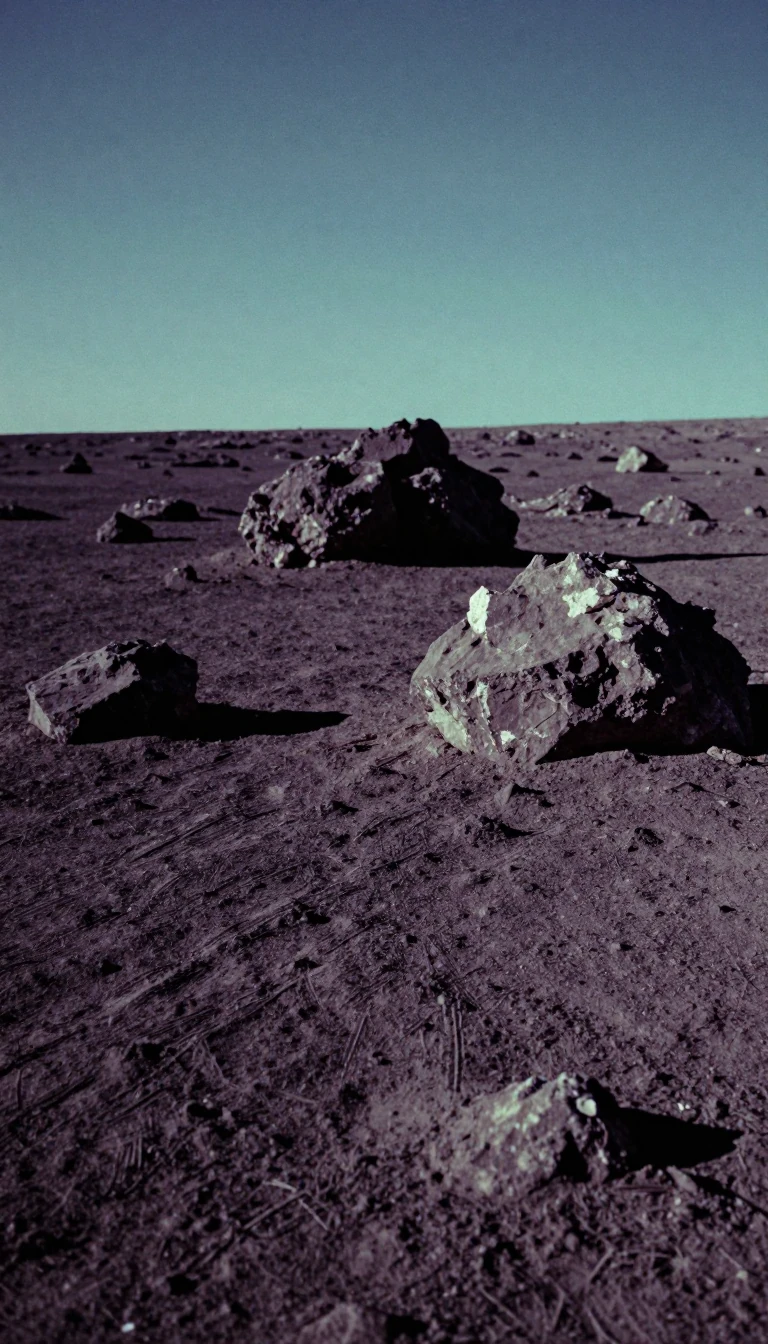
In short: Mars hosts two tiny, enigmatic moons: Phobos and Deimos. Discovered in 1877, these lumpy satellites defy simple classification. While some scientists argue they are captured asteroids, others point to their high porosity and unique mineralogy as evidence of a violent, ancient collision that once reshaped the Martian landscape itself.
The two moons of Mars, Phobos and Deimos, were discovered in August 1877 by American astronomer Asaph Hall. Despite their small size—Phobos measures 22.2 km across and Deimos just 12.6 km—they have captivated scientists for over a century. Their origins remain a subject of intense debate, with two primary competing theories: the capture of passing asteroids or the re-accretion of material ejected from Mars during a massive, ancient impact event.
Evidence for the impact hypothesis is compelling. Phobos is highly porous, with voids comprising 25 to 35 percent of its volume, a characteristic inconsistent with typical asteroidal composition. Furthermore, thermal infrared observations reveal the presence of phyllosilicates, minerals commonly found on the Martian surface but distinct from those in chondrite meteorites. Some researchers suggest a protoplanet one-third the mass of Mars collided with the planet, creating a debris ring that eventually coalesced into the moons we see today.
The fate of these moons is as dramatic as their potential origins. Phobos orbits so closely that tidal forces are pulling it inward at a rate of about 1.8 meters per century. Scientists estimate that within 50 million years, it will either collide with Mars or shatter to form a planetary ring. Conversely, Deimos is slowly drifting away. Future missions, such as the JAXA Martian Moons eXploration (MMX) mission, aim to return samples to Earth by 2029, potentially providing the definitive data needed to solve this celestial mystery.
Interestingly, these moons have a rich literary history. Jonathan Swift famously predicted the existence of two Martian moons in his 1726 novel Gulliver's Travels, over 150 years before their actual discovery. Today, craters on Phobos and Deimos bear the names of characters and locations from Swift's work, a nod to the strange intersection of scientific inquiry and imaginative fiction that has long surrounded these two small, orbiting companions.
Opens the Intellect+ feed with this card first. Swipe up for the next one.
Sources
- Summary by Intellect · source: Moons of Mars
- Also: Mars Moons - NASA Science
To cite this card, link to https://intellectplus.co.uk/app/space-moons-of-mars.
How we source, check and correct cards: Editorial standards.
General information, not professional advice. Spotted an error? Flag the card or see corrections and complaints.
Intellect Plus is a visual educational discovery platform for exploring fascinating facts and ideas. Brain Food, Not Brain Rot. What is Intellect Plus?
Related
More in Astronomical objects · More in Space · Latest · A–Z · All topics
