A single, violent impact may have blanketed the Martian moon Deimos in dust.
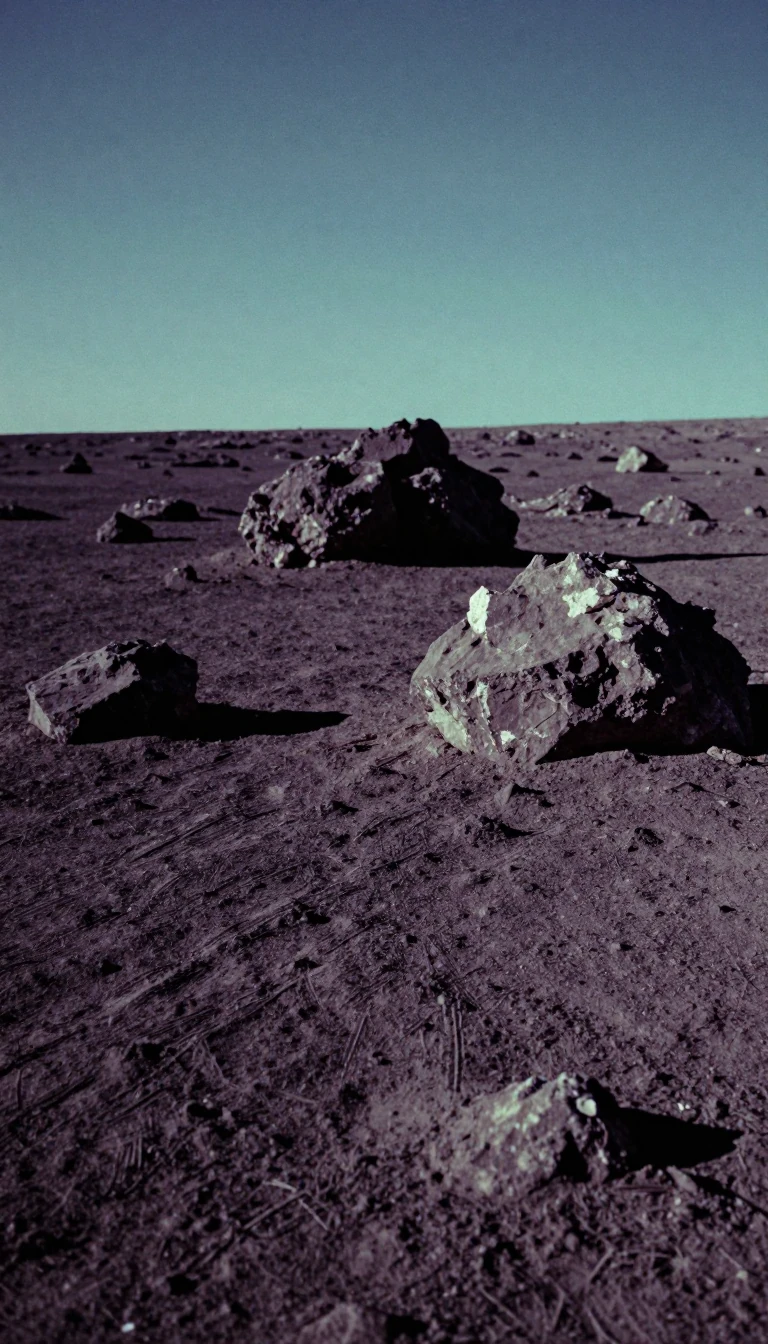
In short: Deimos is a lumpy, ellipsoidal moon of Mars, famously smoother than its companion, Phobos. While scientists long debated the origin of the thick, fine-grained debris covering its surface, new high-resolution simulations suggest a single, massive collision at the south pole created the moon's signature crater and its global regolith mantle.
Discovered by Asaph Hall in 1877, Deimos is a small, irregular body measuring roughly 16 by 12 by 10 kilometres. Its most striking feature is a remarkably smooth, muted surface, which hides older craters beneath a thick layer of regolith. For decades, researchers proposed various origins for this debris, including material exchanged with Mars or Phobos, or the slow accumulation of local impact ejecta. However, these models struggled to explain the global distribution and continuity of the dust blanket.
Recent research proposes a more dramatic origin: a subcatastrophic impact. Simulations indicate that a projectile between 300 and 360 metres in diameter, striking the moon at approximately 8.2 kilometres per second, could account for both the 10-kilometre-wide south-polar depression and the widespread debris mantle. This impact would have excavated material and redistributed it across the moon, creating the smooth plains and bright downslope streaks observed by missions like the United Arab Emirates’s Hope and the European Space Agency’s Hera.
The moon’s physical properties are central to this theory. With a bulk density of only 1.5 grams per cubic centimetre, Deimos is highly porous—about 40 to 50 percent. Its surface behaves like a rubble pile, with low slopes and a friction angle similar to small asteroids like Bennu or Ryugu. The impact model accounts for this by incorporating material cohesion of about 1 Pascal, which prevents excessive slope failure. This scenario is consistent with the moon's current orbit and spin, suggesting the collision shaped the moon without destabilizing it.
While the impact hypothesis provides a self-consistent explanation for the surface morphology, the broader history of Deimos remains a subject of active scientific debate. Whether it is a captured asteroid perturbed by Jupiter or a fragment of a larger, shattered progenitor, its evolution remains a complex puzzle. By resolving the topography at a 100-metre scale, modern datasets continue to refine our understanding of how this tiny, dark moon evolved into the world we see today.
Opens the Intellect+ feed with this card first. Swipe up for the next one.
Sources
- Summary by Intellect · source: Deimos’s shape and geology explained by a subcatastrophic impact - Nature Astronomy
- Also: Deimos | Moon, Mars, God of War, Meaning, Greek Mythology, Satellite, Orbit, Size, Gravity, Composition, & Facts | Britannica
- Also: Deimos (moon)
To cite this card, link to https://intellectplus.co.uk/app/space-deimos-moon.
How we source, check and correct cards: Editorial standards.
General information, not professional advice. Spotted an error? Flag the card or see corrections and complaints.
Intellect Plus is a visual educational discovery platform for exploring fascinating facts and ideas. Brain Food, Not Brain Rot. What is Intellect Plus?
Related
More in Astronomical objects · More in Space · Latest · A–Z · All topics
