Why astronomers once suspected the Omega Nebula was changing its shape before our eyes
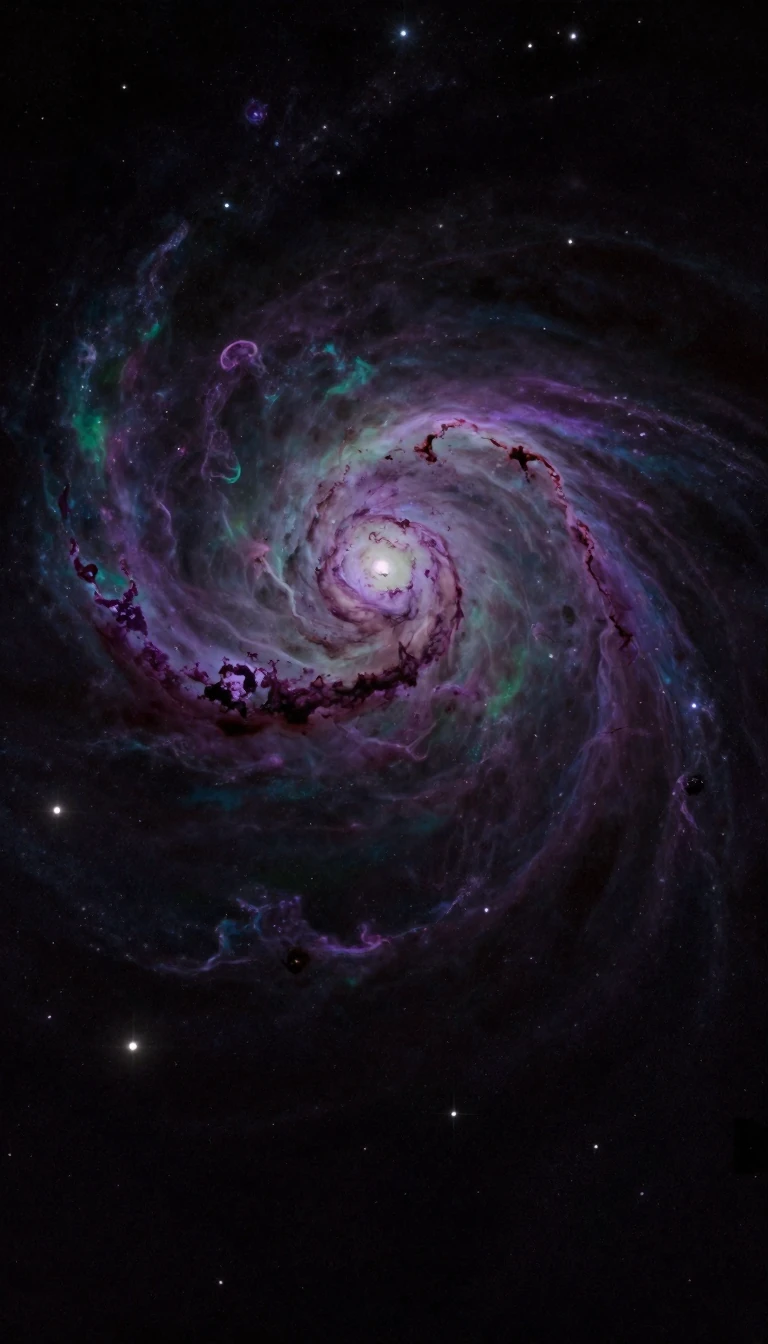
In short: Located 5,000 to 6,000 light-years away, the Omega Nebula is a massive star-forming region in Sagittarius. In the 19th century, observers like John Herschel noted discrepancies in their sketches, leading to intense debates over whether the nebula was physically evolving or if the observations were simply flawed.
The Omega Nebula, also catalogued as M17 or NGC 6618, is one of the most luminous and massive star-forming regions in our galaxy. Discovered by Philippe Loys de Chéseaux in 1745 and later catalogued by Charles Messier in 1764, it sits within the rich starfields of Sagittarius. Spanning roughly 15 light-years, the nebula is part of a larger cloud of interstellar matter estimated at 40 light-years in diameter with a mass of 30,000 solar masses. Its local geometry mirrors that of the Orion Nebula, though it is viewed edge-on.
In the 1830s and 1840s, the nebula became a subject of scientific controversy. John Herschel, who made detailed sketches starting in 1833, noted that the nebula resembled a distorted Greek capital omega. By 1847, he suspected that the nebula’s brightness had changed over time, as certain nebulous diffusions appeared less conspicuous in his later drawings. However, these claims were contested by other observers, including Mr. Mason and Johann von Lamont, whose own observations suggested the nebula remained stable. The debate highlighted the difficulty of accurately capturing such complex celestial structures with the technology of the era.
Modern astronomy has since clarified the nebula's nature. Embedded within the gas is the open cluster NGC 6618, a collection of hot, young stars that cause the nebula to shine. This cluster is remarkably young, at only 1 million years old, and contains hundreds of stars, including nine of spectral type O. Recent data from the Stratospheric Observatory for Infrared Astronomy (SOFIA) has provided a clearer picture, revealing that the nebula's distinctive shape likely results from separate parts forming independently. Infrared imaging has even identified nine previously unseen protostars, further deepening our understanding of this dynamic stellar nursery.
Opens the Intellect+ feed with this card first. Swipe up for the next one.
Sources
- Summary by Intellect · source: Omega Nebula
To cite this card, link to https://intellectplus.co.uk/app/space-omega-nebula.
How we source, check and correct cards: Editorial standards.
General information, not professional advice. Spotted an error? Flag the card or see corrections and complaints.
Intellect Plus is a visual educational discovery platform for exploring fascinating facts and ideas. Brain Food, Not Brain Rot. What is Intellect Plus?
Related
More in Astronomical objects · More in Space · Latest · A–Z · All topics
