A newly discovered object at the solar system's edge challenges the Planet Nine hypothesis
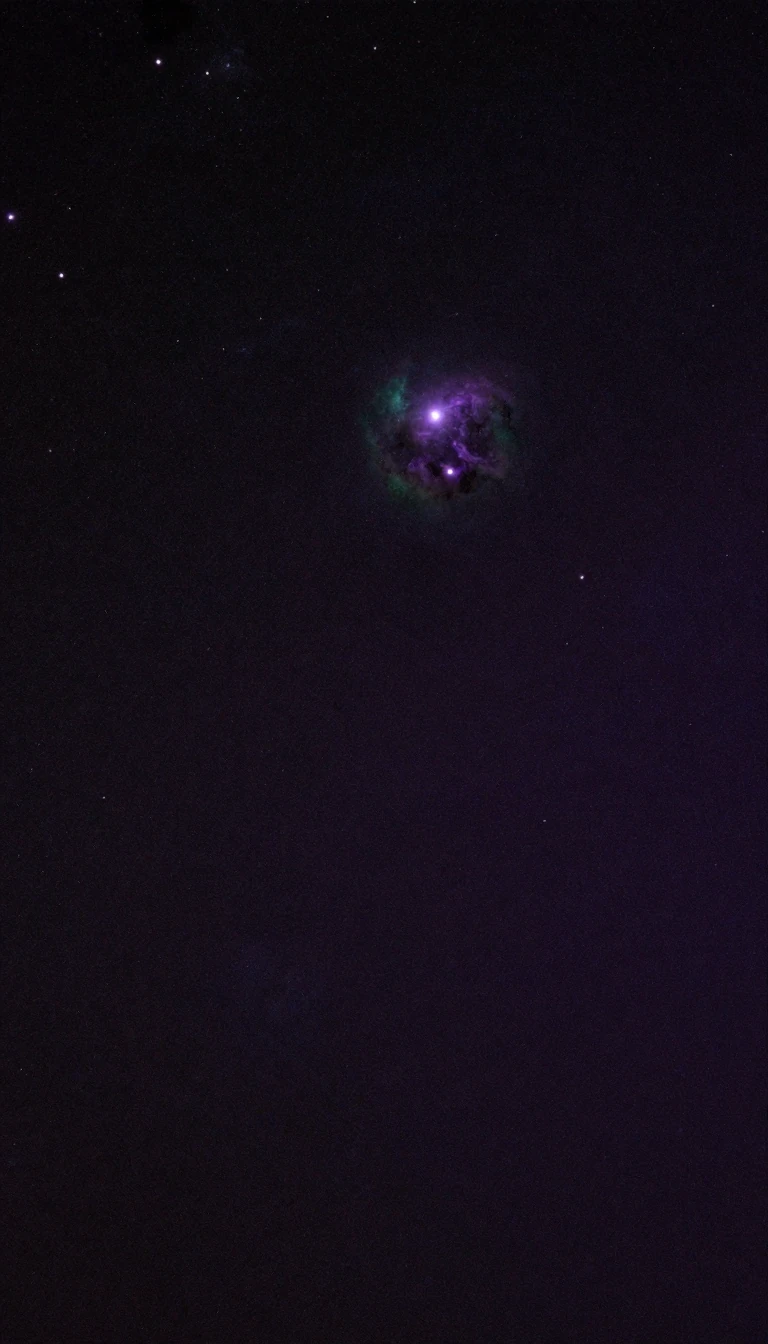
In short: Astronomers have identified 2017 OF201, a massive trans-Neptunian object lurking far beyond Neptune. Its unusual, extreme orbit and position suggest that the outer reaches of our solar system are far less empty than previously believed, potentially undermining the theory that a hidden Planet Nine is shepherding distant icy bodies.
The discovery of 2017 OF201, led by Sihao Cheng of the Institute for Advanced Study, marks a significant shift in our understanding of the outer solar system. Identified using archival data from the Victor M. Blanco and Canada-France-Hawaii telescopes, this object follows an extreme trajectory that takes approximately 25,000 years to complete. Its aphelion reaches more than 1,600 times the distance of Earth's orbit, while its perihelion sits at 44.5 times that distance, mirroring Pluto's proximity to the Sun.
Researchers estimate the object has a diameter of 700 km, potentially qualifying it as a dwarf planet. Its existence is particularly notable because it deviates from the orbital clustering patterns often cited as evidence for Planet Nine—a hypothetical massive world thought to be gravitationally influencing distant objects. By existing as an outlier, 2017 OF201 complicates the case for such a planet, suggesting that the outer solar system's architecture may be more complex than simple gravitational shepherding implies.
The team, which included Jiaxuan Li and Eritas Yang, posits that 2017 OF201 likely migrated to its current position through gravitational interactions with giant planets, possibly being ejected toward the Oort cloud before returning. Because the object is only detectable for 1% of its orbital period, its discovery implies that roughly one hundred similar bodies may remain hidden in the darkness. This finding highlights the power of open science, as the discovery was made using publicly available archival data rather than exclusive access to the world's largest telescopes.
Opens the Intellect+ feed with this card first. Swipe up for the next one.
Sources
- Summary by Intellect · source: Astronomers uncover a hidden world on the solar system’s edge
- Also: Planets beyond Neptune
To cite this card, link to https://intellectplus.co.uk/app/space-planets-beyond-neptune.
How we source, check and correct cards: Editorial standards.
General information, not professional advice. Spotted an error? Flag the card or see corrections and complaints.
Intellect Plus is a visual educational discovery platform for exploring fascinating facts and ideas. Brain Food, Not Brain Rot. What is Intellect Plus?
Related
More in Astronomical objects · More in Space · Latest · A–Z · All topics
