Pollux is a giant star with a surprisingly weak magnetic field and a planet.
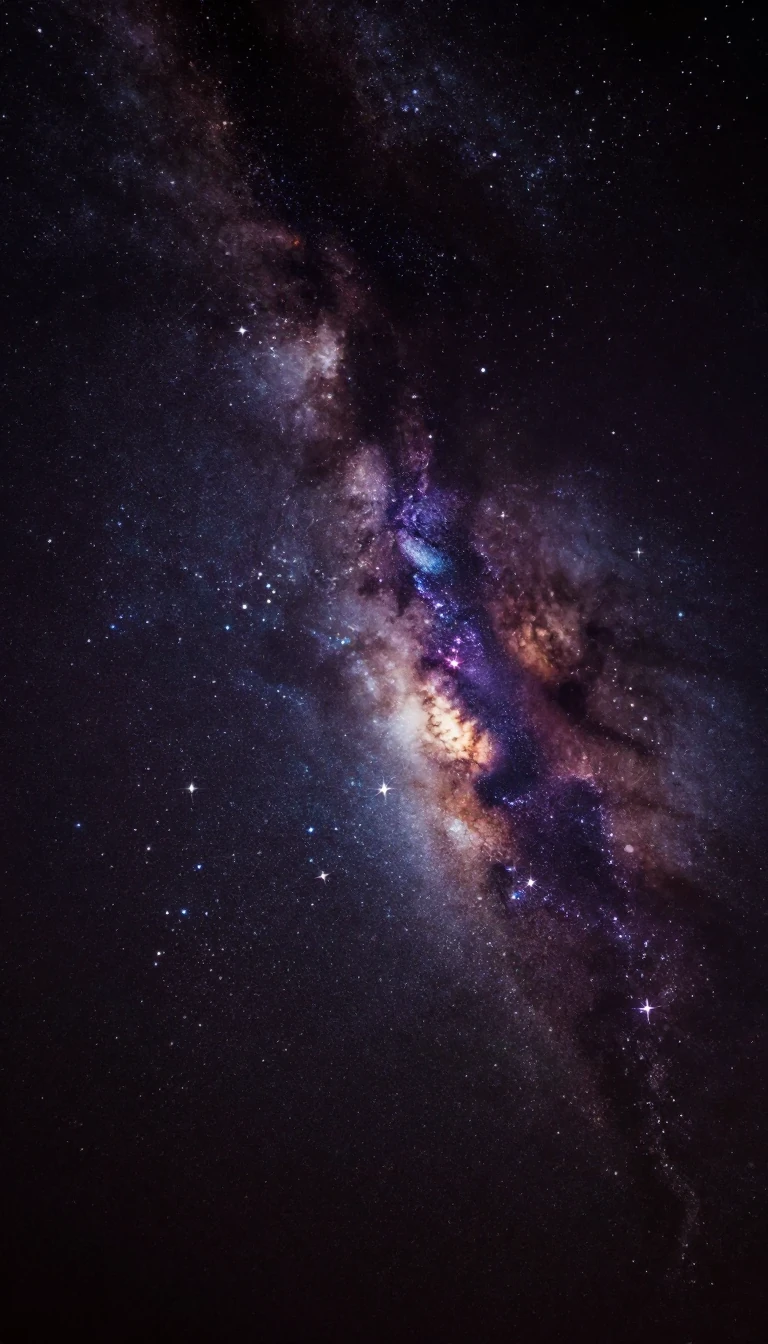
In short: The brightest star in Gemini, Pollux, is a yellow-orange giant located 34 light-years away. While it is nearly twice the mass of our sun and nine times wider, it possesses one of the weakest magnetic fields ever detected on a star, alongside a confirmed, massive exoplanet named Thestias.
Pollux, designated Beta Geminorum, is the 17th-brightest star in the night sky. Despite its name, it is actually the brightest star in the Gemini constellation, outshining its mythological twin, Castor. While the two appear as a pair in the sky, they are physically unrelated; Castor is a complex sextuple system, whereas Pollux is a single, evolved giant star. At approximately 725 million years old, Pollux has already exhausted the hydrogen at its core and left the main sequence, eventually destined to become a white dwarf.
The star is notable for its unusually low magnetic activity. In 2009, astronomers confirmed its surface magnetic field strength is less than 1 gauss, making it one of the weakest fields ever measured on a star. This is significantly lower than the sun's 10 gauss field. Some researchers suggest this weak field implies Pollux may have once been an Ap star with a much stronger magnetic signature, though the exact history of its metallicity remains a subject of scientific uncertainty.
In 2006, astronomers confirmed the existence of an exoplanet orbiting Pollux, now officially named Thestias. Detected via the radial velocity method, the planet is at least 2.3 times the mass of Jupiter and completes an orbit every 590 days. While its discovery is widely accepted, some debate persists; critics note that the radial velocity variations used to identify the planet could potentially be attributed to the star's own internal magnetic activity rather than a planetary companion.
The names associated with the system are deeply rooted in mythology. In Greek tradition, the twins Castor and Pollux were half brothers born from a single egg after Zeus visited Leda in the form of a swan. The exoplanet's name, Thestias, was selected through a 2015 International Astronomical Union competition, honoring the patronym of Leda, the mother of the twins. This celestial pairing serves as an enduring representation of the bond between the mythological brothers.
Opens the Intellect+ feed with this card first. Swipe up for the next one.
Sources
- Summary by Intellect · source: Pollux: The Nearby Star With a Planet
- Also: Pollux (star)
To cite this card, link to https://intellectplus.co.uk/app/space-pollux-star.
How we source, check and correct cards: Editorial standards.
General information, not professional advice. Spotted an error? Flag the card or see corrections and complaints.
Intellect Plus is a visual educational discovery platform for exploring fascinating facts and ideas. Brain Food, Not Brain Rot. What is Intellect Plus?
Related
More in Astronomical objects · More in Space · Latest · A–Z · All topics
