The terminator is the invisible, moving boundary between day and night on any planet.
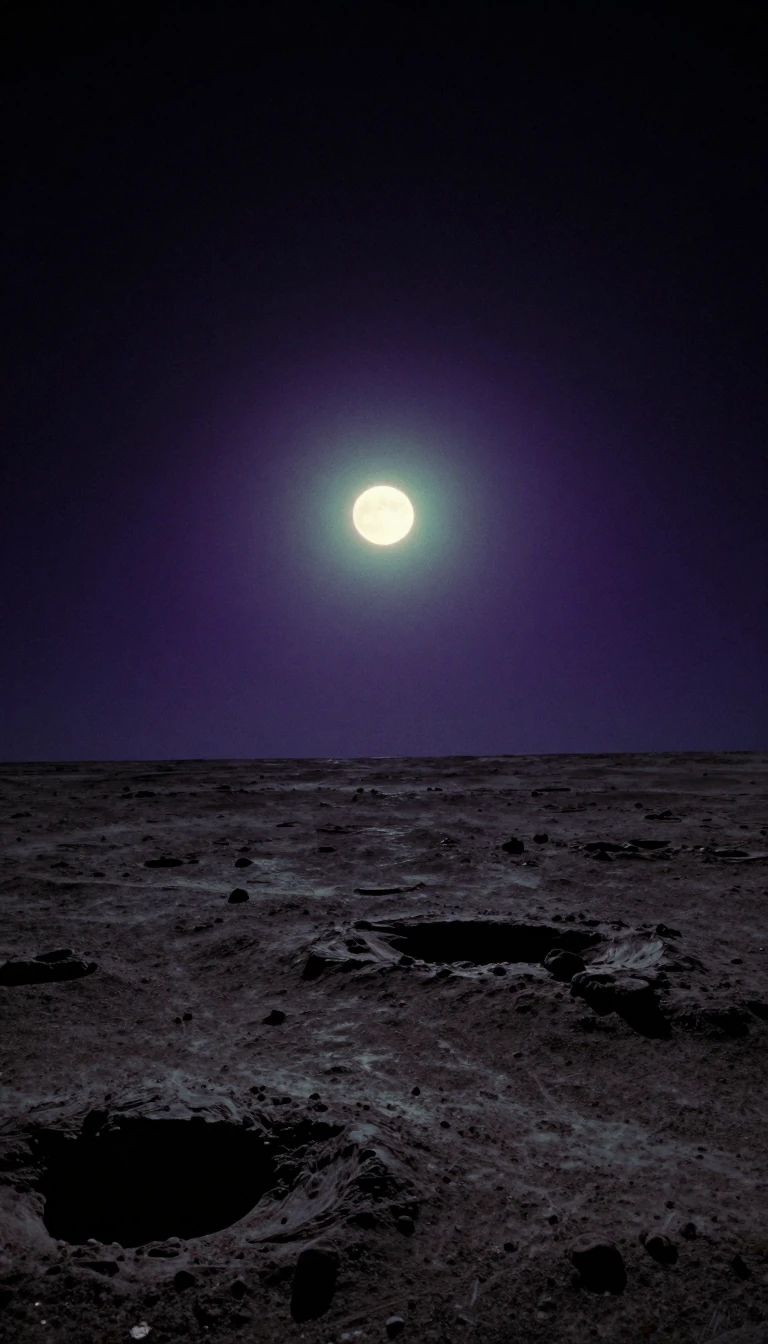
In short: This shifting line, where the sun is tangent to a planetary surface, dictates everything from radio signals to satellite battery life. On Earth, it races at supersonic speeds at the equator, while on the Moon, it moves at the pace of a human jog, revealing hidden craters through elongated shadows.
The terminator, or twilight zone, is the geometric locus where the sun's rays graze a planetary body. On Earth, this circle divides the globe into day and night, constantly shifting due to the planet's rotation and orbital tilt. While the terminator moves at roughly 463 metres per second at the equator, its velocity drops toward the poles. This speed is so extreme that only supersonic aircraft can outrun it at the equator, though slower travel suffices at higher latitudes near the equinoxes.
Beyond mere geography, the terminator creates unique physical conditions. In the ionosphere, the rapid disappearance of the D layer on the dark side creates the 'grey line'—a temporary state that amateur radio operators exploit for long-distance, antipodal communication. Similarly, satellites in dawn-dusk, Sun-synchronous orbits stay perpetually illuminated by the sun, avoiding eclipses to extend battery life and provide stable environments for sensitive sensors.
The lunar terminator offers a different perspective. Because the Moon rotates much more slowly than Earth, its terminator moves at a leisurely 15.4 kilometres per hour. This slow progression is a boon for astronomers; the low angle of sunlight casts long, dramatic shadows across craters, making geological features far easier to map and study. Observers on Earth often experience the 'lunar terminator illusion,' where the perceived direction of sunlight seems to defy the actual position of the Sun, a cognitive error stemming from our intuition for planar geometry.
Terminators also serve as vital diagnostic tools for planetary science. The sharpness of the line reveals the presence of an atmosphere, as light scattering by suspended particles creates a fuzzier boundary and extended twilight. By observing which mountain peaks remain illuminated while their bases sit in shadow, researchers can precisely map topography. Whether on Earth or the Moon, this transition zone is far more than a simple line; it is a dynamic frontier of light, shadow, and atmospheric physics.
Opens the Intellect+ feed with this card first. Swipe up for the next one.
Sources
- Summary by Intellect · source: Terminator (solar)
To cite this card, link to https://intellectplus.co.uk/app/space-terminator-solar.
How we source, check and correct cards: Editorial standards.
General information, not professional advice. Spotted an error? Flag the card or see corrections and complaints.
Intellect Plus is a visual educational discovery platform for exploring fascinating facts and ideas. Brain Food, Not Brain Rot. What is Intellect Plus?
Related
More in Celestial mechanics · More in Space · Latest · A–Z · All topics
