Why the sun appears to set, and why its colors are never the same
In short: Sunset is not just the sun disappearing; it is a complex interplay of atmospheric physics, planetary rotation, and optical illusions. While we perceive a sinking orb, we are actually watching light struggle through a thickening veil of air, creating a daily spectacle that varies based on your exact location.
Astronomically, a sunset is the moment the upper limb of the sun dips below the horizon. However, this is a geometric deception. Because Earth’s atmosphere refracts light, the sun appears higher than it truly is; by the time you observe the sun touching the horizon, the solar disk has already geometrically descended one full diameter below it. This refraction also distorts the sun's shape, making it appear wider than it is high, while the moon illusion makes the disk seem larger than it does at its zenith.
The vibrant reds and oranges we associate with dusk are the result of Rayleigh scattering. As sunlight travels through a longer path of atmosphere at sunset, shorter wavelengths like blue and green are scattered away by air molecules, leaving only the longer-wavelength reds and oranges to reach our eyes. This effect is often amplified by particles in the air; evening sunsets are frequently more brilliant than sunrises because the air has accumulated more dust and pollutants throughout the day. Volcanic eruptions, such as those of Krakatoa in 1883 or Mount Pinatubo in 1991, can inject sulfuric acid droplets into the stratosphere, creating dramatic, lingering afterglows.
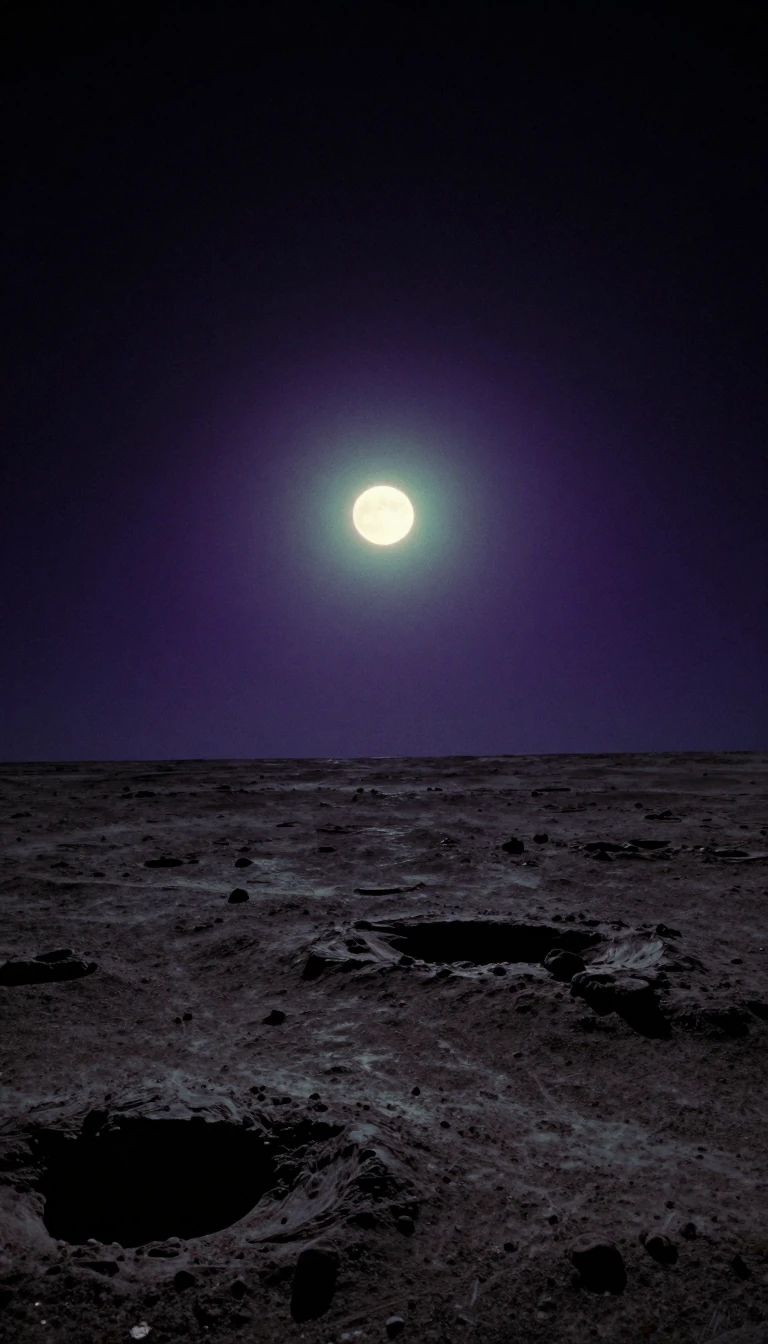
The timing and location of these events are governed by Earth’s axial tilt and elliptical orbit. Because the planet moves at varying speeds, the earliest and latest sunsets do not align perfectly with the solstices. Furthermore, the experience is entirely different on other worlds. On Mars, where the atmosphere is thin and filled with red dust, sunsets are dominated by Mie scattering, which produces blue hues rather than red. On the Moon, the lack of an atmosphere means there is no gradual twilight, and the sunset is a stark, prolonged transition. These celestial mechanics have deeply influenced human culture, with many languages deriving their words for 'east' and 'west' directly from the sun's daily path, and several calendars marking the start of a new day at sunset.
Opens the Intellect+ feed with this card first. Swipe up for the next one.
Sources
- Summary by Intellect · source: Sunset
To cite this card, link to https://intellectplus.co.uk/app/space-sunset.
How we source, check and correct cards: Editorial standards.
General information, not professional advice. Spotted an error? Flag the card or see corrections and complaints.
Intellect Plus is a visual educational discovery platform for exploring fascinating facts and ideas. Brain Food, Not Brain Rot. What is Intellect Plus?
Related
More in Celestial mechanics · More in Space · Latest · A–Z · All topics
