How astronomers track the chaotic, dusty transformation of a star from birth to maturity
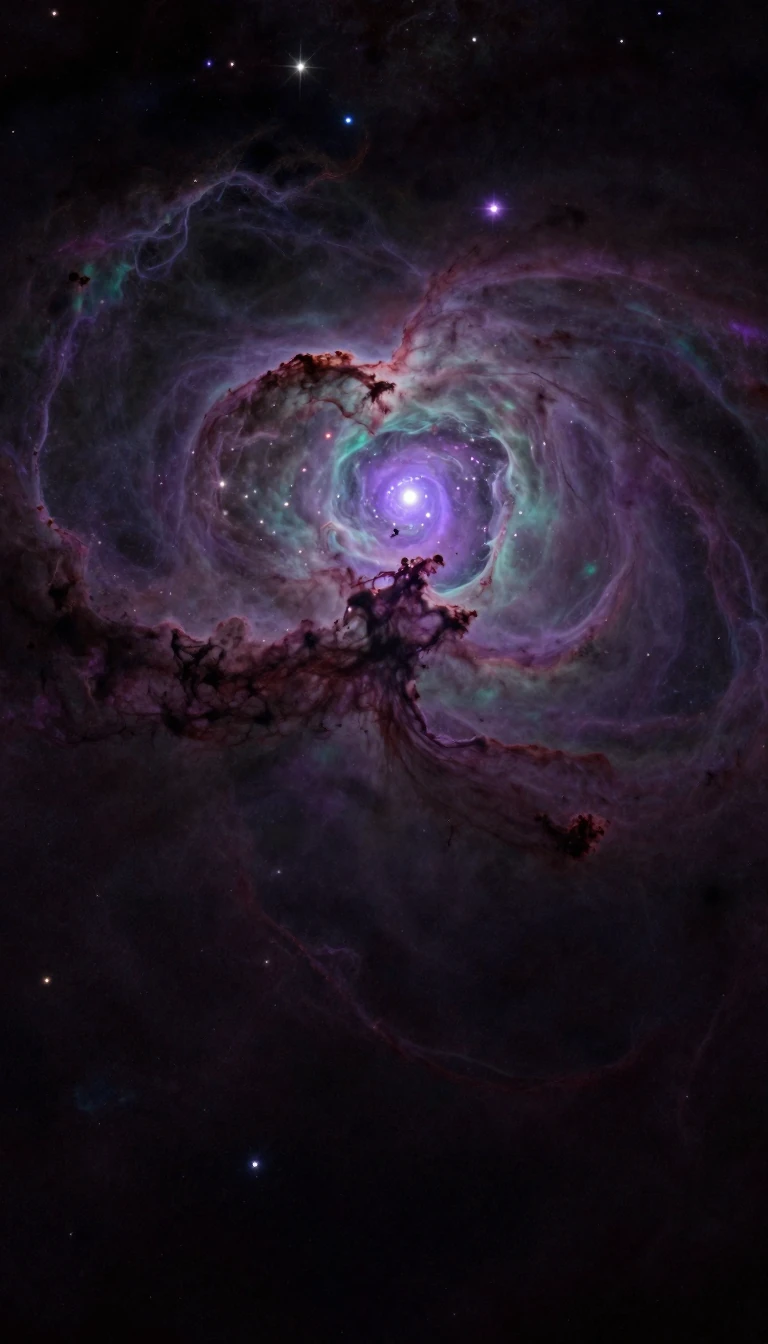
In short: A young stellar object is not just a star in the making; it is a complex, evolving system. By measuring the infrared light radiating from their surrounding disks, scientists can map the transition from hidden, dust-shrouded protostars to the visible, mature stars that eventually populate our galaxy.
The life cycle of a star begins with the accumulation of material falling into a protostar from a surrounding disk or envelope. Because this material is significantly cooler than the protostar itself, it emits radiation at longer infrared wavelengths. As this disk material is gradually depleted over time, the infrared excess diminishes, providing astronomers with a reliable clock to track the star's evolutionary progress.
In 1987, Lada introduced a classification scheme based on the slope of the spectral energy distribution in the mid-infrared. This system categorizes objects into stages, with Class 0 representing the youngest, most deeply embedded sources that exhibit strong submillimeter emission but remain faint at shorter wavelengths. As these objects evolve, they transition through Class I and eventually emerge on the stellar birthline as pre-main-sequence stars. Later stages, such as Class II and Class III, reflect the gradual loss of the circumstellar disk, corresponding to classical and weak-line T Tauri stars respectively.
This evolutionary sequence is not merely a theoretical construct; it is supported by the physical phenomena associated with these objects. Young stellar objects are frequently linked to high-energy events, including bipolar outflows, powerful jets, disk winds, and the formation of Herbig–Haro objects. Furthermore, these stars are categorized by their mass, ranging from massive stellar objects to intermediate-mass stars and brown dwarfs. By analyzing the spectral index across the 2.2 to 20 micrometer range, researchers can determine where a specific object sits in its development, revealing the intricate processes that govern the birth of suns.
While the classification schema is widely accepted as a rough evolutionary sequence, it remains a subject of ongoing study. The transition from a dust-enshrouded protostar to an optically visible star involves complex interactions within the circumstellar environment. Understanding these stages is essential for grasping how planetary systems might form within these disks, marking the critical bridge between the collapse of interstellar gas and the stable, light-emitting stars we observe in the night sky today.
Opens the Intellect+ feed with this card first. Swipe up for the next one.
Sources
- Summary by Intellect · source: Young stellar object
To cite this card, link to https://intellectplus.co.uk/app/space-young-stellar-object.
How we source, check and correct cards: Editorial standards.
General information, not professional advice. Spotted an error? Flag the card or see corrections and complaints.
Intellect Plus is a visual educational discovery platform for exploring fascinating facts and ideas. Brain Food, Not Brain Rot. What is Intellect Plus?
Related
More in Stellar astronomy · More in Space · Latest · A–Z · All topics
