Why the Black Pyramid earned its ominous name despite its royal origins
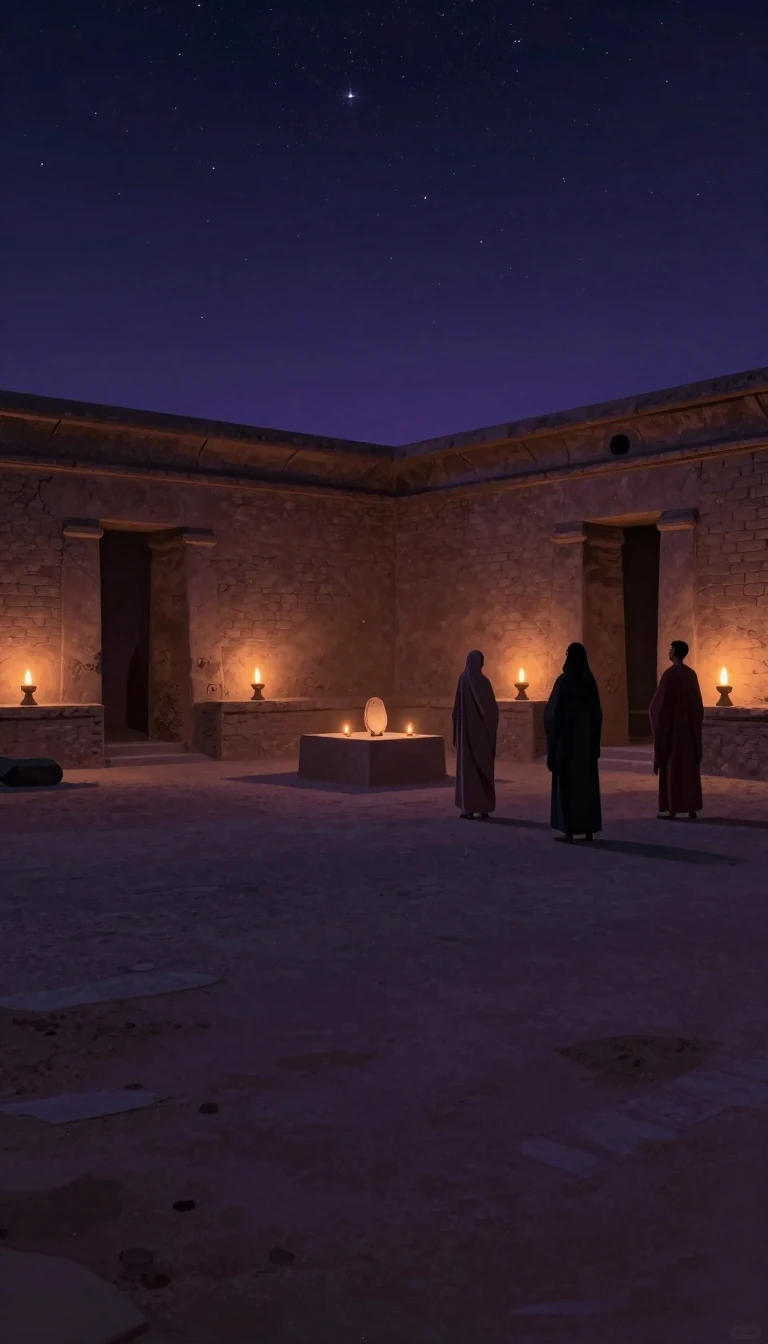
In short: Constructed by King Amenemhat III during Egypt's Middle Kingdom, the Black Pyramid was once a monument of immense prestige. Originally titled Amenemhet is Mighty, it eventually gained its dark moniker due to its crumbling, rubble-strewn appearance. Today, it stands as a haunting reminder of the architectural ambitions of ancient Egyptian rulers.
The Black Pyramid remains a significant historical site within the Dahshur necropolis. It is one of only five structures still standing from an original group of eleven pyramids located in the area. Built during the late Middle Kingdom, a period spanning from 2055 to 1650 BC, the monument was designed to serve as a final resting place for royalty. Notably, it was the first pyramid constructed to house both the deceased king and his queens, marking a shift in funerary practices.
The structure's current state is a far cry from its intended grandeur. Over millennia, the exterior has weathered significantly, leaving behind a dark, decaying mound of rubble that gives the site its modern name. This transformation from a polished royal tomb to a weathered landmark highlights the challenges of preserving ancient stone structures against the relentless passage of time and environmental erosion.
Scientific interest in the site has spanned over a century. Jacques de Morgan initiated the first formal excavations at Dahshur in 1892 as part of a French mission. However, the site's complexity required long-term study, and it was not until 1983 that the German Archaeological Institute of Cairo completed the excavation process. These efforts have provided modern researchers with a clearer understanding of the pyramid's internal layout and its historical significance within the broader context of Egyptian funerary architecture.
While the pyramid is often studied for its structural design, its legacy is equally defined by its physical decay. The contrast between its original name, Amenemhet is Mighty, and its current, somber appearance serves as a poignant reflection on the impermanence of even the most monumental human achievements. It continues to be a subject of fascination for those studying the evolution of royal burial traditions in ancient Egypt.
Opens the Intellect+ feed with this card first. Swipe up for the next one.
Sources
- Summary by Intellect · source: Black Pyramid
To cite this card, link to https://intellectplus.co.uk/app/technology-black-pyramid.
How we source, check and correct cards: Editorial standards.
General information, not professional advice. Spotted an error? Flag the card or see corrections and complaints.
Intellect Plus is a visual educational discovery platform for exploring fascinating facts and ideas. Brain Food, Not Brain Rot. What is Intellect Plus?
Related
More in Ancient egypt · More in History · Latest · A–Z · All topics
