How a chemist’s obsession with stained glass unlocked the secret world of nanoparticles
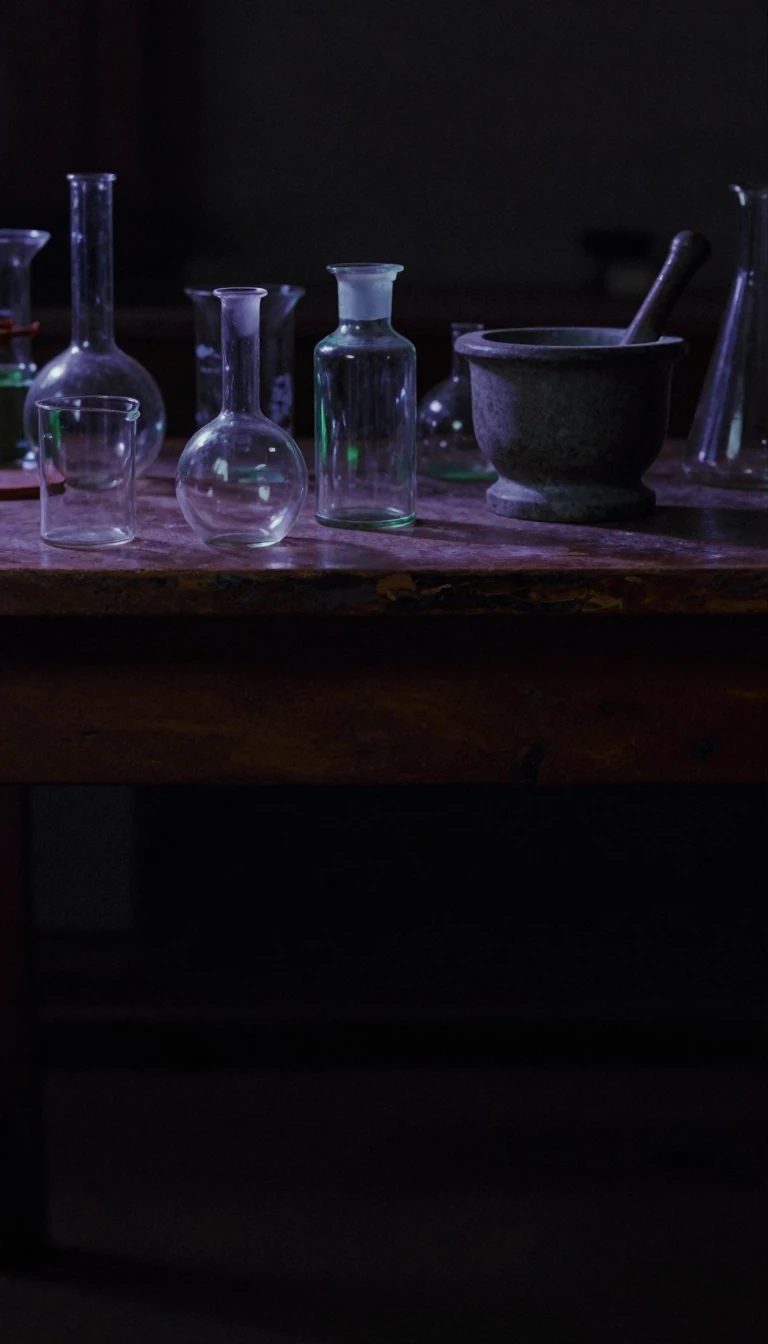
In short: Richard Zsigmondy began his career studying the vibrant colours of glass, but his curiosity led him to a Nobel Prize. By developing the slit-ultramicroscope, he finally made the invisible world of colloids visible, forever changing how we observe and understand the tiny particles suspended in our daily lives.
Born in 1865 in Vienna, Richard Zsigmondy was raised in a family of high achievers, including a mathematician brother and a father who invented surgical dental instruments. Though he began his academic path in medicine, his fascination with natural science eventually led him to chemistry. His early research into the chemistry of glass, specifically the vibrant hues of Ruby glass, sparked a lifelong interest in colloids—substances consisting of particles suspended in a medium.
The breakthrough came when Zsigmondy moved beyond traditional microscopy. In collaboration with the optical manufacturer Zeiss and colleague Henry Siedentopf, he developed the slit-ultramicroscope. This instrument allowed researchers to observe particles far smaller than the wavelength of light, revealing the chaotic motion of nanoparticles. He later refined this technology in 1912 by introducing the immersion ultramicroscope, which provided even greater clarity for his investigations into gold hydrosols and protein solutions.
Zsigmondy’s work was not merely theoretical. His expertise in membrane filtration, developed alongside Wilhelm Bachmann in 1916, laid the groundwork for industrial applications that eventually integrated into the company Sartorius. By the time he received the Nobel Prize in Chemistry in 1925, his methods had become standard for characterizing colloidal systems. His legacy remains etched in both the scientific record and the lunar landscape, where a crater bears his name.
While his career was marked by academic prestige at the University of Göttingen and numerous honorary doctorates, Zsigmondy’s life was defined by a relentless focus on the unseen. By bridging the gap between physics and chemistry, he transformed the study of colloids from a niche interest into a foundational pillar of modern material science, proving that the most profound discoveries often hide in plain sight.
Opens the Intellect+ feed with this card first. Swipe up for the next one.
Sources
- Summary by Intellect · source: Richard Adolf Zsigmondy
To cite this card, link to https://intellectplus.co.uk/app/technology-richard-adolf-zsigmondy.
How we source, check and correct cards: Editorial standards.
General information, not professional advice. Spotted an error? Flag the card or see corrections and complaints.
Intellect Plus is a visual educational discovery platform for exploring fascinating facts and ideas. Brain Food, Not Brain Rot. What is Intellect Plus?
Related
More in Chemistry · More in Science · Latest · A–Z · All topics
