 Intellect Plus
Empires & civilisations
439 cards. Each one is a 40-second story with a five-minute read behind it. Page 8 of 8.
 How a 19th-century philosopher saw Napoleon as the world's soulGeorg Wilhelm Friedrich Hegel did not just observe history; he believed he could decode its very movement. Through his dialectical method, he sought to reveal how contradictions r…
 The trusted shadow: why empires relied on the power of the castratedThey were the ultimate political paradox: physically diminished, yet wielded immense authority. From the halls of Imperial China to the Byzantine court, eunuchs served as the indi…
 How a legendary shepherd's son built history's first great empireHe was a child raised in secret to avoid a royal execution, only to grow into a conqueror so merciful that his decrees are often called the first declaration of human rights. Disc…
 The monarch’s power is not always a mere historical relicWhile we often imagine modern monarchs as purely ceremonial figureheads, the reality is far more nuanced. In some nations, the sovereign retains significant discretion, while in o…
 Is it greed or grievance that fuels the fires of civil war?While we often imagine civil wars as clashes of identity or religion, economic opportunity might be the true driver. New research suggests that the decision to rebel is often less…
 From ancient blood feuds to state-sanctioned death: the evolution of capital punishmentBefore organized courts, justice was often a matter of tribal warfare and blood feuds. Today, while most nations have moved toward abolition, the death penalty remains a global re…
 The ruthless emperor who expanded an empire but fractured its soulHe defeated his brothers, imprisoned his father, and pushed the Mughal Empire to its greatest territorial extent. Yet, the very policies that secured his absolute power—religious …
- How a nineteen-year-old used a dead dictator's will to build an empireWhen Julius Caesar was assassinated in 44 BC, his eighteen-year-old heir, Octavian, faced a choice: retreat or risk everything. Armed with nothing but a controversial will and a d…
 The Roman African who redefined the Western mindBefore he was a saint, he was a hedonist, a rhetorician, and a Manichaean. Augustine of Hippo transformed classical philosophy into a Christian powerhouse, creating a theological …
 The Sultan who built schools to prevent a revolution, only to train his successorsAbdul Hamid II was the last Ottoman Sultan to wield true power. While history often remembers him as the 'Red Sultan' for his repressive autocracy, his reign was a paradox of mode…
 Tokugawa peace locked Japan for two hundred fifty yearsAfter Sekigahara in 1600, Tokugawa Ieyasu won the shogunal title in 1603 and built a bakuhan order of shogun plus some three hundred daimyo. The Edo period's roughly 250 years of …
 Seven Chinese states fought until Qin’s 221 BC unificationChina’s Warring States era (c. 475–221 BC) closed the Zhou dynasty with relentless war, bureaucratic reform, and consolidation. Sima Qian’s start date of 475 BC is the usual textb…
 Scythian self-name Skuδa simply meant archersEastern Iranic horse nomads rode from Central Asia onto the Pontic steppe between the ninth and eighth centuries BC. Their endonym, from a root meaning shoot or throw, labeled the…
 Macedonia was Greece’s edge state before it ruled GreeceBefore the fourth century BC, Macedon sat outside the Athens–Sparta–Thebes triangle, briefly under Achaemenid shadow. Philip II (359–336 BC) remade it from the new capital at Pell…
 Sima Yan’s Jin dynasty briefly reunified Three Kingdoms ChinaFrom 266 to 420 CE the Jin Empire, founded by Sima Yan—Emperor Wu—succeeded Cao Wei. Western Jin (266–316) took Eastern Wu in 280 and ended the Three Kingdoms split, then tore its…
 Yuezhi nomads built an empire from Bactria to the GangesThe Kushan Empire (about 30–375 CE) began when Yuezhi migrants settled Bactria and expanded across Afghanistan, northern India, Pakistan and Central Asia. Chinese sources list the…
 Late antiquity is the hinge from Rome to the Middle AgesHistorians carve a cultural era roughly 250–750 CE across the Mediterranean and Near East—not a sudden dark fall, but a remaking. German Spätantike, popularized by Alois Riegl, en…
- Hellenistic means Greek culture after Alexander's deathFrom Alexander's death in 323 BC to Cleopatra VII's in 30 BC, Greek-led kingdoms stretched from the Mediterranean into Asia and Egypt. Art, science, and the koine Greek language p…
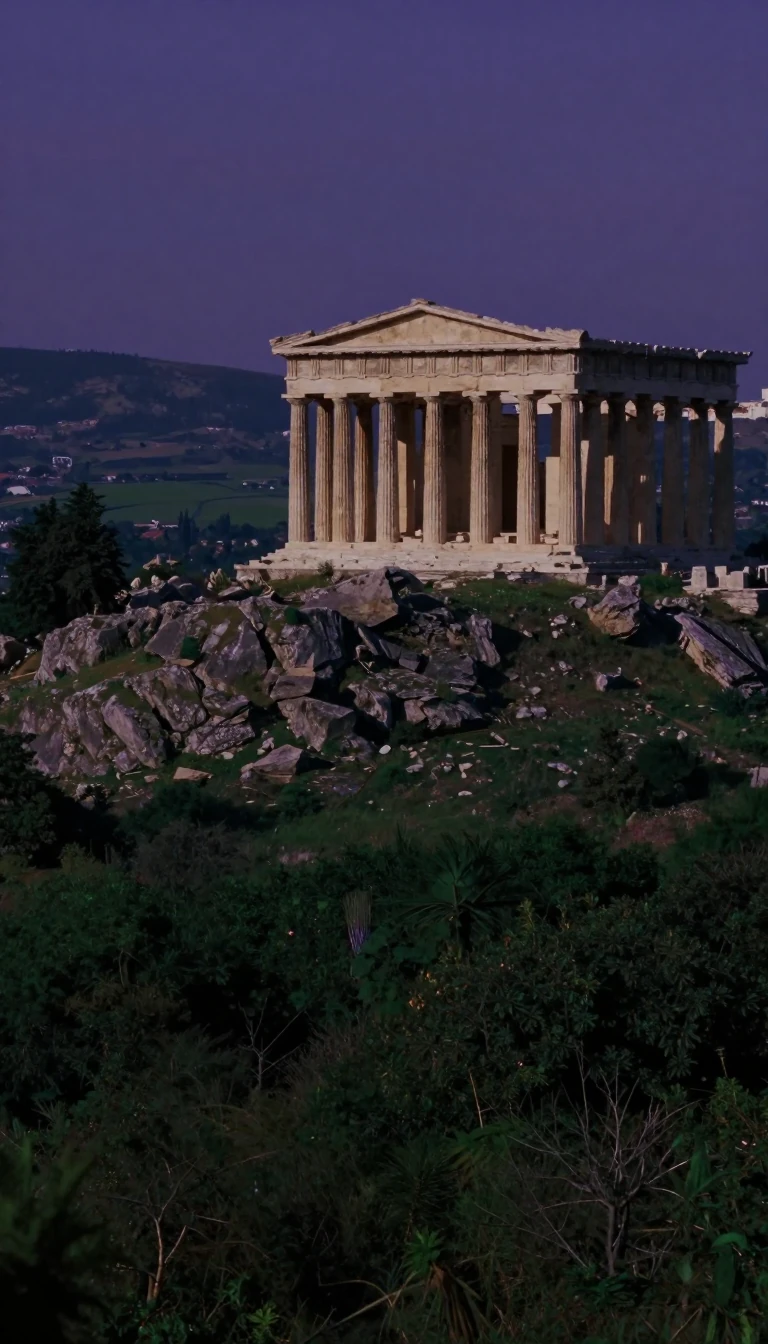 Greece wrote history before it finished living itFrom Dark Age villages to Alexander's death, Greek poleis never formed one lasting state—yet Herodotus, Thucydides, and Athenian philosophers left the first full narrative histori…