 Intellect Plus
Religion and spirituality
628 cards. Each one is a 40-second story with a five-minute read behind it. Page 3 of 11.
 Caelus: The Roman Sky God Who Was Both A Deity And A PlaceCaelus was more than just a Roman sky god; he was a complex bridge between physical space and divine power. Often identified with the Greek Uranus, he evolved from a primordial ge…
 The Catechism of the Catholic Church: A Modern Reference for Ancient FaithPromulgated in 1992, the Catechism of the Catholic Church serves as a definitive synthesis of Catholic doctrine. More than just a manual for clergy, this massive reference work ai…
 Is ceremonial magic a path to self-mastery or a complex system of occult ritual?Ceremonial magic, often called magick, is a structured practice designed to align individual will with destiny. Popularized by Aleister Crowley, it uses elaborate rituals, symboli…
 How a quiet revolution brought supernatural gifts into the heart of mainstream ChristianityBeginning in 1960, a movement emerged that challenged the boundaries of traditional faith. By integrating Pentecostal experiences like speaking in tongues and divine healing into …
 The accidental origin of a flag that represents the entirety of global ChristendomBorn from a last-minute Sunday school lecture in 1897, the Christian Flag was never intended to be a proprietary symbol. Designed to represent the faith as a whole, it remains fre…
- Why did the early church define a martyr not as a victim, but as a witness?The term martyr originates from the Greek word for witness, initially describing those who testified to the life and resurrection of Jesus. Over time, the meaning shifted from a l…
 Why did 17th-century Puritans lobby for a Jewish return to the Holy Land?Long before modern politics, radical Protestants envisioned a Jewish return to Palestine as a divine prerequisite for the Second Coming of Jesus. This millennialist dream, rooted …
 Christianity and Islam share deep roots, yet diverge on the nature of the divine.As the world's two largest religions, Christianity and Islam both trace their origins to the Middle East and Abrahamic tradition. While they share narratives about Jesus and Mary,…
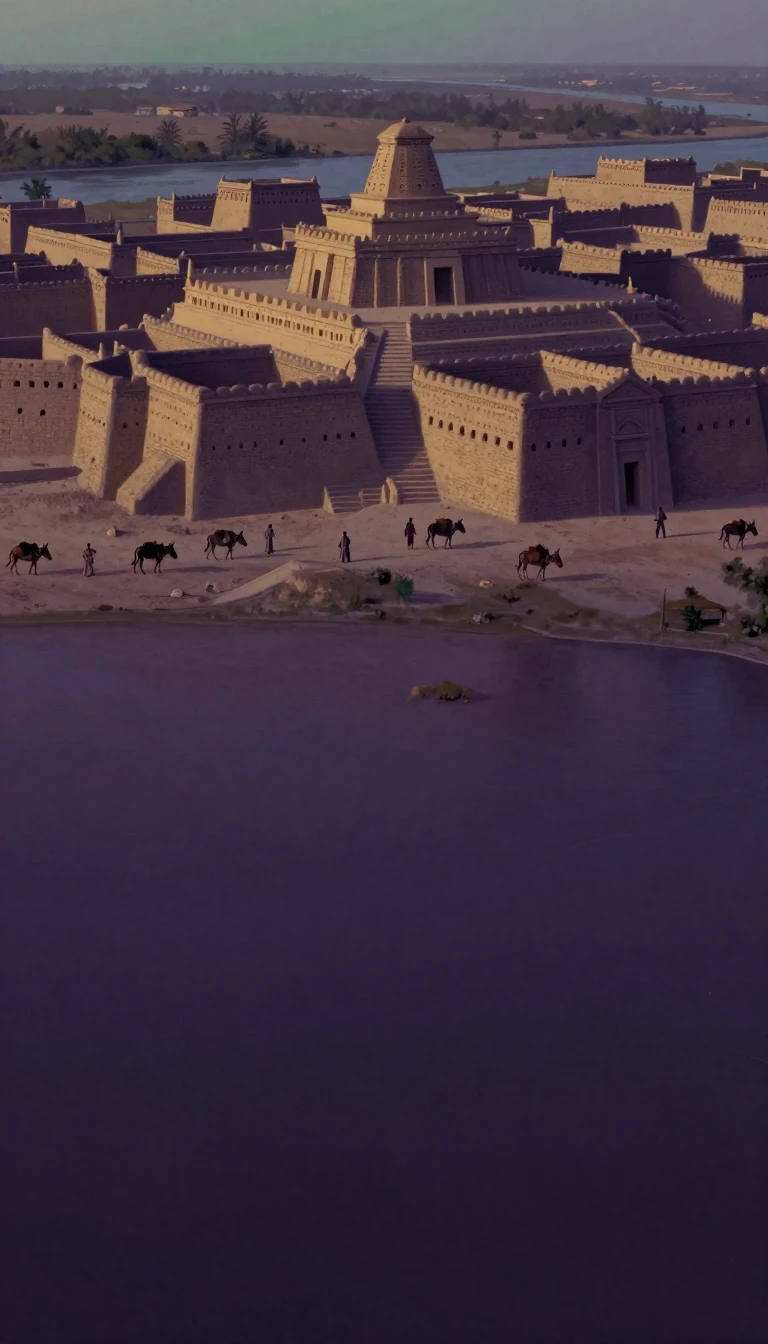 How Civilization VI turned city-building into a strategic puzzle of geography and terrainIn Civilization VI, your empire is no longer a stack of icons on a single tile. By unstacking cities into specialized districts, the game forces players to engage with the map its…
 Can humans truly see the unseen, or is clairvoyance merely a trick of the mind?Clairvoyance, the alleged ability to perceive distant events or hidden information, has fascinated humanity for centuries. While deeply embedded in religious traditions and cultur…
 Is the human tendency toward sin a character flaw or a fundamental design error?Concupiscence is a term for the human inclination toward sin, but theologians have debated its nature for centuries. Is it an evil force, a mere weakness, or a natural instinct go…
 Confabulation is not a lie, but a brain-generated reality that the mind believes completely.When someone describes a memory that never happened, they are not necessarily trying to deceive you. They may be experiencing confabulation, a neurological phenomenon where the br…
 Did a medical emergency or a divine encounter transform Paul the Apostle?The conversion of Paul on the road to Damascus is a cornerstone of Christian history. While traditional accounts describe a supernatural encounter with the resurrected Christ, mod…
 The horn of plenty: how an ancient goat's broken horn became a global symbolThe cornucopia is more than a Thanksgiving centerpiece. Rooted in classical mythology, this horn-shaped vessel represents divine abundance and prosperity. From the nursing goat of…
 Is freezing your body after death a scientific breakthrough or a modern form of quackery?Cryonics promises a second chance at life through ultra-low temperature preservation. While proponents argue that future nanotechnology could one day revive the dead, the mainstre…
 The secret history of the Dönme: crypto-Jewish converts who shaped modern TurkeyIn 1666, a self-proclaimed Jewish messiah converted to Islam under pressure from the Ottoman Sultan. Many of his followers did the same, forming a clandestine sect known as the Dö…
 Who was the Deuteronomist, the mysterious architect behind the foundational books of the Bible?The Deuteronomist is not a single person, but a source or school of thought identified by biblical critics. This group shaped the core of Deuteronomy and the historical books from…
 Can a single book redefine the human mind and offer a complete mental cure?In 1950, L. Ron Hubbard published a work claiming to have unlocked the secret to human existence: the drive to survive. By identifying the reactive mind as the source of all menta…
 Is divine retribution a literal act of cosmic justice or a metaphor for consequence?Across human history, cultures have grappled with the idea of supernatural punishment. From the great floods of ancient myth to the specific curses of the Tanakh, the concept of d…
- How a struggling, unlettered shoe salesman became the architect of modern mass revivalism.Dwight L. Moody rose from humble, impoverished beginnings to command audiences of up to 30,000 people. By blending business acumen with evangelical fervor, he transformed how reli…
 The Edict of Milan did not make Christianity the official religion of RomeHistory remembers the Edict of Milan as a landmark for Christianity, yet it was never a formal decree, nor did it establish the faith as the state religion. Instead, it was a prag…
 Was the 21st Emperor of Japan a bloodthirsty tyrant or a visionary state builder?Emperor Yūryaku, the first archaeologically verifiable Japanese sovereign, remains a figure of intense debate. Ancient chronicles paint him as a volatile, murderous ruler, yet mod…
 Ovid’s Fasti: A poetic calendar that survived exile and centuries of scholarly debateOvid’s Fasti is a six-book Roman poem that functions as a calendar, blending mythology, astronomy, and ritual. Written while the poet was in exile, it has been dismissed as an art…
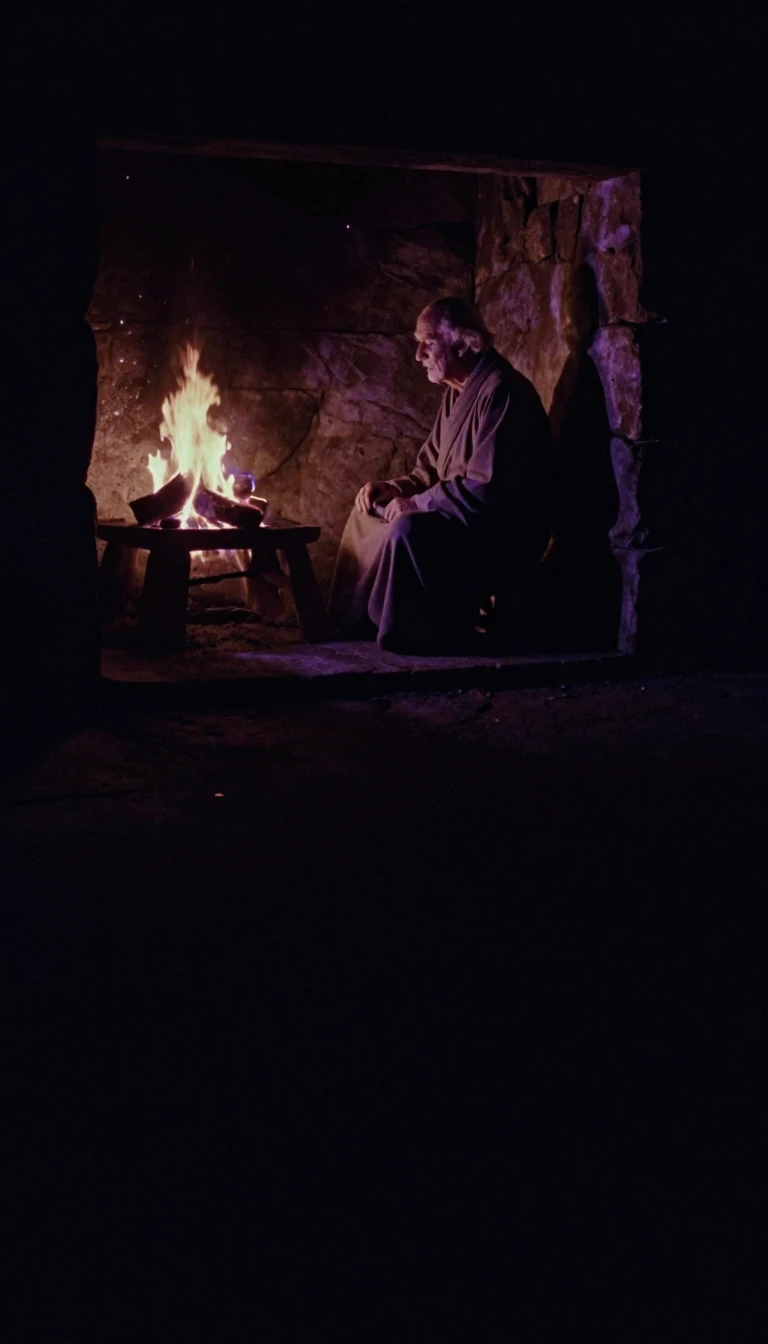 Zoroastrian fire temples are not designed to glorify the building but to house fire.Zoroastrian fire temples are functional, often nondescript structures built to house sacred flames. Far from being mere monuments, these temples are classified by the grade of fir…
 Are humans born with an innate, pre-programmed knowledge of the divine?In Islamic tradition, fitra is the primordial nature every human possesses at birth—an internal compass oriented toward the oneness of God. While life’s distractions often bury th…
 Why the world’s most famous song of praise is actually a two-word commandHallelujah is not a single word, but a Hebrew imperative meaning praise Yah. While often used as a spontaneous expression of joy, its liturgical history is deeply structured, rang…
- The Hundred-Handed Giants: Mythical Guardians or Ancient Personifications of the Sea?In Greek mythology, the Hecatoncheires were three monstrous giants, each boasting fifty heads and one hundred arms. While famous for helping Zeus defeat the Titans, these enigmati…
 How a merchant-class philosophy became the dominant spiritual force of ancient IndiaBorn in the 6th or 5th century BCE, Buddhism emerged as a Middle Way between extreme indulgence and self-mortification. By aligning with trade routes and securing royal patronage,…
 Why does almost every alien in science fiction look like a human being?From Star Trek to the silver screen, extraterrestrials are overwhelmingly humanoid. While practical filmmaking constraints explain the reliance on human actors, some scientists ar…
 Is Jesus fully God and fully man, or is that a logical impossibility?The hypostatic union is the foundational Christian doctrine that Jesus Christ possesses two distinct natures—divine and human—within a single personhood. It is a concept that has …
 Are ifrits malevolent demons or simply powerful, misunderstood spirits of the Islamic tradition?Often reduced to wish-granting genies in Western pop culture, the ifrit is a complex, chthonic entity in Islamic lore. Far from mere fairy-tale monsters, these powerful spirits in…
 Your brain is not a camera; it is a master of creative interpretationAn illusion is not a failure of your senses, but a window into how your mind constructs reality. Unlike hallucinations, which arise from nothing, illusions are misinterpretations …
 Impalement was a calculated tool of state terror across ancient and early modern civilizations.Far from a chaotic act of cruelty, impalement was a formal, often ritualized method of execution used to suppress dissent, punish crimes against the state, and project absolute im…
 Was the biblical Jezebel a wicked villain or a misunderstood, powerful foreign queen?Jezebel is remembered as a symbol of manipulation and idolatry, yet scholars argue her story is a heavily edited political narrative. From a Phoenician princess to a demonized cul…
 Why is a temple in Assam dedicated to the divine yoni of a goddess?Deep in the Nilachal hills of India lies the Kamakhya Temple, a site where the yoni of the goddess Sati is said to have fallen to earth. As the embodiment of desire, this mother g…
 Why do ancient heroes risk everything to descend into the realm of the dead?A katabasis is a journey into the underworld, a recurring motif in global mythology. Whether seeking lost loved ones, divine knowledge, or the defeat of death itself, the hero who…
 Are Kayasthas India's original professional administrators, or a caste defined by their own ambition?The Kayastha identity is not a single caste but a diverse cluster of communities across India. Historically serving as elite scribes, record-keepers, and ministers, they navigated…
 Is the haunting Kol Nidre a prayer, a legal loophole, or a desperate plea?Often mistaken for a prayer, Kol Nidre is actually a solemn legal declaration that opens Yom Kippur. This ancient Aramaic formula allows individuals to annul personal vows made to…
 Is the coiled serpent of Kundalini a dormant power or a spiritual blockage?Kundalini is often described as a latent feminine energy coiled at the base of the spine, waiting to be awakened to achieve liberation. Yet, interpretations vary wildly: some see …
 The ancient princess who mothered gods and shaped the fate of an entire empireKunti is a central figure in the Mahabharata, known for her divine lineage and strategic brilliance. From bearing children through celestial invocations to navigating the complex …
 Was this ancient Mesopotamian goddess a demon, or a deity acting on her own?Lamashtu was a terrifying figure in Mesopotamian lore, feared for causing miscarriages and infant deaths. Unlike typical demons who followed divine orders, she acted with terrifyi…
 Why the Lantern Festival marks the final, glowing chapter of the Chinese New YearThe Lantern Festival is more than a display of light; it is the grand finale of the Chinese New Year. Celebrated on the first full moon of the lunar year, this tradition honors an…
 Why the laurel wreath remains the ultimate, enduring symbol of human achievement and victoryFrom the tragic myth of Apollo and Daphne to the modern film festival circuit, the laurel wreath has evolved from a divine crown into a global shorthand for excellence. Whether wo…
 Can a video game character truly possess free will in a world of predestination?The Legacy of Kain series transformed the action-adventure genre into a complex philosophical exploration of fate. By weaving Gnostic theology, Shakespearean drama, and the hero's…
 How a low-budget horror experiment became a cult classic despite universal critical derisionWhen Mark Jones pitched a murderous leprechaun, he aimed for a horror-comedy hybrid. The result was a critical disaster that critics called witless and unwatchable, yet it launche…
 Louisiana Voodoo: A misunderstood African-Creole religion of the Mississippi River valleyFar from the sensationalist myths of witchcraft, Louisiana Voodoo was a sophisticated African diasporic religion. Emerging from the syncretism of West African traditions, Haitian …
 The most hated woman in America who fought to keep God out of schools.Madalyn Murray O'Hair became a household name in the 1960s as the face of American atheism. A relentless litigator, she successfully challenged mandatory Bible reading in public s…
 Is the most significant figure in Mahayana Buddhism actually a hidden Buddha in disguise?Manjushri is revered as the bodhisattva of supreme wisdom, yet Mahayana texts suggest his identity is far more profound. While he appears as a humble disciple or a youthful seeker…
 Manu is the legendary first man and the architect of ancient Hindu law.In Hindu mythology, Manu is the primordial progenitor of humanity, whose name is etymologically linked to the Sanskrit verb for thinking. Beyond his role as the first man, he is c…
 Did a second-century heretic accidentally create the modern New Testament canon?Marcion of Sinope believed the God of the Hebrew Bible was a cruel, lesser deity, entirely distinct from the loving Father revealed by Jesus. By rejecting the Old Testament and cu…
- The Maronites: A Mountain-Dwelling Christian Community That Shaped the Modern Lebanese StateTracing their roots to a 4th-century monk, the Maronites have navigated centuries of regional upheaval, from the Muslim conquest to the French Mandate. Today, this Eastern Catholi…
 Why do movements across history believe the world must end to be saved?Millenarianism is the belief that society is fundamentally broken and requires a cataclysmic transformation to reach a utopian state. Whether religious or secular, these movements…
- Did Jesus perform miracles, or are these stories meant to be read figuratively?The miracles of Jesus, ranging from faith healings to controlling nature, remain a subject of intense debate. While many believers view these accounts as literal history, others i…
 Why do monks and nuns separate themselves from society to live by radical rules?Monasticism is more than just solitude. It is a rigorous, institutionalized commitment to religious works that exceed the requirements of ordinary believers. Whether living as rec…
 Why do different religions use thousands of distinct names for the same Supreme Being?Across human history, the divine has been invoked through countless titles, from the Hebrew Tetragrammaton to the 1001 names of Yazidism. While these names often define religious …
- The Nemean lion was a beast so tough that only its own claw could skin it.In Greek mythology, the Nemean lion was an invulnerable monster sent to terrorize the hills of Nemea. When Heracles was tasked with slaying it, his arrows bounced harmlessly off i…
 Nergal was the Mesopotamian god of war, disease, and the ruler of the underworld.Known as the god of inflicted death, Nergal reigned over the Mesopotamian underworld of Kur. While he began as a northern deity in Kutha, he eventually became a central figure in …
- Is Obeah a religion, a science, or a hidden system of Caribbean spiritual power?Obeah is a diverse, often misunderstood tradition of ritual healing and spell-casting found across the Caribbean. Far from a single religion, it functions as a flexible system of …
 Why millions of Japanese households keep sacred talismans in their homes for protectionOfuda are more than mere paper or wood; they are conduits for divine presence. Found in Shinto shrines and Buddhist temples, these talismans act as portable vessels for the essenc…
 Did Judaism emerge centuries later than we once believed?For generations, scholars traced the roots of widespread Torah observance to the 5th century BCE. However, recent research challenges this timeline, suggesting that the practice o…