 Intellect Plus
Writers
1,873 cards. Each one is a 40-second story with a five-minute read behind it. Page 24 of 32.
 The wartime bureaucrat who became the architect of Japan's modern political dynastyNobusuke Kishi was a central figure in Japan's wartime regime, a suspected war criminal, and a ruthless political operator. Yet, he emerged from prison to become prime minister, f…
 Are universals real entities or just convenient labels we attach to the world?Nominalism challenges the existence of abstract universals like beauty or humanity. It argues that only individual, physical things exist, and general terms are merely names. This…
 How Norman Mailer turned his own ego into a literary divining rodNorman Mailer was a titan of American letters who pioneered the New Journalism, blending the techniques of fiction with factual reporting. From his war-torn debut to his controver…
 How a self-taught New Zealand filmmaker revolutionized cinema through digital restoration and epic storytelling.Peter Jackson rose from a childhood of stop-motion experiments to become one of history’s highest-grossing directors. By pioneering digital visual effects and applying them to bot…
 How a Hungarian immigrant became Hollywood's most memorable master of the sinister screenPeter Lorre escaped Nazi Germany to become a fixture of American cinema, defined by his raspy voice and bulging eyes. Though typecast as a villain, he possessed a rare ability to …
 How a Secular Experiment in Greenwich Village Became a Global Academic PowerhouseFounded in 1831 to offer merit-based education in New York City, NYU has evolved from a local institution into a sprawling, multi-continental system. Today, it stands as a massive…
 How a Quaker whaling hub became the wealthiest city in North AmericaNew Bedford, Massachusetts, transformed from a modest colonial settlement into a global maritime powerhouse. By the mid-19th century, its whaling fleet made it the richest city pe…
 How a reluctant schoolboy became the definitive voice of British bureaucratic obstructionismNigel Hawthorne spent his early years in South Africa, feeling like an outsider in school, before returning to the United Kingdom to master the stage. He eventually became a house…
 How a generation of young rebels briefly seized control of the Hollywood studio system.From the mid-1960s to the early 1980s, American cinema underwent a radical transformation. As traditional studio power crumbled, a new wave of directors—the so-called Movie Brats—…
 Why the French New Wave worshipped a director Hollywood tried to eraseNicholas Ray was a master of the American screen who defined the modern teenager with Rebel Without a Cause. Yet, his career was a volatile cycle of studio clashes, political susp…
 The man-lion deity who outsmarted a demon by exploiting the fine print of fateNarasimha, the fourth avatar of Vishnu, is a fierce protector who famously defeated the tyrant Hiranyakashipu. To bypass a divine boon that granted the demon near-invulnerability,…
 Can a retired general’s radical new party redefine the Italian political landscape?Formed in February 2026 by MEP Roberto Vannacci, National Future has rapidly emerged as a potent far-right force in Italy. By rejecting political moderation and embracing a tradit…
 How a collection of 700,000 imperial treasures survived war, exile, and political controversy.The National Palace Museum in Taipei holds the world's most significant collection of Chinese art, yet its existence is a product of survival. Relocated during the Chinese Civil W…
 A minor railway explosion triggered the Japanese occupation of Manchuria and a puppet stateOn September 18, 1931, Japanese officers staged a false flag attack on a railway line near Mukden. Though the blast was too weak to stop a train, it provided the pretext for a ful…
 The printing press was not a singular invention but a global, centuries-long evolution.While Johannes Gutenberg is often credited with the printing press, movable type technology emerged in China and Korea centuries earlier. From ceramic pieces in the 11th century t…
 The Moscow Metro: A Communist Cathedral of Engineering and Socialist RealismOpened in 1935 as a symbol of Soviet modernity, the Moscow Metro is more than a transit system. It is an underground palace of marble, chandeliers, and ideological art. Designed t…
 Nadezhda Krupskaya was far more than Lenin's wife; she was a revolutionary architect.Often reduced to a footnote in her husband's shadow, Nadezhda Krupskaya was a central figure in the Bolshevik party and the primary architect of the Soviet educational and library…
 Naguib Mahfouz: The Egyptian Master Who Turned a Single Lane Into the WorldNaguib Mahfouz remains the only Egyptian author to receive the Nobel Prize in Literature. Over a prolific seven-decade career, he transformed the local Egyptian experience into a …
 From cages to clinics: the brutal evolution of the lunatic asylumBefore the advent of modern psychiatry, the 'mad' were often kept in cages, towers, or even used as courtly entertainment. The transition from violent containment to clinical trea…
 Was Milan Kundera a secret police informant or just a victim of history?The celebrated author of The Unbearable Lightness of Being spent his life avoiding political labels, yet he was haunted by a 1950 police report accusing him of denouncing a defect…
 Medieval military orders were the original hybrid of monastic devotion and professional warfare.Emerging during the Crusades, military orders combined the strict religious vows of monks with the martial purpose of knights. These organizations managed vast estates across Euro…
 How a bookish, celibate outsider became a seminal icon of British indie rockMorrissey subverted rock machismo by cultivating an image of a sexually ambiguous, bespectacled social outsider. As the frontman of the Smiths, he paired melancholic, sardonic lyr…
 The woman who saved Anne Frank's diary insisted she was no hero at all.Miep Gies was an ordinary office worker who risked execution to hide eight people from the Nazis for over two years. After their arrest, she recovered Anne Frank's diary, keeping …
 Is Michel Houellebecq the most controversial and prophetic literary voice in modern France?Michel Houellebecq is a polarizing figure, hailed as France's greatest living writer and dismissed as a nihilistic provocateur. His novels dissect the intersection of free-market …
 From Hammer Horror villain to Batman's butler, the versatile career of Michael GoughMichael Gough was a prolific British actor whose career spanned over 150 film and television roles. While he became a staple of Hammer horror cinema as a sinister villain, he is p…
 From Sri Lanka to the Booker Prize: The literary evolution of Michael OndaatjeBorn in Colombo and later settling in Canada, Michael Ondaatje transformed from a young poet into a global literary force. His work, spanning poetry, memoir, and genre-bending nov…
 Maria Edgeworth: The Enlightenment polymath who transformed the European novel through realism and reformLong before the Victorian era, Maria Edgeworth was among the most celebrated authors in Britain and Ireland. A brilliant realist, she used fiction to dissect social injustice, est…
 Why the grandest tombs in history are more than just final resting placesA mausoleum is far more than a simple grave. It is a free-standing, monumental structure designed to house the remains of the departed in a dedicated chamber. While often confused…
 Beyond the family name: Mariel Hemingway’s journey from Hollywood stardom to mental health advocacyMariel Hemingway debuted in cinema at fourteen, earning an Academy Award nomination by nineteen. Yet, her most enduring work emerged later, as she pivoted from acting to confront …
 The Man in the Iron Mask was likely a valet, not a royal twin.History remembers a mysterious prisoner hidden behind a black velvet mask, a legend later misreported as iron. While fiction paints him as Louis XIV's secret twin, official docume…
 How Matt Stone and Trey Parker built a billion-dollar empire on pure creative anarchy.From sleeping on dirty laundry to becoming billionaires, Matt Stone and Trey Parker transformed a foul-mouthed animated short into a global powerhouse. By embracing a unique, rapi…
 Mel Brooks used comedy as a defense mechanism to survive a life of tragedy.Born Melvin Kaminsky in 1926, the legendary filmmaker grew up in Brooklyn facing poverty and bullying. He learned early that humor could disarm enemies and mask his own anger. Thi…
 Literary realism is not just about accuracy; it is a rejection of romanticized ideals.Literary realism emerged in the mid-nineteenth century as a direct challenge to the grandiose, supernatural, and exotic tropes of Romanticism. By focusing on the mundane, quotidia…
 Louisa May Alcott: The Transcendentalist Tomboy Who Wrote Her Way Out of PovertyBefore Little Women made her a household name, Louisa May Alcott lived a life of radical experiments, grueling labor, and secret sensation novels. Raised among giants like Emerson…
 How a Tuscan city preserved its independence for five centuries behind massive stone wallsLucca is a rare survivor of the Italian city-state era, maintaining its autonomy until the French Revolution. While its neighbors fell to conquest, Lucca guarded its sovereignty b…
- Leuven: From a Medieval Cloth Hub to a Global Center of Academic InnovationLeuven is a city of profound contrasts, balancing its status as the world's oldest Catholic university town with its role as the headquarters of the planet's largest brewer. From …
 The libretto is the unsung hero of opera, yet its writers often remain forgotten.A libretto is far more than just a script; it is the backbone of musical theater and opera. While composers often steal the spotlight, the librettist provides the essential words,…
- Larry McMurtry: The prolific storyteller who redefined the American West through his typewriterLarry McMurtry was a literary titan who spent six decades capturing the fading spirit of Texas. From his Pulitzer-winning Lonesome Dove to his Oscar-winning screenplay for Brokeba…
 The 7th-century desert romance that inspired Eric Clapton and centuries of mystical poetry.Long before Romeo and Juliet, the tragic tale of Qays and Layla defined the archetype of the star-crossed lover. Known as Majnun, the poet whose obsession drove him into the wilde…
 The Tang Dynasty scholar who dreamed of a lifetime while his millet cooked.Lü Dongbin is a legendary Daoist immortal whose life supposedly spanned two centuries. Before his ascension, he was a failed scholar who, according to folklore, experienced an ent…
 Larissa: The Ancient Fortress City That Shaped Greek History and MythologyLarissa, the capital of Thessaly, is far more than a modern transport hub. With roots stretching back to the Paleolithic era, this city has been a fortress, a democratic polis, an…
 Edward Said's Orientalism argued that Western scholarship about the East served empireIn 1978 the literary critic Edward Said took an old word for the academic study of Asia and North Africa and turned it into an accusation. Orientalism, he argued, was less a neutr…
 Orpheus sang his way into the underworld and lost everything with one glanceGreeks called Orpheus the greatest musician who ever lived, a Thracian singer whose lyre could make rocks dance and rivers change course. He charmed the rulers of the dead into re…
- Osamu Dazai turned a turbulent life into Japan's most confessional modern classicsBorn into one of the richest landowning families in northern Japan, Shūji Tsushima enrolled to study French literature without knowing French and boasted he never attended a singl…
 Ossian, a largely invented ancient bard, captivated Napoleon and JeffersonIn the 1760s a Scottish poet named James Macpherson announced he had translated the lost epics of a third-century Gaelic bard. Europe went wild: Napoleon adored them, Jefferson wa…
 Nostalgia was once diagnosed as a disease that could kill homesick soldiersA 17th-century medical student invented the word nostalgia, from Greek for homecoming and pain, to name the anguish of Swiss mercenaries serving far from home. For centuries docto…
 Nuneaton, George Eliot's hometown, took its name from a medieval priory of nunsWarwickshire's biggest town began as Etone, an Anglo-Saxon farming hamlet beside the River Anker. Around 1155 a Norman lord handed the manor to a French abbey that planted nuns th…
 A shy girl who thought she could beat a bad movie became a science fiction giantAt twelve, Octavia Butler watched Devil Girl from Mars and decided she could write something better. A year later an aunt told her Black people could not be writers. She kept typi…
 Oedipus fled a terrible prophecy and ran straight into itHis name means swollen foot, a reminder of the pierced ankles his father gave him before abandoning him on a mountain. Everything Oedipus did to escape the oracle's warning about …
 Bong Joon Ho's Okja was booed at Cannes, then won a four-minute ovationThe Cannes crowd jeered twice in the opening minutes of Okja's 2017 premiere: once at the Netflix logo, again when the projectionist ran the wrong aspect ratio for seven minutes. …
 A lightning strike at summer camp shaped Paul Auster's obsession with chanceAt 14, Paul Auster was at camp when lightning killed a boy standing inches away from him. He called it the seminal experience of his life and said he thought about it every day. C…
 A Verlaine poem about autumn violins told the Resistance D-Day was comingOn 1 June 1944, BBC radio beamed the opening of Paul Verlaine's Chanson d'automne to occupied France: long sobs of autumn violins. To the Resistance it meant invasion within two w…
 Missionaries gave Taiwanese speech a Latin alphabet and Taiwan its first newspaperChinese characters take years to master, so nineteenth-century missionaries tried a shortcut: write Hokkien in Latin letters with tone marks. The result, Pe̍h-ōe-jī, meaning verna…
 Pearl Buck told a room of missionary women that China didn't need themIn 1932, the year The Good Earth won her a Pulitzer, Pearl Buck asked a luncheon of Presbyterian women whether China really needed foreign missionaries. Her answer was a barely qu…
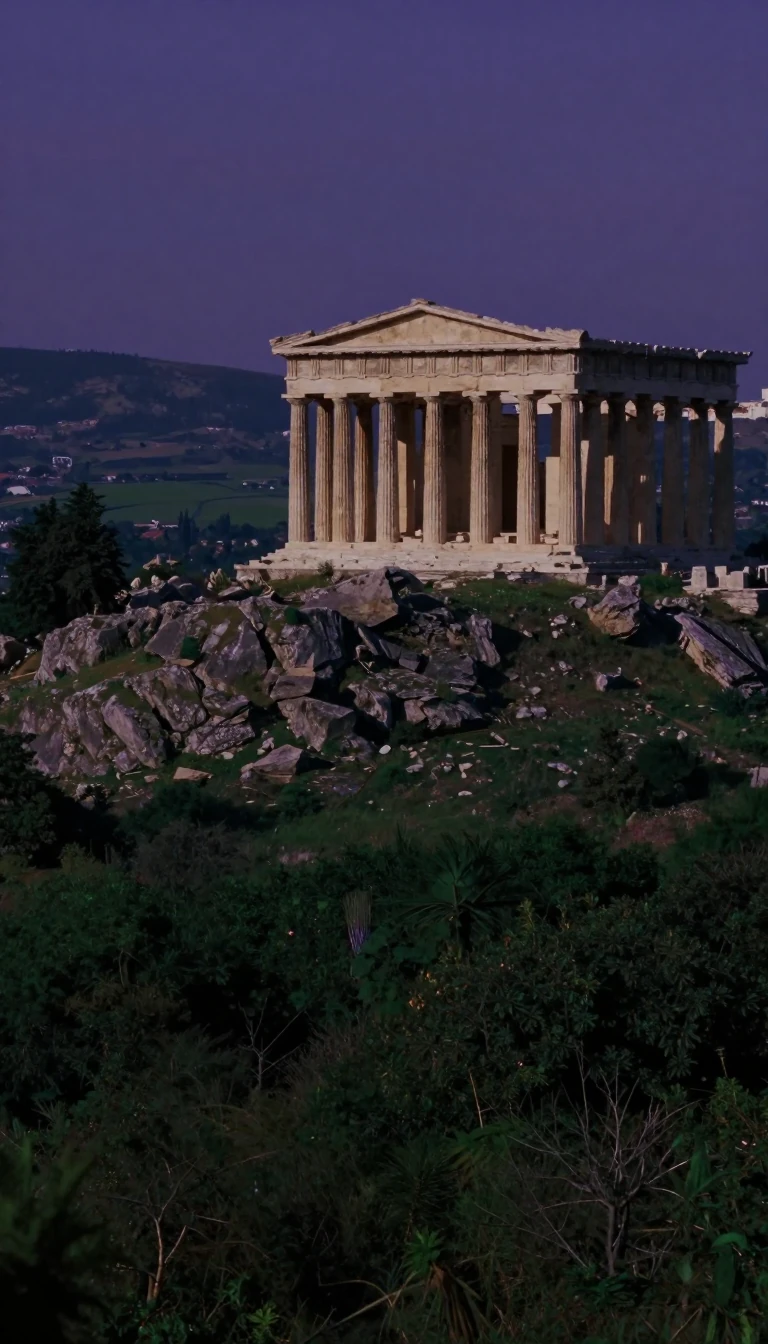 The Peloponnese is called an island even though it is joined to GreecePeloponnesos means the island of Pelops, after the mythical hero said to have conquered it. For most of history it was a peninsula hanging off Greece by a narrow neck of land, unt…
 Rome's famous founding revolution may be mostly a story borrowed from AthensEvery Roman schoolboy learned how Brutus drove out the tyrant Tarquin in 509 BC and swore Rome would never again have a king. Modern historians suspect much of that tale was inven…
 At Blenheim, the trees were planted in the formation of a winning armyWhen Capability Brown laid out the grounds of Blenheim Palace near Woodstock, he arranged the trees like the victorious troops at the battle the palace celebrated. It is one oddit…
 The Paris Panthéon switched between church and national tomb again and againLouis XV promised a grand church to Saint Genevieve if he survived an illness. By the time it was finished, revolutionaries had turned it into a tomb for great citizens, and over …
 Proving a ghost exists would instantly stop it being paranormalThe paranormal has a built-in trap. Anything that science could confirm would simply become part of science, so no phenomenon can ever be verified as paranormal by definition. Tha…
- Patricia Arquette turned down braces because perfect teeth didn't fit herAs a girl, Patricia Arquette refused her parents' offer to straighten her teeth, saying a perfect smile would not match who she was inside. That streak of self-possession carried …