 Intellect Plus
Writers
1,873 cards. Each one is a 40-second story with a five-minute read behind it. Page 22 of 32.
 How Genndy Tartakovsky defied CGI realism to create a unique, squash-and-stretch monster comedy.When Genndy Tartakovsky took over as the sixth director of Hotel Transylvania, he rejected the industry's obsession with photorealism. Instead, he forced computer-generated charac…
 Why Lewis Carroll’s most famous nonsense poem is a masterclass in linguistic ambiguityJabberwocky is more than a collection of whimsical sounds. First appearing in 1871, this dreamscape poem introduced words like chortle and galumphing into English. While it depict…
 How a short-lived post-punk band defined the sound of melancholy for future generationsFormed in 1976, Joy Division evolved from raw punk roots into a pioneering post-punk force. Despite a brief career cut short by the suicide of frontman Ian Curtis, their atmospher…
 From Screen Star to Director: The Artistic Evolution of Frances O'ConnorBorn in England and raised in Australia, Frances O'Connor built a prolific career as a versatile actress before stepping behind the camera. From her early independent film breakth…
 The genitive case is more than just possession; it is a linguistic Swiss Army knife.While often associated with ownership, the genitive case is a versatile grammatical tool used to describe relationships, agents, and descriptions. From the Saxon genitive in Engli…
 Before Westeros, George R. R. Martin wrote monster stories for pennies in New JerseyLong before he became the architect of epic fantasy, George R. R. Martin was a child selling sinister turtle tales to neighborhood friends. His path to literary fame was anything …
 Where is Odysseus' home? Scholars have spent millennia debating the location of Homer's Ithaca.For centuries, the search for the legendary island home of Odysseus has spanned from the Mediterranean to the coast of Spain. While modern Ithaca is the traditional candidate, inv…
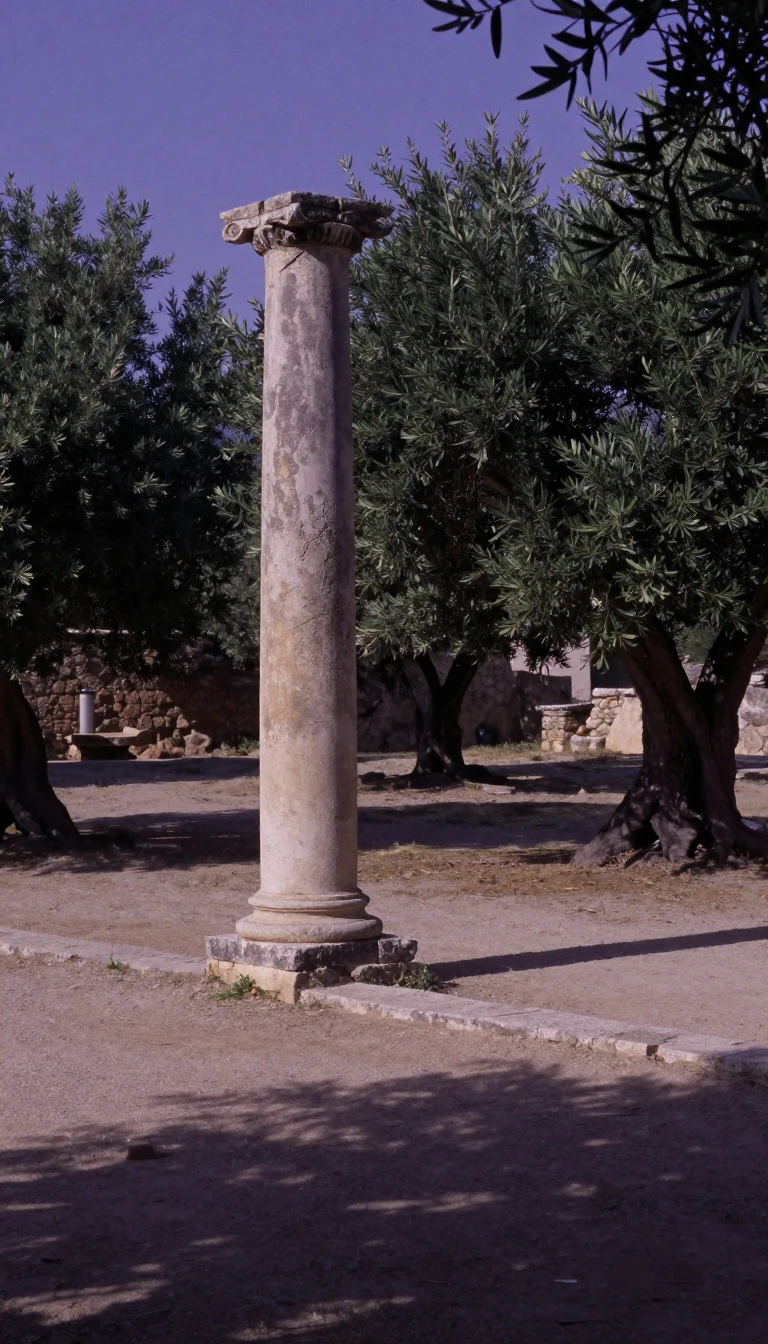 Why Ancient Greek citizen-soldiers abandoned individual heroics for a wall of bronze shieldsHoplites were not professional soldiers, but farmers and artisans who transformed Ancient Greek warfare. By locking shields in a disciplined phalanx, they replaced the chaotic her…
 Why do writers rely on the god from the machine to fix impossible plots?The deus ex machina is a classic storytelling shortcut where an unlikely force suddenly resolves a hopeless situation. While often dismissed as a sign of lazy writing, this ancien…
 How a student film about fatherhood became a cornerstone of surrealist midnight cinemaDavid Lynch spent five years crafting his debut feature, Eraserhead, in a disused stable. What began as a low-budget project about a man caring for a deformed child evolved into a…
 The Fall of Man: A Mythological Transition from Innocent Obedience to Human Self-AwarenessThe Fall of Man describes the first humans transitioning from innocent obedience to guilty disobedience. While Christian traditions often view this as the origin of original sin, …
 Dhikr is the ancient Islamic practice of using repetitive remembrance to find inner peace.Dhikr, or remembrance of God, is a foundational Islamic practice involving the rhythmic recitation of sacred phrases. Whether performed silently or in collective ceremonies, this …
 The Roman equites were not just cavalrymen, but the empire's original administrative power brokers.Often called knights, the equites evolved from a small cavalry unit into a wealthy, influential class that monopolized Roman military and political life. While they started as hor…
 Was India's fifth president a willing architect of authoritarianism or a mere rubber stamp?Fakhruddin Ali Ahmed remains a polarizing figure in Indian history. While he held high office during the nation's most controversial political period, his legacy is defined by his…
 How an accidental singer became the most recorded artist in music historyAsha Bhosle never planned to be a star. After her father died, she began singing to support her family, eventually evolving from a background vocalist into a genre-defying icon. W…
 How Tim Burton’s 2005 film brought Roald Dahl’s dark chocolate factory to lifeTo capture the tactile magic of Roald Dahl’s classic, Tim Burton rejected modern digital shortcuts. He built a massive, functional chocolate river, trained real squirrels, and cas…
 Was the infamous Queen of Mycenae a cold-blooded murderer or a grieving mother?Clytemnestra remains one of Greek mythology's most notorious figures, remembered primarily for orchestrating the brutal death of her husband, King Agamemnon. Yet, ancient accounts…
 Why the 2012 apocalypse was a modern invention, not an ancient Mayan prophecyThe 2012 phenomenon promised a cataclysmic end to the world, rooted in the supposed conclusion of the ancient Maya Long Count calendar. Yet, scholars confirm the Maya never predic…
 The Argonauts were not just mythic heroes but symbols of early Greek maritime expansion.Jason and his crew of fifty heroes sailed the Argo to Colchis, seeking the legendary Golden Fleece to reclaim a stolen throne. While the tale is rich with magic and monsters, anci…
 Yad Vashem is not just a memorial, but a massive repository of individual lives.Established in 1953, this Jerusalem institution serves as the official Holocaust memorial for Israel. Beyond its role as a site of remembrance, it functions as a global research c…
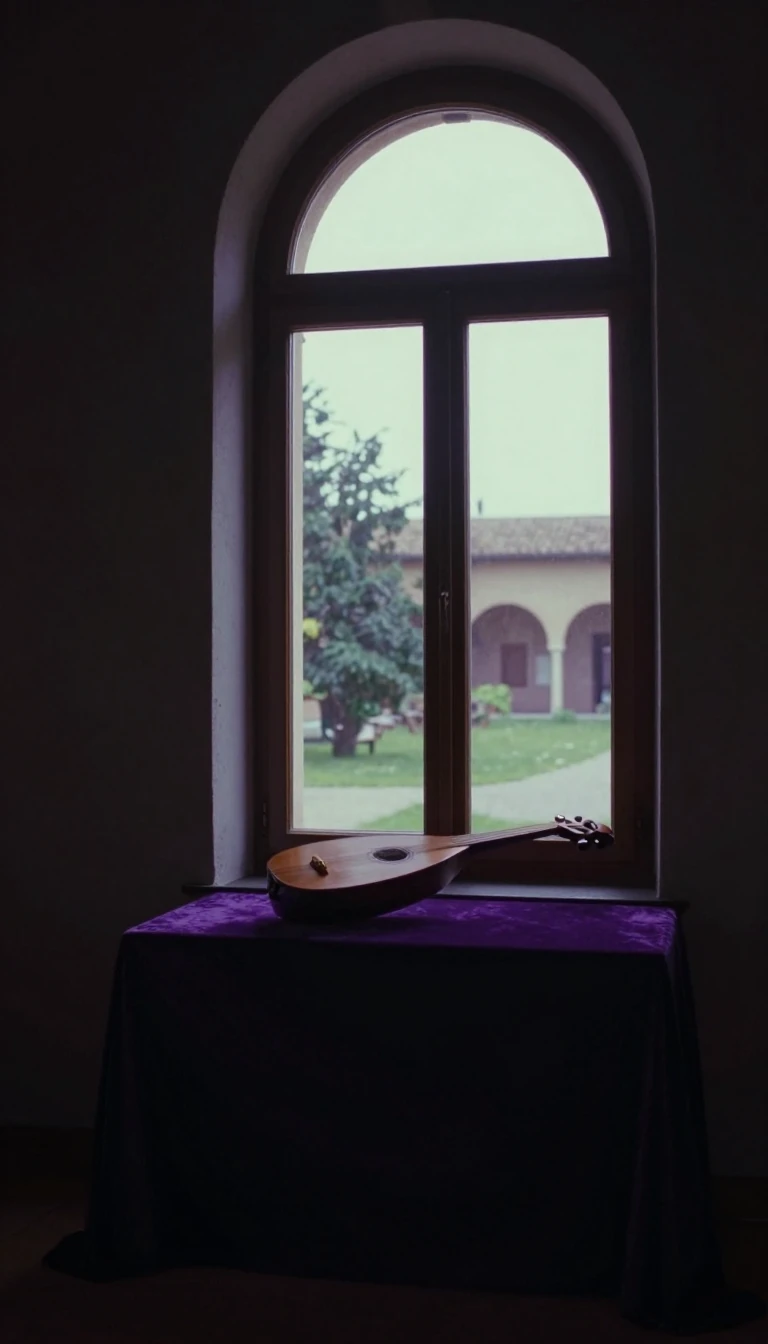 The zither is not just one instrument, but a vast family of stringed wonders.Often mistaken for a simple folk relic, the zither is a diverse class of instruments ranging from the ancient Chinese guqin to the modern concert zither. Whether played flat on a …
 How Sanjay Leela Bhansali turned personal tragedy into a signature aesthetic of Indian cinemaSanjay Leela Bhansali is a master of visual splendor, known for his grand period dramas and musical vision. Yet, his path to success was forged in the fires of personal loss and f…
 Why Kolkata built a massive stadium to escape the constraints of its historic grounds.In 1984, Kolkata faced a sporting crisis. Its traditional Maidan club grounds were too small for the massive crowds, and the iconic Eden Gardens struggled to balance cricket and f…
- How a Viking chief’s settlement became the beating heart of medieval French powerRouen began as a Roman outpost, but its trajectory shifted when a Viking leader secured the city through a treaty. From a base for Northmen to a contested prize between English an…
 The Rosary is more than a string of beads; it is a meditative cycle.Often mistaken for a simple counting tool, the Rosary is a structured meditative practice centered on the life of Christ. By cycling through specific prayers and reflecting on key…
 Is the actor a creative artist or merely a vessel for the playwright's words?The Royal Academy of Dramatic Art, established in 1904, remains the gold standard for acting training. Yet, the very nature of the craft it teaches remains a subject of intense de…
 The Russian nobility was not a static caste but a fluid, state-manufactured social project.Far from a rigid hereditary elite, the Russian nobility was a dynamic, state-engineered class. By the 19th century, commoners frequently ascended into its ranks, while ancient ari…
 From period drama star to director, Romola Garai reshapes the British screen landscape.Romola Garai has spent decades as a fixture of prestige costume dramas and psychological thrillers. Yet, her most significant evolution lies behind the camera. By transitioning fr…
 Why Japan uses three different systems to write its language in Latin scriptJapanese is traditionally written with kanji and kana, but the use of Latin script—known as rōmaji—is surprisingly common. From early Jesuit dictionaries to modern computer input …
 Romain Rolland: The Nobel Laureate Who Defined Europe’s Moral Consciousness During WartimeA French novelist and mystic, Romain Rolland was awarded the 1915 Nobel Prize for his lofty idealism. Beyond his literary achievements, he was a dedicated pacifist who influenced …
 The Mad Baron who tried to resurrect the Mongol Empire in the twentieth centuryRoman von Ungern-Sternberg was a Baltic German aristocrat who became a brutal warlord in the Russian Civil War. Driven by occult beliefs and a fanatical devotion to monarchy, he l…
 Perched on a dramatic canyon, Ronda is a city defined by its deep, jagged history.Ronda, a Spanish municipality carved in two by the hundred-meter-deep El Tajo gorge, is far more than a scenic mountain retreat. From its origins as an ancient settlement to its r…
- Was the French Reign of Terror a calculated political system or a chaotic reaction?The Reign of Terror remains a polarizing chapter of the French Revolution. While often remembered as a state-sponsored machine of mass execution, historians debate whether it was …
 The Puritan clergyman who defied colonial power to invent the separation of church and state.Banished from Massachusetts for his radical views, Roger Williams founded Rhode Island as a sanctuary for religious dissenters. By rejecting state-enforced faith and insisting on …
 The Soviet leader who governed from a hospital bed while hoarding bundles of cash.Konstantin Chernenko ascended to the pinnacle of Soviet power in 1984, yet he was a terminal patient from the start. His brief, thirteen-month tenure was defined by physical frail…
 Beyond Jon Snow: How Kit Harington Navigated Fame, ADHD, and a Diverse Acting CareerKnown globally as the brooding Jon Snow, Kit Harington’s path extends far beyond Westeros. From his early West End breakthrough to his recent critical acclaim in Industry, Haringt…
 Kokkashugi: How Japan’s Statist Ideology Challenged Liberal Democracy in the Early Twentieth CenturyEmerging in the late Meiji period, kokkashugi was a powerful political doctrine that rejected liberal individualism in favor of a sacred, organic unity between the Japanese people…
 Kemi Badenoch: The Blunt-Spoken Conservative Leader Redefining British Opposition PoliticsAs the first Black leader of the Conservative Party, Kemi Badenoch has risen to prominence by challenging identity politics and woke ideology. Her journey from a childhood in Nige…
 Kentucky is a state defined by its position in the middle of everythingKentucky is a land of striking contradictions, where genteel horse farms meet rugged coal mines and the urban North bleeds into the antebellum South. As the first state west of th…
- The teenage revolutionary who smiled at the gallows and became a national iconIn 1908, eighteen-year-old Khudiram Bose was executed by British authorities for a botched assassination attempt in India. Despite the tragic loss of innocent lives, his calm defi…
 Why Joyce Carol Oates writes about violence: it is not invention, it is history.Joyce Carol Oates is one of the most prolific American writers, averaging two books a year. While critics often fixate on the recurring themes of bloodshed and self-destruction in…
 A prolific German author built a global empire on adventures he never actually experienced.Karl May sold 200 million books by transporting readers to the American West and the Orient. Though he posed in costume and claimed to be the hero of his own tales, he spent most …
 Why this German city’s unique fan-shaped layout inspired the design of Washington, D.C.Karlsruhe is not just a German legal hub; it is a geometric marvel. Planned in 1715 with 32 streets radiating from a central palace, its fan-like design was so influential that Th…
 How a Wisconsin Judge Turned Cold War Paranoia Into a National Political CrusadeJoseph McCarthy transformed from an undistinguished senator into the face of American anticommunism overnight. By weaponizing fears of Soviet subversion, he dominated the early 19…
 Napoleon’s eldest brother was a king twice over, but never a true sovereign.Joseph Bonaparte was a diplomat, lawyer, and soldier who served as king of both Naples and Spain. Yet, despite his royal titles, he remained a subordinate to his younger brother, …
 From tea plantations to Shakespeare, the restless life of actor Joss AcklandJoss Ackland was a prolific performer whose career spanned over 130 roles, from high-stakes espionage in Tinker Tailor Soldier Spy to Disney’s The Mighty Ducks. Yet, behind the sc…
 The dangerous, disappearing act of the modern journalist in an era of news fatigueJournalism is shifting from a pillar of democracy to a profession under siege. As local newsrooms vanish and legacy outlets face declining trust, journalists navigate a landscape …
 Was the beloved disciple a young man, an old sage, or a mythic figure?John the Apostle is a pillar of the early church, yet his life is shrouded in legend. Traditionally credited with writing the Fourth Gospel and Revelation, he remains a figure of …
 The playwright who defined post-war British anger later became a nostalgic country gentleman.John Osborne exploded onto the stage in 1956, becoming the face of a generation disillusioned with the fading British Empire. Yet, the man who once famously cursed his country and…
- How a boy who preached to chickens became the conscience of the U.S. Congress.John Lewis rose from rural Alabama poverty to lead the civil rights movement, enduring brutal violence to secure voting rights. After decades of activism, he transitioned into a l…
 How a self-taught lawyer transformed the Supreme Court into a co-equal branch of government.Before 1801, the U.S. Supreme Court was a minor institution that had never struck down a law. John Marshall, a man with almost no formal schooling, changed everything. By pioneeri…
 Beyond the marches, how a teenage runaway became the architect of American brass sound.John Philip Sousa is remembered for his stirring military anthems, but his influence extended far beyond the parade ground. From his early days as a teenage apprentice in the Mari…
 Why the Chief Justice of the United States compares his role to a baseball umpireJohn Roberts, the 17th chief justice of the Supreme Court, famously promised to act as a neutral arbiter rather than a lawmaker. By framing his judicial philosophy through the len…
 From Queens to Broadway: How John Leguizamo turned personal struggle into a cultural movementJohn Leguizamo transformed a childhood defined by neighborhood fights and self-doubt into a prolific career as a comedian, actor, and activist. By blending autobiography with hist…
 From innkeeper's son to king: the meteoric rise of Napoleon's most daring cavalry commander.Joachim Murat began life as a seminary student but abandoned the church to become the most celebrated cavalry marshal of the Napoleonic era. As King of Naples, he balanced vanity …
 How a missing finger and a tragic childhood shaped a psychedelic rock iconJerry Garcia became the face of the hippie counterculture, yet his path to the Grateful Dead was paved with personal loss and unconventional beginnings. From losing a finger in a …
 How a reluctant lawyer became the chronicler of the British upper middle classJohn Galsworthy, a man trained for the bar, found legal practice so uncongenial that he turned to literature instead. He eventually won the Nobel Prize for Literature in 1932, lar…
 How a Yale dropout and dilettante became America’s first national novelistJames Fenimore Cooper began his career as an aimless amateur, writing his first novel on a dare. Yet, he soon crafted the Leatherstocking Tales, a series that defined the American…
 How a Navy survivor became the definitive interpreter of Eugene O'Neill's stage worksJason Robards survived the sinking of the USS Northampton in World War II before becoming a titan of the American stage and screen. Renowned for his mastery of Eugene O'Neill's pl…
 How a prolific marine painter became the most famous artist in the Russian EmpireIvan Aivazovsky was a titan of 19th-century art, creating roughly 6,000 paintings during a career spanning six decades. Though he lived in the remote Crimean town of Feodosia, his…