 Intellect Plus
Human body & genes
387 cards. Each one is a 40-second story with a five-minute read behind it. Page 5 of 7.
 Arizona State grew from a four-room teacher school into a 160,000-student giantIn 1886, 33 students started classes in a single four-room schoolhouse in Tempe, on land mostly donated by a local couple. Today Arizona State University counts 160,051 students, …
 The arrowhead may be 74,000 years old, and hobbyists still make a million a yearStone points from a South African cave, around 64,000 years old, still carry traces of blood, bone and the plant-resin glue that fixed them to shafts. Making that glue took real p…
 To an archaeologist, a carved bone is an artefact but a butchered one is notArchaeologists sort finds with surprising care. A pebble carried far from the river that rounded it is a manuport, a charred hearth stone is an ecofact, a hearth itself is a featu…
 arXiv began as an overflowing physics mailbox and changed how science gets sharedAround 1990 a physicist's habit of emailing papers to colleagues kept filling their inboxes. Paul Ginsparg's fix, a central mailbox at Los Alamos in 1991, became arXiv, where Grig…
 Button, cremini and portobello are all the same mushroom at different agesThe white button mushroom, the brown cremini or chestnut, and the big flat portobello are one species, Agaricus bisporus, sold at different stages and colours. The white version d…
 The angstrom outgrew the metre, then quietly fell out of the official systemOne angstrom is a ten-billionth of a metre, about the radius of a phosphorus atom. For half a century spectroscopists defined it by a glowing line of cadmium light rather than tru…
 The aorta stretches with every heartbeat to keep blood flowing between beatsEvery time the heart squeezes, the body's largest artery balloons outward, then gently recoils while the heart refills. That elastic bounce, known as the Windkessel effect, smooth…
 The appendix may be a safe house for gut bacteria, not useless leftoversFor generations the appendix was written off as useless, largely because removing it seemed to cause no harm. In 2007 researchers at Duke University proposed a job for it: shelter…
 The aquatic ape hypothesis won fans and celebrities but never convinced anthropologistsA distinguished marine biologist sat on his idea for thirty years because colleagues advised him to. When Alister Hardy finally proposed in 1960 that human ancestors had waded and…
 Childhood leukemia survival climbed from under 10 percent to 90 percentIn the 1960s, fewer than one child in ten survived acute lymphoblastic leukemia. By 2015 about nine in ten did. It is the most common childhood cancer in the United States, and it…
 The Adam's apple may owe its name to a Hebrew mistranslationAccording to an old folk belief, a piece of the forbidden fruit lodged in Adam's throat and passed to all his descendants. A 1662 anatomy translation recorded the idea. A linguist…
 Body fat turned out to be a hormone-making organ, not inert paddingFor a long time, fat was thought of as a passive store, a cushion that also kept the cold out. It is now recognised as a major endocrine organ, pumping out leptin, oestrogen, resi…
 Aflatoxin was unmasked by a mystery disease killing English turkeysIn 1960, young turkeys across England were dying of a mystery illness dubbed Turkey X disease. The culprit turned out to be a poison made by a common mould growing on peanut feed.…
 Two doctors once used the same numbers for opposite blood typesIn 1907 the Czech serologist Jan Janský labelled blood groups I to IV. Unaware of him, the American physician William L. Moss used the same numerals, but his group I was Janský's …
- The teardrop hand axe served our ancestors for well over a million yearsIn 1797 John Frere sent two worked flints from Hoxne in Suffolk to London, arguing they came from a very ancient period indeed, made by people without metal. He was ignored. Those…
 Every nerve signal is a tiny electrical explosion that feeds on itselfA neuron at rest holds its interior at around minus 70 millivolts. Nudge it up to roughly minus 55 and something runaway happens: gates in the membrane swing open, sodium rushes i…
 A coin-sized glass disc holding the human genome now sits in an Austrian salt mineIn 2024 researchers laser-etched all three billion characters of the human genome onto a glass disc the size of a coin, added a picture key inspired by the Pioneer spacecraft plaq…
 The ye in Ye Olde Tea Shoppe was never really pronounced yeThose quaint shop signs reading Ye Olde are built on a misreading. Early Modern English writers used the old letter thorn for the th sound, so the word was simply the, and thorn l…
- Your body deliberately kills billions of its own cells every single dayAn average adult loses somewhere between 50 and 70 billion cells a day to apoptosis, a tidy, genetically controlled form of self-destruction. It is not damage. Your fingers exist …
 Cold sores come from a virus that hides for life in a facial nerveOnce the herpes simplex virus gets in, it never leaves. After the first infection it retreats up a nerve to a cluster of cells beside the brain called the trigeminal ganglion and …
 Six elements make up almost all of your body's weightOxygen, carbon, hydrogen, nitrogen, calcium and phosphorus account for about 99 per cent of a human body's mass. Five more, potassium, sulfur, sodium, chlorine and magnesium, supp…
 Your downward-pointing nostrils mark you as an Old World monkeyLook at a spider monkey's nose and then at your own. Its nostrils open sideways; yours point down. That small difference splits the simians into two great branches, and it places …
 Your body splits cells about 10 quadrillion times in a lifetimeOver a single human life, cells divide roughly 10 quadrillion times. Each split has one overriding job: copy the full set of genetic instructions and hand an exact duplicate to ea…
 Robert Hooke named cells after monks' rooms while staring at corkIn 1665 Robert Hooke peered at a paper-thin slice of bottle cork and saw a mass of tiny pores. He called them cells, after the Latin for a small room like a monk's lodging. What h…
 Francis Crick admitted he never knew what the word dogma meantFrancis Crick called his big idea about genetic information the central dogma, and it haunted him. Years later Jacques Monod told him a dogma is a belief beyond doubt. Crick, who …
 The tiny cell antenna biologists dismissed as useless for a centuryAlmost every animal cell sprouts a single hair-thin projection called a primary cilium. Found in 1898, it was written off for about a hundred years as a leftover with no real purp…
 Your collarbone is first to harden and among the last to finishThe collarbone starts turning to bone in the fifth and sixth weeks after conception, before any other bone in the body. Yet it is one of the last to finish, not completing the pro…
 C. difficile wears chain-mail armour and poisons its gut rivalsClostridioides difficile survives by a mix of armour and chemical warfare. A mesh-like protein coat shields it from saliva enzymes and some antibiotics, it releases a compound tha…
- The US Army searched for a brainwashed prisoner and never found oneBrainwashing entered English in a Miami newspaper in October 1950 and soon dominated Cold War headlines. Yet a 1956 US Army report concluded that exhaustive research by several ag…
 Empty fishing nets off Ghana pushed hunters deeper into its forestsWhen foreign and local trawlers depleted West African fish stocks, people in Ghana turned to wild animals for protein. More than 30 years of records tie falling fish supplies to s…
- Cambridge University Press turned down the Oxford English DictionaryIn the Victorian era, lexicographer James Murray pitched Cambridge University Press a vast new dictionary. The press said no, so he took it to Oxford, where it became the Oxford E…
 Candida albicans reads one word of the genetic code differently from nearly all lifeIn almost every organism, the DNA triplet CUG tells the cell to add the amino acid leucine to a protein. In the common yeast Candida albicans it means serine instead. That quirk m…
 The chemical once in lava lamps, fire extinguishers and dry shampooFor about 70 years carbon tetrachloride was sold as the safe cleaner, a non-flammable swap for gasoline. It filled fire extinguishers, weighted the wax in lava lamps and even went…
 Every heartbeat is a 0.8-second relay timed by a built-in delayAt a resting rate of around 70 to 75 beats a minute, one full heartbeat lasts about 0.8 seconds. In that sliver of time four chambers fill, squeeze and seal in strict order, and t…
 Heart muscle wrings out blood like someone twisting a damp clothLayers of muscle around the heart's left ventricle run at right angles to one another. When they contract together, the chamber shortens, narrows and twists all at once, much like…
 Your wrist bones harden in a spiral order that can reveal your ageA newborn's wrist contains no true bone, only cartilage. The eight small carpal bones start hardening after birth in a roughly spiral sequence, beginning with the capitate and ham…
 The world's leading cause of blindness is usually curable with surgeryCataracts, a clouding of the eye's lens, leave around 12 to 15 million people blind worldwide and over 200 million with impaired sight. Replacing the cloudy lens with an artificia…
 Bornean orangutans build beds with pillows and hold leafy umbrellas in the rainEach night a Bornean orangutan weaves a fresh nest from branches, sometimes adding a roof, a pillow and a blanket of leaves. Youngsters learn the craft by watching their mothers. …
 Bladder cancer is often first noticed as painless blood in the urineEach year about 500,000 people learn they have bladder cancer, most after spotting blood in their urine without any pain. Tobacco smoking causes roughly half of all cases, and the…
 The blood-brain barrier keeps over 98 percent of small-molecule drugs out of the brainAround 1900, Paul Ehrlich injected dyes into animals and found they coloured every organ except the brain. The reason is the blood-brain barrier, a lining of tightly sealed cells …
 Charles Drew scaled up plasma processing from test tubes to mass production in wartimeIn August 1940 New York hospitals began collecting blood so its plasma could be shipped to Britain. Charles Drew, the project's medical supervisor, turned laboratory test-tube met…
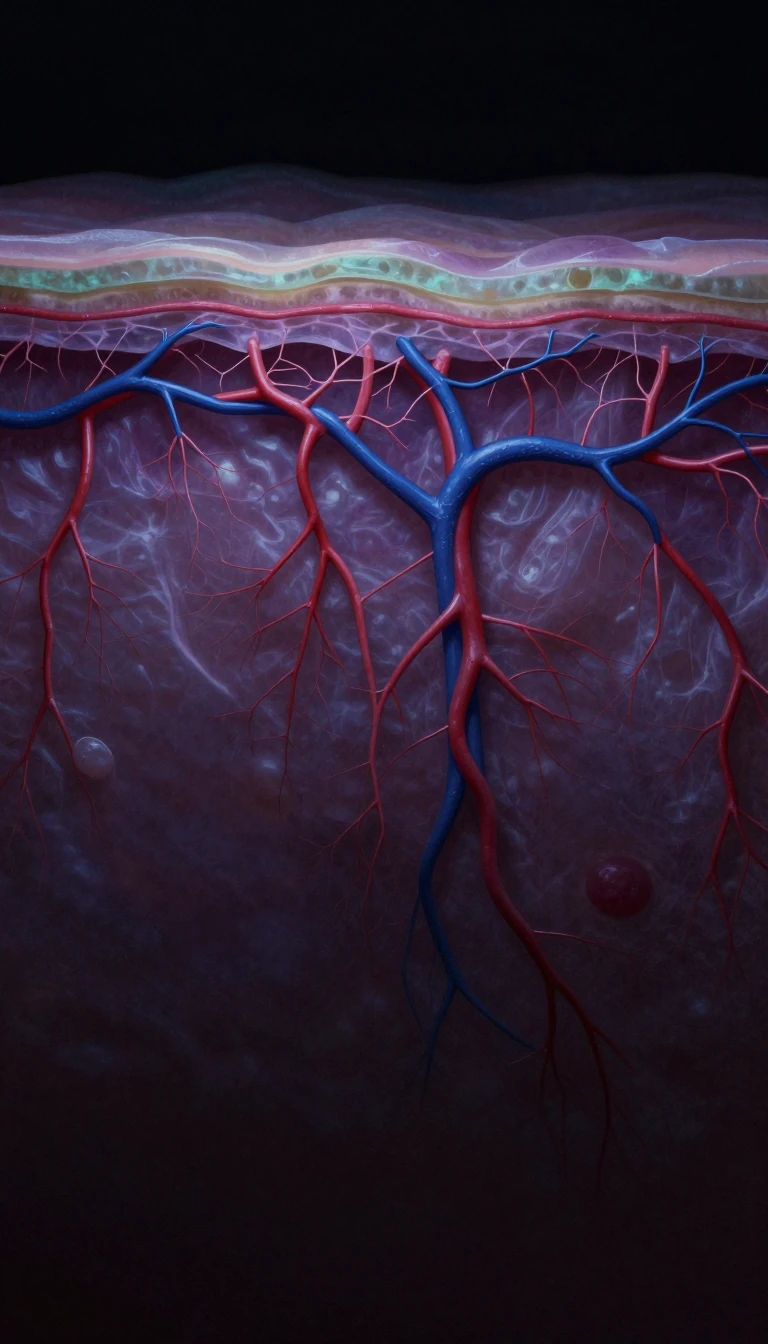 Your muscles alone may contain 9,000 to 19,000 kilometres of capillariesAugust Krogh once estimated that the capillaries in a heavily muscled human body might stretch about 100,000 kilometres. Later studies, using better density figures and average ad…
 Biometric systems either confirm who you claim to be or search for who you areA fingerprint scanner can work in two very different ways. In verification mode it compares your print with one stored template to confirm you are who you claim to be; in identifi…
 Biophysics turns the tools of physics on life, down to single moleculesRichard Feynman once imagined repair machines so tiny that a patient could swallow the doctor. That 1959 idea belongs to biophysics, the field that aims the methods of physics at …
 The pharynx is a shared tube where food always gets right of wayEvery breath and every swallow pass through the same short stretch of throat. The pharynx channels air towards the lungs and food towards the stomach, and a flap of cartilage call…
 The Paleocene was the ten million years when mammals inherited an emptied planetAn asteroid ended the age of dinosaurs about 66 million years ago, and a vast burst of carbon closed the next chapter ten million years later. Between those two catastrophes lay t…
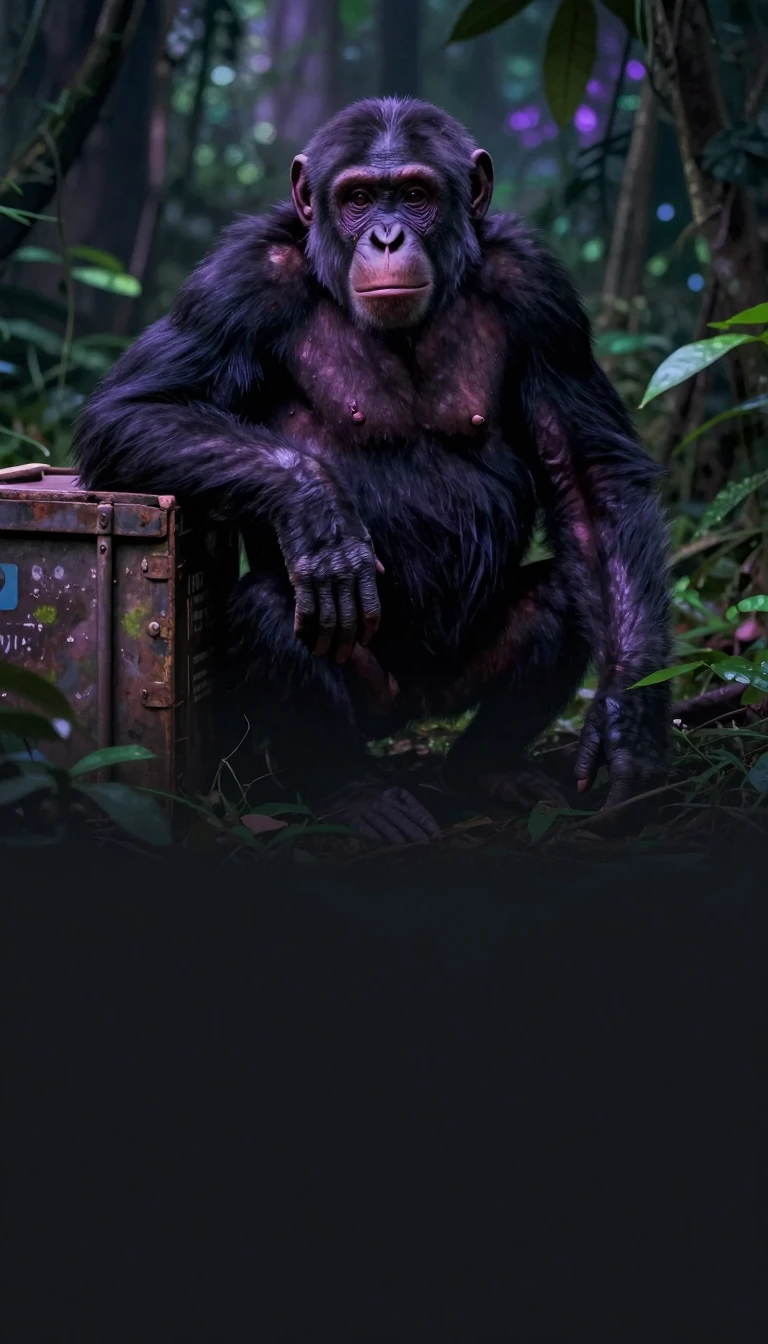 A river split our two closest relatives into warlike chimps and peaceful bonobosChimpanzees live north of the Congo River, bonobos to its south, and the two were treated as one species until 1928. They parted ways only about a million years ago, yet chimp gro…
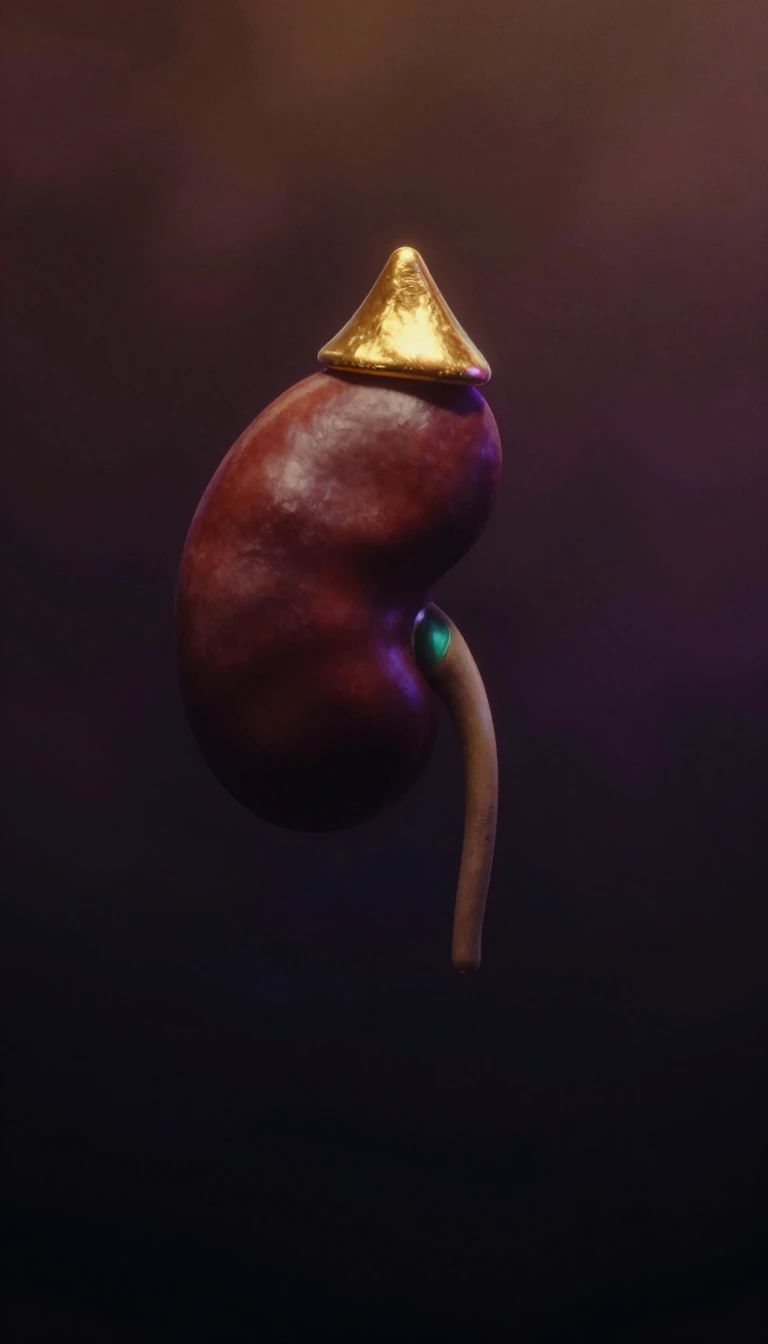 Four lentil-sized glands in your neck keep your blood calcium on a knife edgeTucked behind the thyroid sit usually four tiny glands, each about 6 millimetres long and weighing roughly 30 milligrams. Despite the similar name, they have nothing to do with th…
 Peptides are the short protein chains doing much of your cells' talkingString a few amino acids together and you get a peptide; keep going past a certain size and it becomes a protein. These short chains act as hormones, antibiotics and venoms, and b…
- Cats, ducks and ants were humanity's first pest controllers, long before DDTEgyptians were setting cats loose in grain stores around 3000 BC, and Chinese farmers placed colonies of weaver ants in citrus orchards to eat beetles and caterpillars. Pest contr…
 Your immune cells defend you by literally eating invaders wholeWhen bacteria slip into a wound, some of the first responders simply swallow them. The cell wraps its membrane around the intruder, seals it inside a bubble and digests it. This c…
- Why your thumb has one bone fewer than your fingers, and whales have many moreCount the bones in your fingers and toes and you reach 56, fourteen per hand and foot. Each finger has three, the thumb only two. That same pattern holds for most land mammals, ye…
 The Orang Asli descend from several migrations spanning 60,000 yearsThe oldest inhabitants of Peninsular Malaysia are not one people but many. The Orang Asli, just 0.7 per cent of the peninsula's population in 2017, include descendants of the firs…
 Ovarian cancer risk tracks how many times a woman has ovulatedEvery ovulation prompts cells in and around the ovary to divide, and each round of division is a small chance for something to go wrong. That is why ovarian cancer risk rises with…
 The moment of human ovulation was first filmed by accident in 2008Nobody had ever filmed a human egg leaving its follicle until 2008, when a gynaecologist performing a routine hysterectomy happened to catch it on camera. The egg emerged and was …
- Oxygen damage to DNA may explain why complex cells, and sex, evolvedWhen cyanobacteria began filling Earth's air with oxygen about 2.45 billion years ago, the gas was probably poisonous to much surrounding life. One hypothesis holds that the press…
 Elephants carry 20 copies of the gene nicknamed the guardian of the genomeElephants have huge bodies and trillions of dividing cells, yet they rarely get cancer. Part of the explanation may be that they carry 20 copies of TP53, the gene for a protein ca…
- Why paywalls hit scientific papers harder than novels, and the colours of escapeA literature class can swap a modern bestseller for a free classic without much loss. An emergency doctor treating severe poison ivy cannot swap today's paywalled review for a 90-…
- Opioid, opiate and narcotic mean different things, and tolerance is unevenYour own body makes opioids: endorphins are one family of them. The word covers anything, natural or lab-made, that binds the brain's opioid receptors, from poppy-derived morphine…
 The surgical specialty that counts as dentistry in one country, medicine in anotherIn the United States, the surgeons who rebuild shattered jaws, repair cleft palates and remove head and neck cancers are formally dental specialists; a medical degree is optional.…