 Intellect Plus
Human body & genes
387 cards. Each one is a 40-second story with a five-minute read behind it. Page 7 of 7.
 Jared Diamond won a Pulitzer and a long quarrel with historiansJared Diamond trained to study how the gallbladder absorbs salt. He then built a second career watching birds in New Guinea, and a third explaining world history. His book Guns, G…
 A Dutch doctor went looking for the missing link and actually found a fossilNobody had ever found an early human fossil by setting out to look for one. In 1887 a young Dutch anatomist, Eugene Dubois, quit academia, joined the colonial army as a surgeon an…
 For 33 years scientists confidently miscounted human chromosomes as 48In 1923 Theophilus Painter peered through his microscope and counted 24 pairs of human chromosomes, 48 in all. Others repeated his figure for decades. Only in 1956 did the Indones…
 The unguided mechanism that shapes the complexity of all lifeWe often imagine evolution as a purposeful climb toward perfection. In reality, it is a much more spontaneous process. By filtering random variations through the sieve of survival…
 The 99% similarity: what truly defines the human species?We often define ourselves by our unique intellect and culture, yet genetically, any two humans are over 99% identical. Beyond the complex brain and advanced technology, our biolog…
 The four-letter alphabet that writes the entire story of lifeEvery living thing, from the smallest bacteria to the largest human, is built using the same incredibly simple code. Though we feel unique, our genetic blueprints are 99.9% identi…
 The towering giants of Asia: were Denisovans much larger than we imagined?For years, we viewed the Denisovans through tiny fragments of bone and DNA. But new, unpeer-reviewed research into leg bones from Taiwan suggests these extinct cousins might have …
 The biological master keys capable of rewriting their own cellular identityMost cells in your body are specialists, locked into a single, permanent role. But stem cells possess a rare, dual power: the ability to divide indefinitely while retaining the po…
 The microscopic marathon: how a single cell navigates a biological obstacle courseAn average ejaculation contains up to 400 million sperm, yet only one will succeed. To reach the egg, these tiny travelers must survive acidic environments, navigate chemical sign…
 Traits are not just genes; environment and history also shape what we pass on.While we often assume traits are dictated solely by DNA, the reality is far more complex. Some observable characteristics are shaped by the interplay between our genes and our sur…
 The RNA World: Life’s original architect before DNA ever existedBefore DNA became the master blueprint of life, a more versatile molecule likely held the reins. RNA didn't just store information; it acted as both the architect and the builder,…
 The biological machinery that builds, moves, and maintains your very existenceFrom the structural scaffolding of your cells to the enzymes driving your metabolism, proteins are the essential architects of life. They are not static building blocks, but dynam…
 The patent is not a right to invent, but a right to excludeWe often view patents as a golden ticket to profit. In reality, a patent is a legal bargain: the inventor promises to reveal their secrets to the public in exchange for the power …
 The forest-dwelling humans who share 97% of our DNAThey are the most solitary of the great apes, yet their intelligence rivals our own. Known as the 'person of the forest,' the orangutan is a master of the canopy, using sophistica…
 The real reason Neanderthals vanished wasn't just climate change or competitionFor decades, we believed Neanderthals succumbed to the harsh Ice Age or the arrival of modern humans. But new research suggests a more subtle killer: fragile social networks. Whil…
 The monk whose forgotten pea plants rewrote the laws of lifeIn the 1860s, Gregor Mendel’s experiments with pea plants were largely ignored by the scientific community. His radical idea—that heredity isn't a fluid blend of parents, but a pr…
 Is sexual orientation a social construct or a biological reality?While many believe sexual identity is purely learned from culture, scientific evidence suggests a much deeper, innate foundation. From prenatal hormones to genetic influences, the…
 The shifting boundaries of what it means to be humanFor decades, we defined the genus Homo by their mastery of stone tools. But new fossil evidence suggests our ancestors were crafting implements long before the first 'true' human …
 The genetic engine behind the world's fastest tree-dwelling mammalsGibbons are masters of the canopy, swinging through Southeast Asian forests at speeds of 55 km/h. But their true marvel lies in their DNA: a highly unstable genome that uses 'jump…
- Beyond selective breeding: the precision of the genetic revolutionFor millennia, humans shaped life through slow, natural selection. Today, we can move genes across entire kingdoms, creating organisms that never could have existed through mating…
- The elusive definition of a gene: is it a protein factory or a code?We often think of genes as simple blueprints for proteins. But the biological reality is far more complex. From non-coding sequences to the debate over what constitutes a 'true' g…
 The microscopic engines that turn millions of years into millisecondsWithout enzymes, the chemical reactions necessary for life would move at a glacial pace. These biological catalysts possess the incredible power to accelerate reactions by factors…
 The evolutionary arms race hidden inside a single eggshellFrom the massive whale shark to the tiny bee hummingbird, eggs are much more than simple vessels for life. They are sophisticated biological machines, featuring specialized teeth,…
- How your cells achieve near-perfect biological fidelity every single timeEvery time a cell divides, it must duplicate its entire genome with staggering precision. This isn't just a simple copying task; it is a high-stakes mechanical feat involving spec…
- The 1 in a quintillion math that identifies a single human beingWe share 99.9% of our DNA with every other person on Earth. Yet, through the power of repetitive genetic sequences, scientists can now calculate match probabilities so precise the…
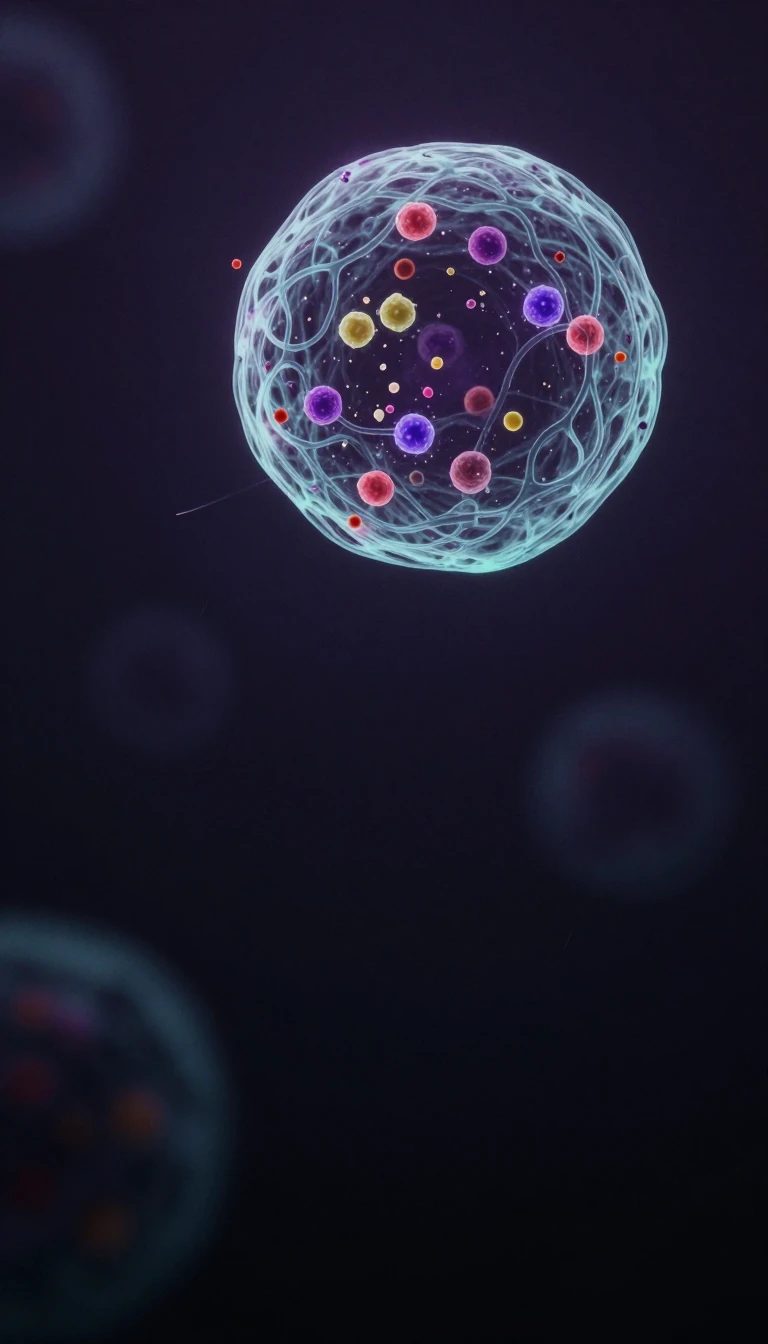 The invisible gatekeeper that has been misunderstood for centuriesFor nearly two hundred years, scientists looked right at cells but missed their most vital boundary. They focused on the visible cell wall, dismissing the membrane as a secondary …
 The invisible checkpoints that prevent your cells from turning into cancerEvery second, your body is performing a high-stakes biological audit. To grow and heal, cells must replicate their entire genetic blueprint with perfect precision. One single erro…