 Intellect Plus
Society
7,726 cards. Each one is a 40-second story with a five-minute read behind it. Page 118 of 129.
Subtopics: Ancient · Basics · Charity & volunteering · Childhood · Communication · Contemporary · DIY & home improvement · Early modern · Education · Education & schools · Everyday inventions · Everyday life: General · Family and kinship · Family life · Family, kinship and interpersonal relationships · Generations · Hobbies & collecting · Home & housekeeping · Home living · Household items · Housing · International organizations · Journalists · Law · Law & justice · Law enforcement, intelligence, and security officials · Leisure & holidays · Mass media · Modern · Pets · Post-classical · Postal services · Public transport · Railways · Roads & driving · Social media & the internet · Socialites and favorites · Society · Society and social sciences: General · Sociology · Stages of life · UK & Ireland: life
 The last country to abolish slavery did so in 1981Mauritania formally outlawed slavery in 1981, the last country in the world to do so. Colonial France had nominally banned it across French West Africa back in 1905, but that ban …
 The word class began as a Roman census category for military serviceClass comes from the Latin classis, the label Roman census takers used to sort citizens by wealth so they could decide who owed what military service. Only in the late eighteenth …
 Social equality is about equal respect, not about relieving hardshipHelping the unfortunate and pursuing social equality sound alike but are different goals. Social equality is the ideal that any two people deserve equal respect and an equal right…
 The Black Death gave Western Europe's surviving peasants unexpected bargaining powerWhen plague killed a large share of Europe's people in the mid-1300s, survivors found land plentiful and labour scarce. Many workers could now demand wages and other compensation,…
- Lord Acton judged a country's freedom by how safe its minorities feltThe Victorian historian John Dalberg-Acton proposed a blunt yardstick: the surest test of whether a country is truly free is the security its minorities enjoy. It is one of many c…
 Falling birth rates, more than longer lives, are what make populations grow oldAgeing societies are usually explained by people living longer, but that is the smaller half of the story. Across the world, declining fertility now drives most population ageing:…
- The dollar-a-day poverty line never literally meant one US dollarWhen the World Bank introduced its famous dollar-a-day poverty line in 1990, it did not mean converting a dollar at the exchange rate. The figure uses purchasing power parity, ask…
 Ancient Athens jailed people who could not pay fines, then had to add limitsIn classical Athens, imprisonment was a common fate for people unable to pay their fines. Because poor citizens often could never pay, they faced being locked up indefinitely, so …
 Nonviolent civil rights protests won sympathy while violent ones fed calls for orderOne study of the American civil rights era found a striking split. Nonviolent activism tended to earn favourable press and shift public opinion toward the issues organisers raised…
 John Dewey argued a public forms only when people face a shared problemIn 1927 philosopher John Dewey offered a surprising definition: a public is not simply the population but a group of people who face a similar problem, recognise it and organise t…
 In 2023 America's national science academies formally dropped race from geneticsAmerica's national science, engineering and medical academies officially renounced using race in genetics research in 2023. It capped a long shift in which scientists came to rega…
- Liberty and freedom are not quite synonyms, and philosophers have argued whyOne common distinction treats freedom as the raw ability to do whatever you want and can, while liberty means the absence of arbitrary restraint, bounded by everyone else's rights…
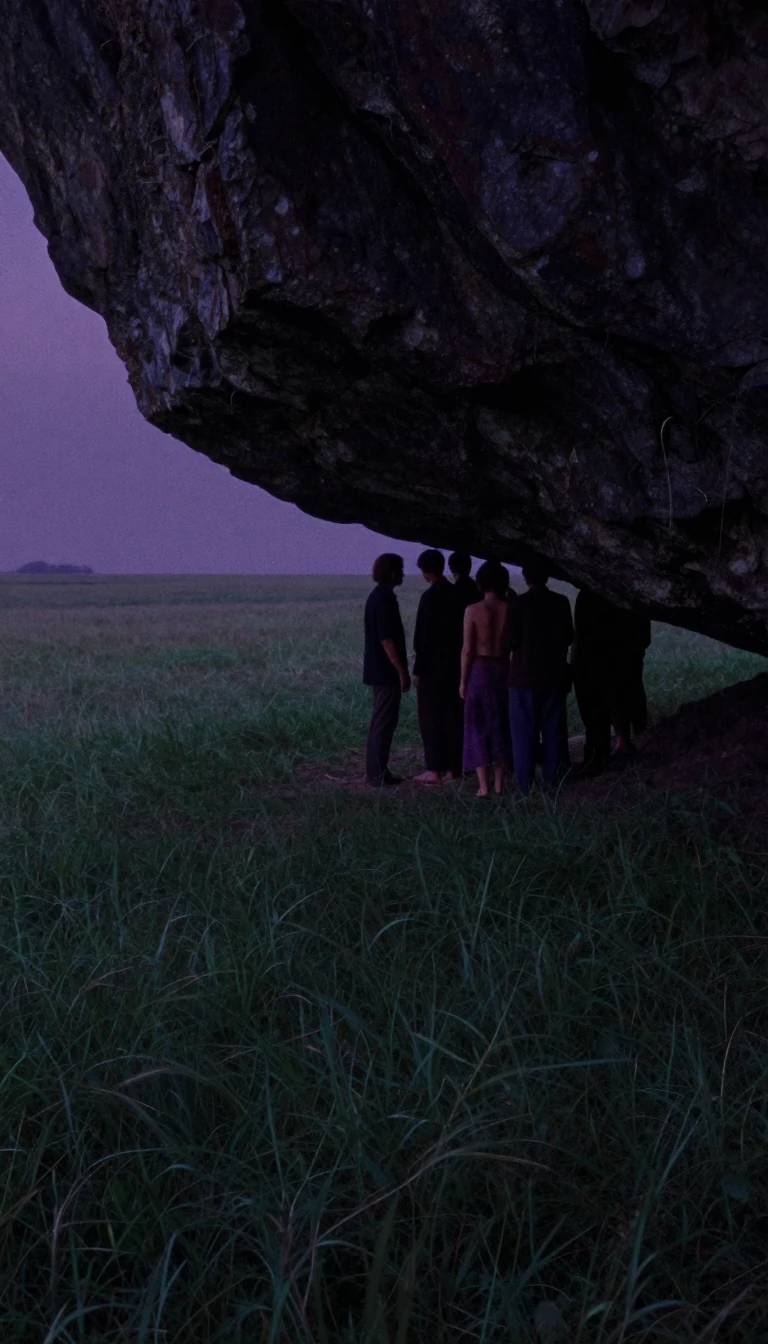 Sociologists define a minority by power, not by headcountIn everyday speech a minority is simply the smaller group. Academics mean something else: a group at a disadvantage relative to a dominant one. Under apartheid, black South Africa…
 India once had more NGOs than primary schools, roughly one per 600 peopleAround 2009 India was estimated to host about 2 million non-governmental organisations, far more than its primary schools and health centres. The United States has roughly 1.5 mil…
 Nonprofits are allowed to make a surplus; they just cannot hand it outA common belief holds that nonprofit organisations may not turn a profit. In fact the rule is a non-distribution constraint: income beyond expenses must go back into the mission r…
 China's one-child rule covered only about a third of people by 1984China's one-child policy is remembered as near-universal, and a strict limit was imposed in 1980 and written into the constitution in 1982. Yet exceptions multiplied so quickly th…
- A committee only gets smarter with size if its members beat a coin tossCondorcet's jury theorem shows that if the average member of a group votes more accurately than chance, adding members raises the odds the majority is right. The catch cuts both w…
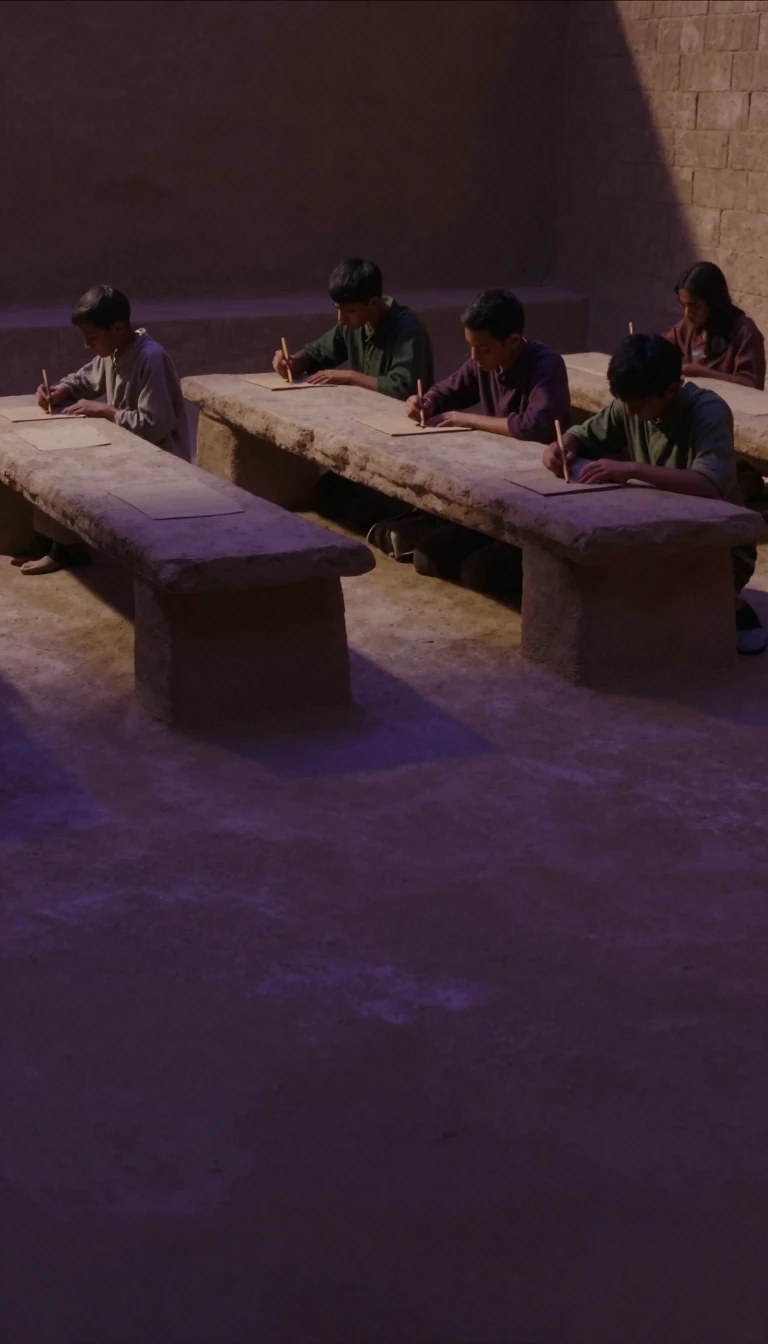 London's Foundling Hospital asked parents no questions, only for a tokenWhen sea captain Thomas Coram opened London's Foundling Hospital in 1741 for deserted children, nobody asked who the child or parent was. Instead, each parent left a distinguishin…
 The word pacifism was coined in 1901, though opposition to war is ancientFrench peace campaigner Émile Arnaud invented the word pacifism, and fellow activists took it up when their tenth international peace congress met in Glasgow in 1901. The idea beh…
 Shalom means far more than peace, including hello, goodbye and good healthFrom around 1300, English speakers began using peace in greetings as a rendering of the Hebrew shalom. But shalom, related to Arabic salaam, carries a crowd of other meanings: jus…
 Medieval England punished homelessness with stocks, whipping and eventually brandingAfter the Peasants' Revolt, a 1383 English law let constables seize vagabonds and demand proof they could support themselves; failure meant gaol or three days in the stocks. Whipp…
 Most people who migrate never leave their own countryMigration conjures images of border crossings, but the dominant form worldwide is internal: people moving from village to city, or out to the suburbs, within a single nation. Glob…
- World population growth peaked in 1968 and has roughly halved sinceHumanity grew by 2.1 percent a year in 1968, the very year Paul Ehrlich published The Population Bomb. The annual rate has since fallen to about 1.1 percent, and forecasters keep …
 A thirteenth-century West African charter guaranteed the right to lifeCenturies before Enlightenment philosophers wrote about natural rights, the Mali Empire's constitution, the Kouroukan Fouga, set out a right to life and to bodily integrity along …
 Crowdmapping after the 2010 Haiti earthquake gave humanitarianism a digital branchWhen volunteers plotted reports on online maps after the 2010 Haiti earthquake, Patrick Meier called it digital humanitarianism. The idea of helping strangers in distant emergenci…
 In the UN's accounting, you can be malnourished without being hungryThe Food and Agriculture Organization treats hunger, malnutrition and food insecurity as overlapping but distinct. Every hungry person is malnourished and food insecure, yet someo…
 Crossing the Atlantic shrank from five weeks to eight days, and immigration surgedIn the eighteenth century an Atlantic crossing could take up to five weeks. By the early twentieth it took about eight days. As the time and cost of moving fell, so did the opport…
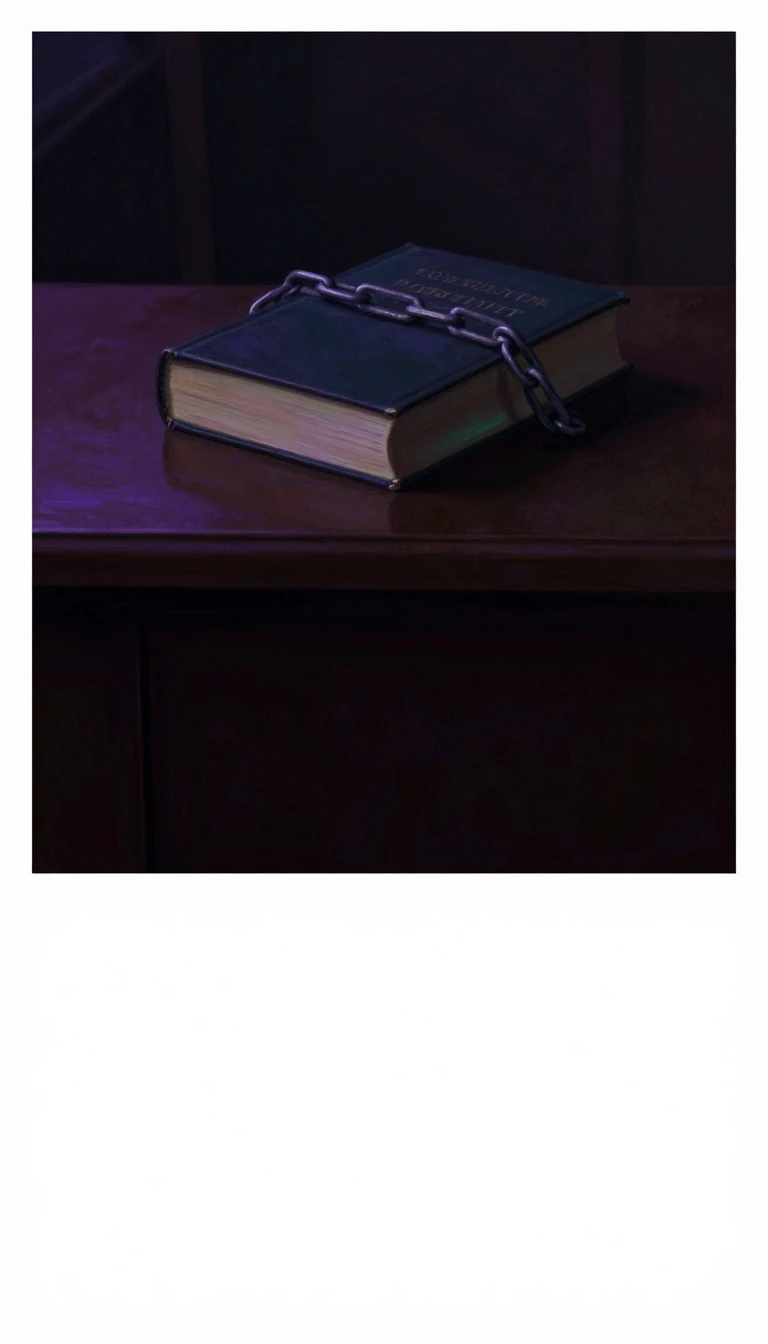 To social scientists, a handshake can be an institution just like a parliamentAsk a sociologist what an institution is and the answer may include a firm handshake. The broadest definitions cover any regular, shared practice that shapes behaviour, formal or …
 A famine is officially declared only when three measurable thresholds are crossedUnder the international classification used today, an area counts as being in famine only when a fifth of households face extreme shortages, acute malnutrition in children tops 30…
 Ancient Rome's first fire brigade haggled with owners while their houses burnedMarcus Licinius Crassus assembled 500 men who raced to burning buildings in Rome and then did nothing. Crassus would offer the frantic owner a pitiful price for the property. If t…
 Seventeenth-century London gangs wore coloured ribbons to tell rival factions apartLong before modern street crews adopted colours, London in the 1600s was plagued by organised gangs with names like the Mims, Hectors, Bugles and Dead Boys. They clashed with one …
 A celibate American sect practised sex equality in its leadership for two centuriesIn 1788 Joseph Meacham, head of the Shakers' central ministry, became convinced by a revelation that men and women stood on equal footing. He brought Lucy Wright in as his counter…
 The British Library adds about three million items to its shelves every yearPhysical books were long humanity's main way of storing knowledge, and the British Library alone holds more than 170 million items, growing by some three million a year. Publishin…
 Thomas Edison secretly bankrolled the journal Science and got friendly coverageWhen the journalist John Michels launched Science in 1880, Thomas Edison helped fund it. In return the inventor, then under fire for delays on his light bulb, received favourable …
 Scientific American once reported on a boat-lifting invention by Abraham LincolnAmerica's oldest continuously published magazine began in 1845 as a four-page weekly obsessed with the Patent Office. Its early pages covered perpetual motion schemes, the univers…
 America's largest television network is not ABC, CBS or NBC but PBSThe commercial giants dominate talk of American television, but the largest network is the non-profit Public Broadcasting Service. Unlike its rivals, PBS has no single central sch…
 The Hitchhiker's Guide began as a radio pitch about destroying Earth six timesDouglas Adams first proposed a radio series called The Ends of the Earth, six episodes each finishing with the planet wiped out in a new way. While drafting the first, he needed a…
 The word multimedia was coined to advertise a 1966 Long Island disco showLong before CD-ROMs and streaming, multimedia described a nightclub act. The singer and artist Bob Goldstein used it in July 1966 to promote Lightworks at L'Oursin in Southampton,…
- National Geographic began as a dry journal for just 165 membersThe first issue, in September 1888, went to 165 charter members and contained no photographs to speak of. Then, in January 1905, the editors ran several full-page pictures of Tibe…
- Nature turns away more than nine in ten papers submitted to itGetting published in Nature can make a scientific career: fewer than 8 percent of submissions are accepted. Yet the journal began in 1869 not as an elite gatekeeper but as a publi…
 NBC's peacock logo was invented to sell colour televisionIn 1956 NBC unveiled a stylised peacock to show off its pioneering colour broadcasts, and the Peacock Network nickname stuck. The company was already three decades old by then, fo…
- Why is man bites dog news, while dog bites man is not?News prizes the unusual. An ordinary event rarely qualifies, but a reversal of the expected does, which is the point of the old newsroom saying about men biting dogs. Across cultu…
 America's first newspaper was shut down immediately after its first issueIn 1690 Richard Pierce and Benjamin Harris printed a newspaper in Boston without government permission, and the authorities promptly suppressed it. It took a libel trial in 1735 a…
- Newspapers were not killed simply by the internet beating printThe obvious story says digital news defeated paper. The fuller picture is messier: most papers now publish online anyway, and anyone can subscribe digitally. What really drained t…
- The first news photograph ever printed had to be copied as an engravingOn 25 June 1848 someone photographed barricades in Paris during the June Days uprising. Presses could not yet reproduce photographs, so L'Illustration published it in July as an e…
- One of the founders of public relations could not explain what he didIvy Lee rebuilt the battered Rockefeller reputation and, with Edward Bernays, drafted an early definition of public relations. Yet asked at a hearing to describe his job, Lee admi…
- Common law got its name from being common to the English king's courtsAfter 1066, Norman kings built courts whose rulings applied across all of England, slowly pushing aside local folk and manor courts. That shared, judge-made law spread through the…
 The average written constitution lasts about 19 years, close to Jefferson's guessThomas Jefferson thought a constitution should expire after roughly 20 years, since the earth belongs to the living. Modern studies find that newly written national constitutions …
- Justinian's law code banned lawyers from citing the very sources it was built fromBetween 529 and 534, Emperor Justinian's editors boiled centuries of Roman law down to a few books and gave every page, even a student textbook, the force of law. Consulting the o…
 Facebook started with two students each putting in 1,000 dollarsIn January 2004 a Harvard sophomore coded a site he called TheFacebook, and he and classmate Eduardo Saverin agreed to invest 1,000 dollars apiece. It went live on 4 February. By …
 The word meme was invented by an evolutionary biologist in 1976Richard Dawkins coined meme in The Selfish Gene as a cultural counterpart to the gene: a unit of culture that copies itself from mind to mind. Seventeen years later Mike Godwin ap…
 In America, a blogger reviewing a free gadget must legally say soThe US Federal Trade Commission requires bloggers who write about products they were given for free to disclose the gift. The rule exists because in the United States almost anyon…
- Le Monde was launched on de Gaulle's wish, then spent decades defying himIn late 1944 Charles de Gaulle wanted France to have a prestigious paper speaking to the world, almost an unofficial voice of the Republic. The man chosen to run it, Hubert Beuve-…
- Magazines share their name with gunpowder stores and Russian shopsMagazine comes from the Arabic makhazin, storehouses, reaching English through French and Italian. It first meant a military depot. In 1731 an English editor borrowed the word for…
- The first printed mass medium was probably not books but cheap European printsChina printed the Diamond Sutra in 868 and invented clay movable type in 1041. Yet limited literacy and costly paper held back a mass market there. The earliest true mass medium w…
- English courts no longer call it alternative dispute resolution, because it is normal nowFor years, a party in England who refused mediation could not be forced into it. A 2023 Court of Appeal ruling, Churchill v Merthyr, overturned that rule. Judges can now order lit…
- England only gave criminals a general right to appeal in 1907Babylon had appeal judges under Hammurabi, and Rome recognised a right of appeal from 509 BC. Yet English common law resisted the idea for centuries. It took at least 28 parliamen…
- The word assassin may owe nothing to the drug it seems named afterAssassin comes, via Italian and French, from hashshashin, a label pinned on a medieval Ismaili order and linked to hashish. The popular story says its killers were drugged. Many E…
- Civil rights began as the privileges of a Roman citizenThe phrase civil rights translates the Latin for the rights of the citizen. In Rome even enslaved citizens had some legal standing. Two thousand years later, the same idea travell…
 About 150 countries run on legal codes descended from ancient RomeThe world's most widespread legal system does not rely on judges building law case by case. Instead, roughly 150 countries follow compact written codes whose ancestry runs back to…