 Intellect Plus
Society
7,726 cards. Each one is a 40-second story with a five-minute read behind it. Page 119 of 129.
Subtopics: Ancient · Basics · Charity & volunteering · Childhood · Communication · Contemporary · DIY & home improvement · Early modern · Education · Education & schools · Everyday inventions · Everyday life: General · Family and kinship · Family life · Family, kinship and interpersonal relationships · Generations · Hobbies & collecting · Home & housekeeping · Home living · Household items · Housing · International organizations · Journalists · Law · Law & justice · Law enforcement, intelligence, and security officials · Leisure & holidays · Mass media · Modern · Pets · Post-classical · Postal services · Public transport · Railways · Roads & driving · Social media & the internet · Socialites and favorites · Society · Society and social sciences: General · Sociology · Stages of life · UK & Ireland: life
 Simón Bolívar dreamed of a union of American republics in 1826At the Congress of Panama in 1826, Bolívar proposed a league of newly free American republics with a shared army and a supranational parliament. Only Gran Colombia ratified the tr…
 Scouting began as a week-long experiment with 21 boys on an English islandIn August 1907 a retired general took 21 boys of mixed social backgrounds to Brownsea Island in Dorset to test some ideas. Within two years 11,000 uniformed Scouts packed a rally …
- The Commonwealth's head is Charles III, yet the job is not hereditaryFifty-six countries, most of them former British territories, belong to a club that imposes no legal duties on its members at all. They swap high commissioners instead of ambassad…
 Europe's blue flag with gold stars was designed for a different organisationThe circle of gold stars that flies over Brussels was created in 1955 for the Council of Europe, a separate body based in Strasbourg. The European Union later borrowed both the fl…
 The G20 was born from a string of financial panics in the late 1990sA Mexican peso crash, the Asian financial crisis, Russia's 1998 meltdown and the collapse of a giant American hedge fund convinced two finance ministers that the rich-country G7 c…
 The World Court's rulings are final and binding, but it cannot enforce themFifteen judges in The Hague decide disputes between nations, and their judgments cannot be appealed. Yet the International Court of Justice has no police, no bailiffs and no army.…
- Interpol arrests nobody, and its name began as a telegraph addressFilms show Interpol agents kicking down doors, but the organisation is not a police force at all. It is a clearing house linking police in 196 countries through databases and comm…
 Woodrow Wilson won a Nobel for the League his own country refused to joinThe American president was hailed as the chief architect of the League of Nations and received the 1919 Peace Prize for it. Yet the United States never became a member. That absen…
 The premature obituary that supposedly created the Nobel Prizes may be a mythThe legend says Alfred Nobel read his own obituary in 1888, headlined The Merchant of Death Is Dead, after a French paper confused him with his brother Ludvig, and rewrote his wil…
 OPEC members broke 96 percent of their production promises, one study foundOPEC is the textbook cartel: agree to pump less, and everyone earns more. The catch is that each member profits most by quietly pumping extra. A political scientist who tracked co…
 A Cold War talking shop in Helsinki became Europe's election watchdogMoscow wanted the talks to lock in its grip on Eastern Europe. Finland wanted to show off its neutrality. The West hoped for calmer relations and better lives behind the Iron Curt…
 The African Union governs a bloc bigger than any nation on EarthFifty-five member states, more than 1.5 billion people and about 30 million square kilometres, from the Sahara to the Nile. The African Union, launched in Durban in 2002, replaced…
 Was the Arab League built to fail on purpose?Two political scientists looked at the Arab League's record and concluded its weakness was a feature, not a bug. Leaders praised Arab unity to shore up their legitimacy at home, t…
 Three leaders in a Belarusian forest signed the Soviet Union out of existenceOn 8 December 1991 the heads of Russia, Ukraine and Belarus met in a nature reserve near Brest and declared that the USSR had effectively ceased to be. In its place they proclaime…
 Scientific journals began as a Paris review of books and court rulingsBefore journals, scientists shared ideas by private letter. In 1664 Denis de Sallo, writing under a pseudonym, and printer Jean Cusson won a royal privilege from Louis XIV to publ…
 The school edition of Fahrenheit 451 was itself quietly edited about 75 timesRay Bradbury's novel about a society that burns books became a classroom staple, yet the Ballantine paperback most schools used contained roughly 75 edits, omissions and changes f…
 A single broken window can help a hurricane tear the roof off a houseWhen one window or door shatters in a severe storm, wind rushes inside and pressurises the house from within, making it far likelier that the roof lifts away. Closing interior doo…
 Countries rarely count who leaves, but some have built walls to stop themMost nations keep careful track of arrivals yet record little about departures, so emigration figures often have to be reconstructed from other countries' immigration files. Some …
 London banned smoky sea-coal in 1272, centuries before the green movementIn 1272 Edward I proclaimed a ban on burning and selling sea-coal in London after its smoke became a citywide nuisance. The fuel took its name from lumps found washed up on beache…
 Philosophers have spent decades trying to pin down exactly what euthanasia meansThe Greek roots simply mean good death, and the Roman historian Suetonius used the word for Augustus dying swiftly and peacefully in his wife Livia's arms. Turning that phrase int…
 Propaganda began as the name of a Vatican missionary office in 1622In 1622, as part of the Counter-Reformation, the Catholic Church set up the Congregation for Propagating the Faith to spread Catholicism in non-Catholic lands, known informally as…
 The Universal Declaration of Human Rights was designed like a Greek templeRené Cassin, the French jurist who shaped its final structure, pictured the 1948 declaration as the portico of a Greek temple. Its preamble forms the steps, the opening articles o…
 Why English law says will and testament when either word would doPeople often assume a will once covered land and a testament covered belongings, hence the double name. Records show the two words were used interchangeably. The pairing comes fro…
 One eyewitness quadrupled guilty verdicts in a mock trial, despite unreliable memoryIn a 1988 experiment by Elizabeth Loftus, mock jurors heard the same criminal case in two versions. With only circumstantial material, 18% voted to convict. When a shop clerk clai…
 Women voted on Pitcairn Island decades before most of the world's capitalsFrom 1838, the female descendants of the Bounty mutineers on tiny Pitcairn Island could vote, and they kept that right when the community resettled on Norfolk Island in 1856. Such…
- The Latin word behind suffrage once meant a ballot, then a bribeSuffrage comes from the Latin suffragium, first a voting tablet or the right to vote. By the second century it had drifted toward patronage and influence, by the fourth it meant a…
 How a phone in your pocket can be located, tracked and even overheardA mobile phone reveals its position even when idle. By comparing how long its signal takes to reach several nearby towers, a technique called multilateration pins down the handset…
 Walking off with the wrong scarf is not theft until you decide to keep itPicture a diner who grabs someone else's scarf from a restaurant coat rack by mistake. She has physically taken it, yet no crime has occurred, because she believed it was hers. If…
- Modern tort law grew from Anglo-Saxon fines paid to settle feudsLong before anyone separated crimes from private wrongs, Anglo-Saxon England handled most harms with payments to the victim or their clan. Weregild, charged for killing, aimed to …
 Treaties follow an unwritten template, from gerund-filled preambles to formal datesNo rule dictates what a treaty must look like, yet since the late 19th century most share a strikingly consistent shape. They open by naming the High Contracting Parties, often in…
 Two legal traditions disagree about whether truth emerges from contest or inquiryCommon law courts bet that truth surfaces when prosecution and defence fight openly before a neutral referee. Civil law systems bet instead on a magistrate who investigates exhaus…
- Nobody has agreed on a universal definition of crime, despite millennia of punishing itModern criminal law has no simple, universally accepted definition of crime. The most popular answer is circular: something is a crime because the law says so. Almost every societ…
 Returned Boxer Rebellion reparations paid for the founding of Tsinghua UniversityAfter foreign armies crushed the Boxer uprising, China owed the United States a US$30 million indemnity, which Secretary of State John Hay considered excessive. In 1909 Congress c…
 Universitas originally meant any guild or corporation, not specifically a place of learningIn Latin, universitas simply meant a group of people joined into one body: a society, company, guild or corporation. As medieval towns grew, associations of students and teachers …
 At medieval Bologna, students hired, fined and policed their own professorsThe world's oldest continuously operating university was run by its students. Foreign students in Bologna formed mutual aid guilds, hired teachers, set their pay and fined them fo…
 A Danish queen's trip to Rome won Copenhagen its university in 1479Denmark's oldest university exists partly thanks to Queen Dorothea of Brandenburg, whose visit to Rome secured a papal bull from Sixtus IV in June 1475. Her husband Christian I fo…
- Göttingen was the world's mathematics capital until the Nazi purge emptied itBy 1900 David Hilbert and Felix Klein had drawn mathematicians from around the world to Göttingen. Then came the purge of 1933. When the Nazi education minister reportedly asked H…
 The 1923 earthquake wrecked Tokyo's university and rebuilt it as a seismology leaderOn 1 September 1923 the Great Kanto Earthquake destroyed nearly every main building of the University of Tokyo, including its library and irreplaceable scientific and historical c…
 Toronto's university was conceived as a bulwark against American republican ideasJohn Graves Simcoe, an Oxford-educated officer who had fought against the American revolutionaries, wanted a college in Upper Canada to stop republicanism seeping north. His wish …
 Vienna's university waited nineteen years for the pope to allow theologyDuke Rudolf IV founded the University of Vienna on 12 March 1365, but Pope Urban V refused to approve its theology faculty, probably under pressure from Emperor Charles IV, who di…
- Yale was named for a merchant whose gift was nine bales of goodsIn 1718 Cotton Mather asked Elihu Yale, a Boston-born merchant who had grown rich in Madras running the East India Company's Fort St. George, to fund a building for a struggling C…
 Pedagogy literally means leading a child, and its theorists have argued about how ever sinceThe word pedagogy comes from Greek roots meaning child and to lead, originally the job of attending boys. Scholars still disagree whether teaching is a science that can be codifie…
- Peking University outlived the failed reform movement that created it in 1898The Guangxu Emperor authorised an imperial university in June 1898 as part of the Hundred Days' Reform. By late September the conservative Empress Dowager Cixi had seized power an…
 Victorian English teachers were paid according to their pupils' test resultsFrom 1870, when England made state schooling compulsory, elementary teachers' pay depended on whether children hit exact targets: reading a short newspaper paragraph, writing from…
 For four months in 1783, Princeton's Nassau Hall served as America's capitalPrinceton's oldest building has had a dramatic life. British soldiers briefly held Nassau Hall during the 1777 Battle of Princeton before surrendering to George Washington's army.…
 A papal wine tax helped fund Rome's Sapienza, now Europe's largest universityIn 1431 Pope Eugene IV reorganised Rome's university and levied a new tax on wine to pay for it. The proceeds bought a palace that later held the church of Sant'Ivo alla Sapienza.…
- Nineteenth-century secondary schooling rationed years of study according to social classUntil the mid-1800s, European secondary schools were designed around class: labourers' sons got about four years, merchants' sons five, and the elite seven. The idea that every te…
 The famous Sorbonne began as a royal chaplain's lodging house for poor scholarsRobert de Sorbon, chaplain to King Louis IX, noticed how hard it was for poor students to reach the rank of doctor. In February 1257 he founded a house where clergy could live tog…
- High school got its name when secondary schooling counted as higher educationWhen most children never went beyond basic schooling, higher education meant what we now call secondary school. That older usage survives in the term high school. Today higher edu…
 Songbirds, single-celled giants and even pea plants show signs of learningPut a stuffed owl in a songbird's cage and the birds panic, then gradually calm down. Swap in a different owl and the alarm returns. That narrow, stimulus-specific fading is habit…
 From Sumerian clay tablets to Finnish borrowing records, libraries span 4,600 yearsThe earliest libraries held no books at all, only archives of cuneiform clay tablets from Sumer, some dating to around 2600 BC. The word itself traces to the Latin liber, meaning …
 After British troops burned Congress's library, Jefferson sold it his own booksIn August 1814 British forces burned the Capitol and more than 3,000 volumes of the young Library of Congress. Within a month Thomas Jefferson offered his personal collection as a…
 Munich's great university began in Ingolstadt and moved twice to dodge historyLMU Munich was founded in 1472 in the Bavarian town of Ingolstadt, not in Munich at all. French threats during the Napoleonic Wars pushed it to Landshut in 1800, and King Ludwig I…
- MIT narrowly escaped being swallowed by Harvard, then an anonymous donor saved itCash-strapped and cramped in Boston's Back Bay, MIT's governing corporation once agreed to merge with Harvard. Only a 1905 court ruling that it could not sell its land killed the …
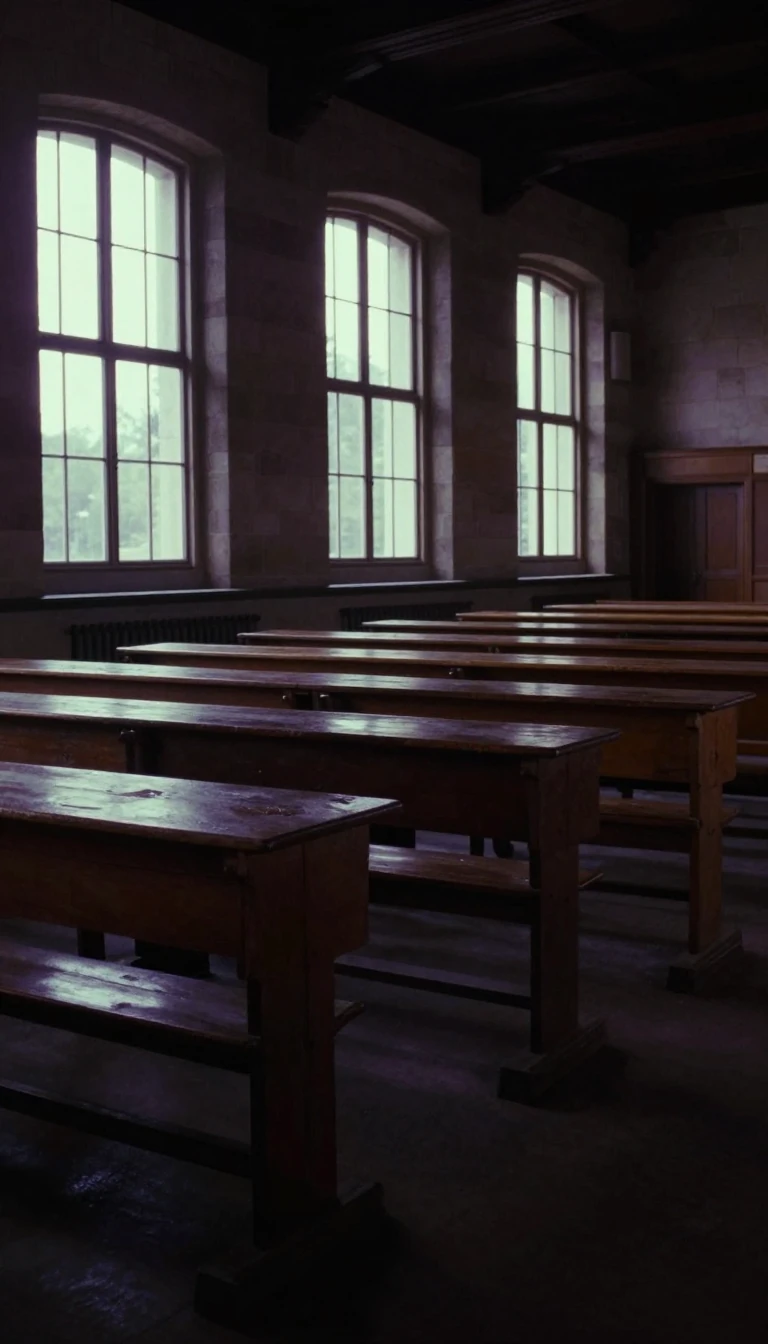 A 1903 newspaper called Oxford and Cambridge master's degrees bogus academic fraudsAt Oxford and Cambridge, a Master of Arts has long come without further study, awarded to bachelor's graduates after some years simply to make them full members of the university.…
 Student strikes won Mexico's national university its autonomy and shaped its turbulent historyUNAM, with more than 324,000 students, is among the world's largest universities, and its students have repeatedly shut it down. Strikes over exam rules in the 1920s helped win it…
- Britain's civil service exams were partly inspired by imperial ChinaChina pioneered standardised written exams for choosing officials, beginning in 605 under the Sui dynasty. Centuries later, European thinkers from Voltaire to East India Company o…
- Harvard's changing seals trace its drift from Puritan college to VeritasHarvard's founders feared leaving New England's churches with an illiterate ministry. The colonial legislature voted the college into being in 1636, and a dying clergyman's gift o…
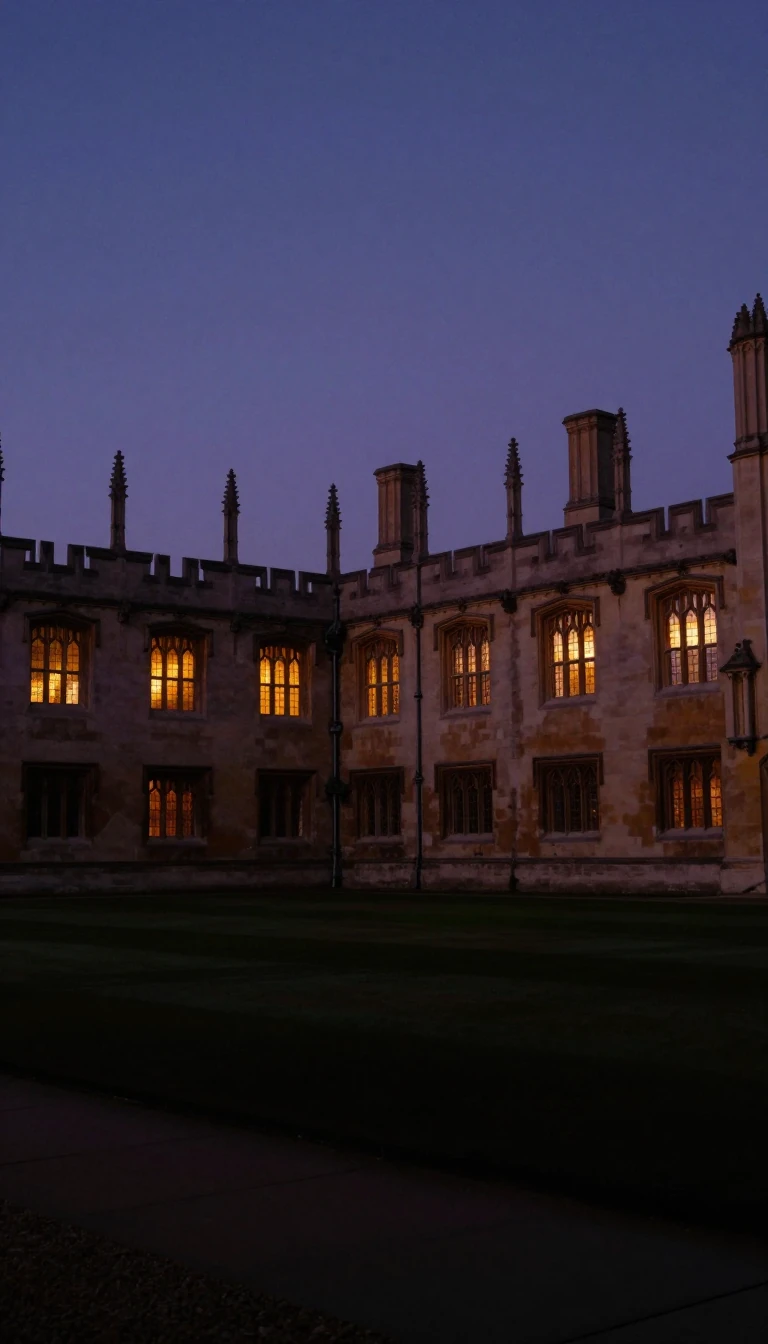 A papal split let a small Rhineland capital found Germany's oldest universityWhen two rival popes emerged in 1378, German scholars in Paris backed Rome, lost their stipends and had to leave. Rupert I, ruler of the Palatinate, saw an opening and secured pap…
 California once effectively banned homework for children under fifteenIn 1901 California's legislature passed an act that all but abolished homework for anyone younger than 15. It capped a parental revolt against evening assignments. American attitu…