 Intellect Plus
Astronomy
1,544 cards. Each one is a 40-second story with a five-minute read behind it. Page 19 of 26.
 NASA's Cassini spacecraft prepares to sample an extraterrestrial ocean on Saturn's moon EnceladusOn October 28, 2015, NASA's Cassini spacecraft performed a historic flyby, passing directly through a plume of icy spray erupting from Enceladus. This teleconference details the m…
 Watch the Moon dance through every hour of 2021 in high definitionThis 4K visualization tracks the Moon's changing phases and libration throughout 2021. By rendering the lunar cycle at hourly intervals, it offers a precise look at how our satell…
 How a ten-day stare into an empty patch of sky changed our cosmic perspectiveIn 1995, astronomers pointed the Hubble Space Telescope at a seemingly vacant sliver of space near the Big Dipper. Over ten days, they captured light from 3,000 previously unseen …
 NASA’s new telescope will use exploding stars to map the history of our universeThe Nancy Grace Roman Space Telescope is set to revolutionize cosmology by observing thousands of type Ia supernovae. By acting as cosmic standard candles, these rare stellar expl…
 Why five galaxies are currently locked in a slow-motion, billion-year cosmic collisionTo mark its 32nd anniversary, the Hubble Space Telescope captured a rare, isolated gathering of five galaxies known as Hickson Compact Group 40. These galaxies are so tightly pack…
 Why Mercury’s Oddly Oval Orbit Is the Perfect Laboratory for Studying Our SunMercury possesses the most elliptical orbit in our solar system, swinging closer to and further from the Sun than any other planet. This unique path allows it to experience vastly…
 Why the Moon appears to wobble in the night sky throughout the yearThis 4K NASA visualization tracks the Moon's phases and libration at hourly intervals throughout 2023. By compressing a month of lunar movement into 24 seconds, it reveals the sub…
 Why the Moon appears to wobble as it orbits the EarthThis 4K visualization tracks the Moon's phases and libration throughout 2023 from a Southern Hemisphere perspective. By compressing a month of lunar motion into 24 seconds, the an…
- Why the Moon turns blood red during a total lunar eclipseDiscover the mechanics behind a total lunar eclipse and why the Moon glows red. This NASA presentation explains the celestial alignment required for this event and provides a look…
- The cosmic speed limit that prevents stars from collapsing foreverWhy don't all stars collapse into black holes? The answer lies in a quantum-mechanical standoff between gravity and the Pauli exclusion principle. This threshold, known as the Cha…
 The moon so large it pulls its planet off-centerCharon is not your typical moon. With a mass roughly 12% that of Pluto, it is so substantial that the two bodies orbit a center of gravity located outside Pluto itself. This uniqu…
- The heavy-duty telescope that could face an extinction-level eventLaunched in 1999, the Chandra X-ray Observatory has redefined our view of the violent universe. From black holes to supernova remnants, its high-resolution mirrors see what Earth …
 Sedna is a frozen fossil from the dawn of our solar systemDiscovered in 2003, the dwarf planet Sedna orbits the Sun in a path so extreme it takes 11,400 years to complete. This mysterious object, coated in reddish organic sludge, sits fa…
- A white hole is the theoretical opposite of a black hole, but does it exist?In general relativity, a white hole is a region of spacetime that nothing can enter, yet energy and matter can escape. While black holes are born from collapsing stars, white hole…
 A cosmic bubble sculpted by the fury of a massive starIn our own Milky Way, a massive star is actively carving out a glowing void. The Bubble Nebula is a striking example of how stellar winds and intense radiation can sculpt the inte…
 Why the Hubble Space Telescope is facing its own version of Y2KThe Hubble Space Telescope operates on a unique internal clock that resets every 17 years. This video explores the complexities of synchronizing Hubble's distinct timekeeping with…
 The tiny star that marks a tainted victory or a missing lineFrom the ancient libraries of Alexandria to modern baseball record books, the asterisk has served as a silent witness to imperfection. It is more than just a footnote; it is a sop…
 The community-driven gallery capturing the world's most advanced telescopesExplore a unique visual archive where professional astronomers and amateur enthusiasts share their perspectives on ESO facilities. This episode highlights how collective photograp…
 What do astronomers do when they aren't looking at the stars?Beyond the telescopes, the people at ESO lead diverse lives. This episode introduces six specialists working in Germany and Chile, exploring the intersection of their professional…
 A white dwarf packs the mass of our Sun into the volume of Earth.Imagine a star so dense that a single ton of its material would fit inside a matchbox. These stellar remnants are not powered by nuclear fusion, but by the strange laws of quantum…
- A massive new camera in Chile is filming the entire night sky every few days.The Vera C. Rubin Observatory is revolutionizing astronomy with a 3.2-gigapixel camera that captures the southern sky in a continuous ten-year time-lapse. By snapping images every…
 Seven stars, a thousand stories: why the Big Dipper is humanity's celestial compass.The Big Dipper is more than a ladle in the sky. Across cultures, this asterism has been a wagon, a bear, a funeral bier, and a hunter’s bow. While it serves as a vital navigationa…
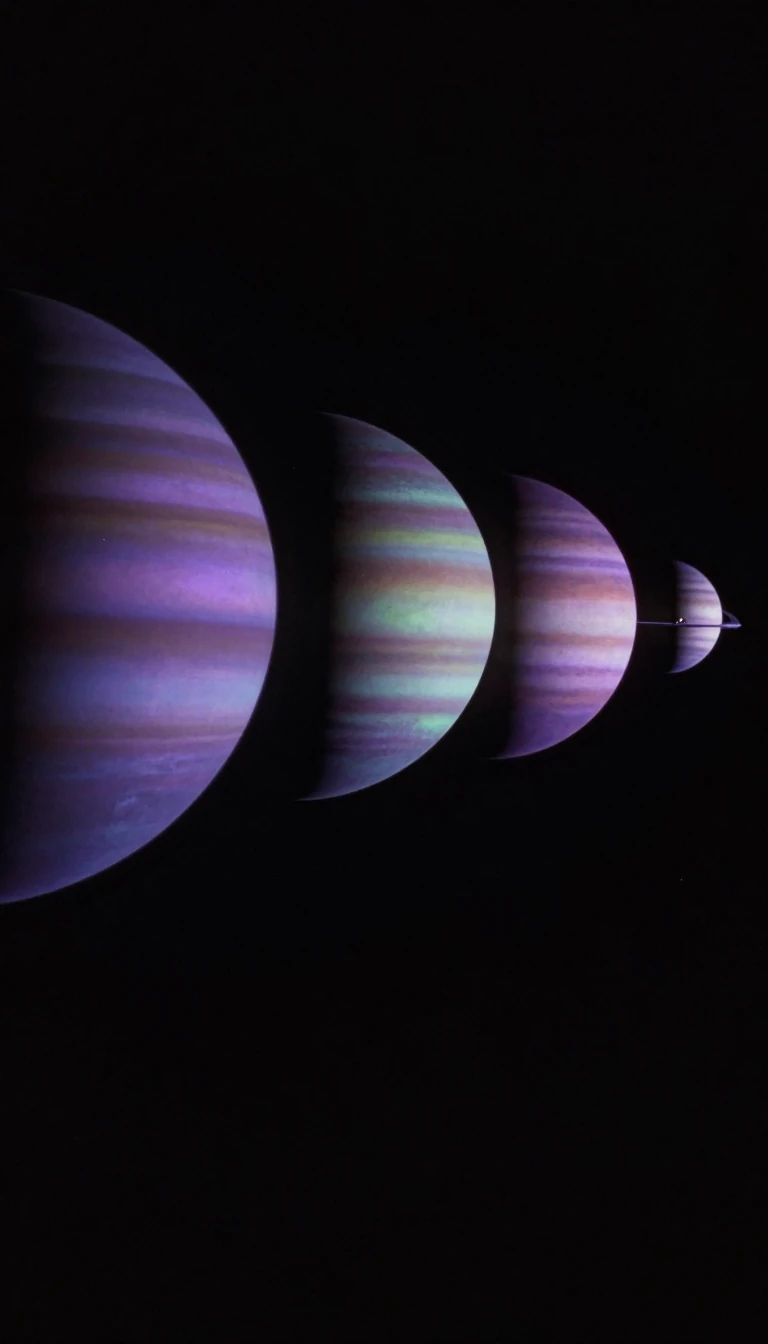 Voyager 2 is a lone traveler, still sending data from the edge of space.Launched in 1977, Voyager 2 remains our only visitor to the ice giants, Uranus and Neptune. Now drifting through the interstellar medium, this resilient probe continues to transmi…
 TON 618: The Colossal Quasar That Outshines Entire Galaxies With Its Massive Black HoleDeep in the cosmos lies TON 618, a hyperluminous quasar powered by one of the largest black holes ever discovered. This celestial engine is so brilliant it masks its own host gala…
- Why the Greek letter Tau is the most versatile symbol in modern scienceFrom the rotational force of mechanics to the optical depth of distant stars, the nineteenth letter of the Greek alphabet is a universal shorthand. Tau appears in fields as divers…
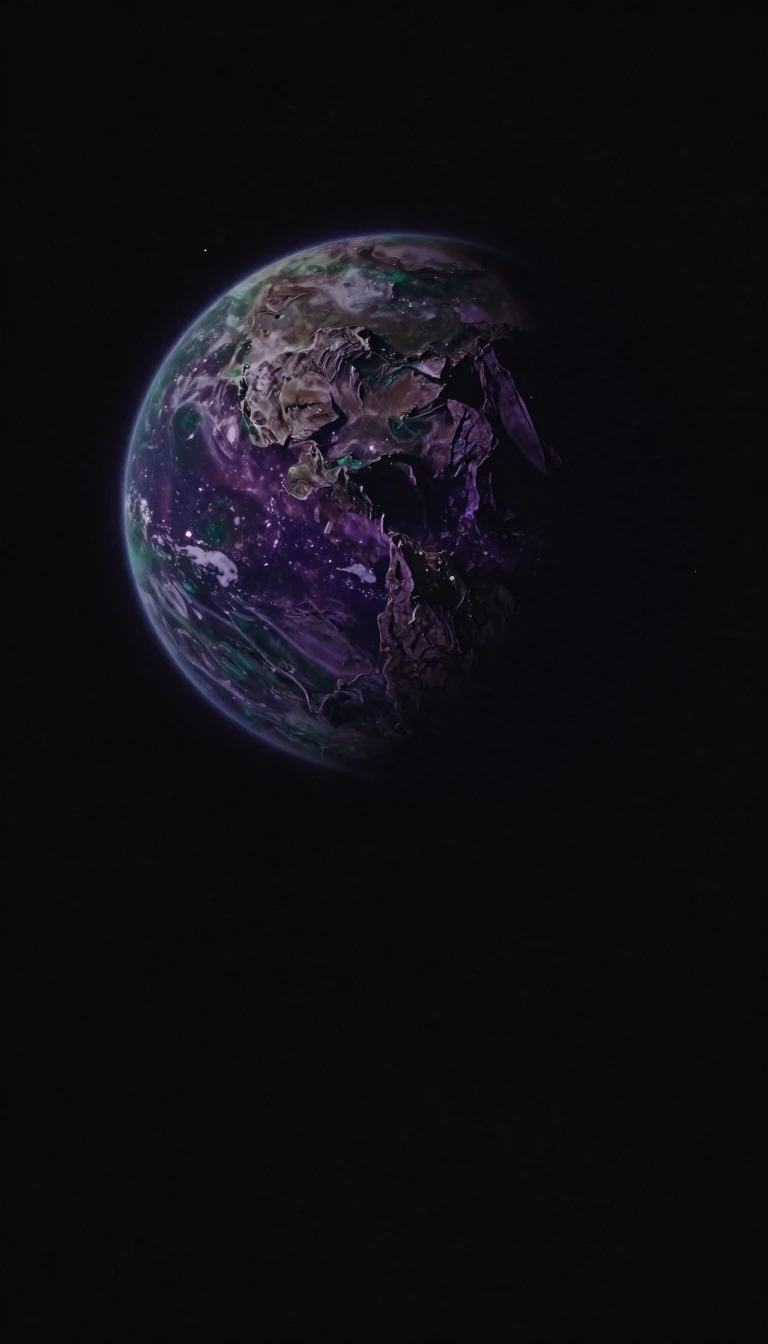 Why the mythical Planet X remains a persistent, disproven ghost in our solar systemThe Nibiru cataclysm is a persistent doomsday theory claiming a massive, hidden planet is on a collision course with Earth. Despite decades of viral warnings, scientific evidence …
 Saturn's iconic rings might be a fleeting cosmic accident rather than an ancient feature.For centuries, astronomers assumed Saturn's rings were as old as the planet itself. Today, data from the Cassini mission suggests a far more recent origin, potentially within the …
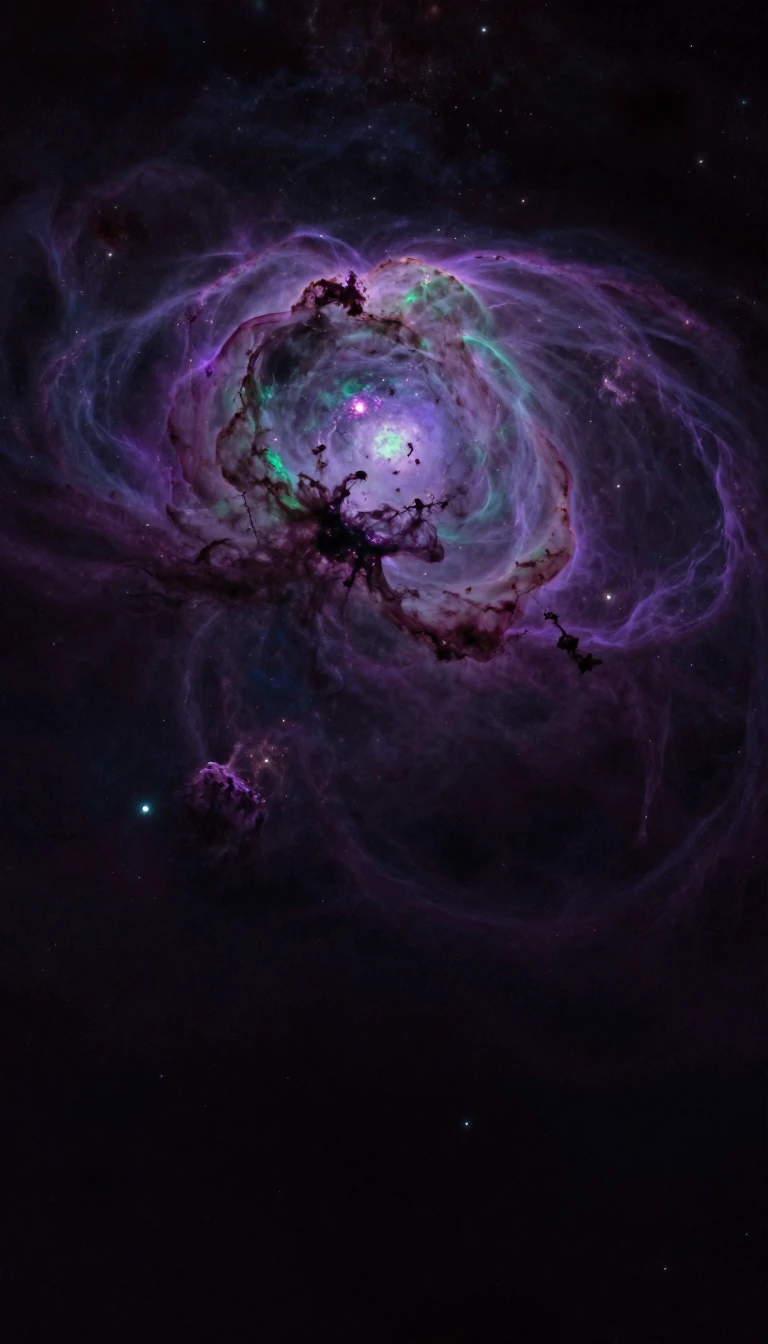 Why the term gas giant is a scientific misnomer for these massive worldsDespite their name, gas giants are not actually made of gas. Under the immense pressure of their interiors, matter exists in a state where the distinction between liquid and gas v…
 Our home in the cosmos is not a permanent structure but a fleeting cosmic basin.Laniakea, the massive structure containing our Milky Way, was defined in 2014 by mapping the flow of galaxies. While it spans 400 million light-years and holds 100,000 galaxies, a…
- Every object has a Schwarzschild radius, the point where it becomes a black hole.If you compressed the Earth into a sphere just nine millimeters wide, it would become a black hole. This threshold is the Schwarzschild radius, a mathematical boundary defined by …
 How a sudden shadow proved Einstein was right about the universeA total solar eclipse is more than a visual spectacle; it is a natural laboratory. By momentarily blocking the Sun's blinding light, these rare alignments allow astronomers to obs…
 How can we predict asteroid impacts in a solar system defined by chaos?Predicting asteroid collisions with Earth seems impossible given the chaotic nature of our solar system. This video examines the science behind how we identify and assess the risk…
- Is our solar system a cosmic anomaly or just one of many similar worlds?Astronomers are hunting for Earth-like planets to understand if our home is unique. This video explores the search for exoplanets orbiting Sun-type stars and why finding worlds wi…
- Are these galaxies older than the universe, or is our understanding of formation wrong?The James Webb Space Telescope has identified galaxies that appear unexpectedly ancient. This video explores the tension between these observations and current cosmological models…
- Are we searching for alien signals using an outdated cosmic playbook?For over six decades, humanity has scanned the stars for radio signals, yet we have found nothing but natural phenomena. This video examines why our traditional SETI methods might…
- Ten years later, we may finally understand the mystery of Tabby's star.Tabby's star has baffled astronomers for a decade with its erratic dimming, sparking theories ranging from alien megastructures to swarms of comets. This video examines the latest…
- Why the brightest planet in our sky is actually a thin crescentAs February 2025 unfolds, Venus will reach its peak annual brilliance. Yet, looking through a telescope reveals a surprising paradox: the planet is at its most dazzling not when i…
 NASA's Psyche mission is chasing a mysterious metal-rich asteroid across the solar systemOne year after launch, NASA's Psyche mission is traveling toward a unique metal-rich asteroid. This spacecraft aims to uncover whether the object is a planetary core remnant or pr…
- Four bright planets and a rare lunar occultation highlight the January 2025 night sky.NASA's January skywatching guide highlights planetary alignments, a meteor shower, and a rare celestial event. This overview helps observers track the best viewing times for Mars,…
 December 2024 offers a spectacular lineup of planets and celestial events to observe.NASA highlights key astronomical events for December 2024, including planetary oppositions and meteor showers. This guide helps you identify the best times and conditions to view …
- Planets return to the morning and evening skies throughout April 2025NASA's latest skywatching guide highlights the return of planets to our view after a quiet March. This month offers observers a chance to track planetary movements in both morning…
 A rare stellar explosion is set to light up the night sky this MayNASA highlights the celestial events of May 2025, including planetary alignments, a meteor shower, and a highly anticipated nova event. This guide helps you identify what to look …
 Celestial highlights for September 2026 include peak Venus and a lunar-planetary alignmentNASA provides a guide to the night sky for September 2026, featuring planetary sightings, the shifting seasons, and a global celebration of our moon. This overview helps observers…
 What to look for in the night sky during July 2026NASA highlights key celestial events for July 2026, including planetary alignments, a returning comet, and the best opportunities to view the Milky Way. This guide helps you plan …
- A planetary parade and lunar occultation highlight the June 2026 night skyNASA provides a guide to celestial events in June 2026, including a rare planetary conjunction and a lunar occultation. This overview helps skywatchers identify key alignments and…
- How Saturn's magnetic field creates vibrant, glowing light displays in its atmosphereDr. Padi Boyd explores the ultraviolet aurorae of Saturn captured by the Hubble Space Telescope. This video explains how charged particles interacting with the planet's magnetic f…
- A new NASA mission will study the giant light-emitting halo surrounding our planetEarth is enveloped in a glowing layer of gas called the geocorona. A new NASA observatory, named after Dr. George R. Carruthers, will soon launch to capture the most detailed imag…
- Track the Moon's shifting face and orbit throughout the entire year of 2026This NASA visualization provides an hourly guide to the Moon's phases and libration as seen from the Northern Hemisphere. It is a precise resource for observing lunar features, or…
 How the Moon appears from the Southern Hemisphere throughout the year 2026This NASA visualization tracks the Moon's phase and libration at hourly intervals for the entire year of 2026. It provides a precise perspective on lunar changes specifically for …
 How the James Webb Space Telescope is finally revealing our universe's earliest history.The James Webb Space Telescope is fulfilling a decades-old dream by observing the cosmic dawn. This documentary features Nobel laureate John Mather, who spearheaded the project, a…
- How NASA's newest space telescopes will revolutionize our search for distant alien worldsNASA's James Webb and Nancy Grace Roman space telescopes are teaming up to transform exoplanet research. This video explains how their distinct technologies and observational stre…
- How humanity evolved from using naked eyes to peering into the deep cosmosNarrated by John Rhys-Davies, this film celebrates the history of space observation. It highlights the transition from simple human sight to the advanced capabilities of the Hubbl…
- Hubble’s 36th Anniversary Reveals a Glowing Cosmic Sea Slug in the Trifid NebulaTo mark 36 years of operation, the Hubble Space Telescope has captured a high-resolution view of the Trifid Nebula. This video tour, led by Dr. Jennifer Wiseman, explores how mass…
- Hubble accidentally captures a rare, real-time look at a comet disintegrating in space.NASA's Hubble Space Telescope unexpectedly caught a comet in the process of breaking apart. This rare observation provides a unique look at celestial fragmentation, revealing unex…
 You can help NASA make real scientific discoveries using Hubble's massive image archiveNASA's Hubble Space Telescope has generated over 1.7 million observations since 1990. While professional astronomers lead the way, the sheer volume of data allows citizen scientis…
- Beyond Our Solar System: Hubble Reveals Six Thousand Exotic Alien WorldsSince its 1990 launch, the Hubble Space Telescope has transformed our understanding of the galaxy. By investigating the atmospheres of distant planets, it has uncovered bizarre ce…
- How NASA's upcoming Roman Space Telescope is designed to reveal the entirely unknownNASA's Roman Space Telescope is engineered to uncover astronomical phenomena that researchers have not yet anticipated. This video explores the mission's capacity for discovery, h…
- NASA's upcoming Roman Space Telescope promises a sweeping, high-resolution view of our vast universe.The Nancy Grace Roman Space Telescope is designed to capture massive sections of the sky with unprecedented sensitivity. By surveying billions of cosmic objects, this mission aims…
- Can the Nancy Grace Roman Space Telescope redefine our understanding of the entire universe?NASA project scientist Dr. Julie McEnery explains the capabilities of the upcoming Nancy Grace Roman Space Telescope. This mission aims to survey the cosmos at an unprecedented sc…
 NASA’s New Eye on the Cosmos Is Ready to Reveal the UnknownThe Nancy Grace Roman Space Telescope is nearing launch after years of rigorous assembly and testing. This mission promises to capture unprecedented infrared surveys of the univer…