 Intellect Plus
Computing and information technology
457 cards. Each one is a 40-second story with a five-minute read behind it. Page 3 of 8.
 Cryptanalysis is the art of finding patterns in secrets that seem perfectly random.Breaking a code is rarely about raw power alone. It is a subtle game of intuition and pattern recognition. From the telegrams that shifted the course of world wars to the modern m…
 From Medieval Monastic Games to Modern Newspaper Puzzles, the Enduring Allure of CryptogramsLong before they became daily entertainment in newspapers, cryptograms were serious tools for protecting military and personal secrets. While today we solve them for fun, their or…
 The digital revolution of cut, copy, and paste began with physical scissors and glue.Before computers, editors literally cut paragraphs from paper and pasted them elsewhere. In 1974, Larry Tesler and his team at Xerox PARC digitized this workflow, creating a parad…
 The D-subminiature connector: A 1950s engineering marvel that defined the digital ageIntroduced by Cannon in 1952, the D-subminiature connector became the backbone of early computing. Recognizable by its iconic D-shaped metal shield, this versatile interface power…
 Data types are the hidden rules that keep computer programs from falling apart.At the lowest level, computers only understand bits. Data types are the conceptual framework programmers use to impose order on that chaos. By defining what values a variable can …
 How a Toy Story-themed project became the backbone of the modern internetFounded in 1993, Debian is the second-oldest Linux distribution, powering servers and devices worldwide. Known for its rigorous commitment to stability and open-source principles,…
 Debugging is more than fixing errors; it is a systematic hunt for hidden logicDebugging is the art of finding the root cause of software malfunctions. While the term evokes images of moth-ridden hardware from the 1940s, modern debugging is a sophisticated d…
 Stop telling your computer how to think and start telling it what you want.Declarative programming shifts the focus from explicit, step-by-step instructions to defining the logic of a problem. By describing the desired outcome rather than the execution p…
 When a computer beat the world chess champion, was it actually intelligent?In 1997, IBM's Deep Blue became the first machine to defeat a reigning world chess champion in a formal match. While the victory was hailed as a milestone for artificial intellige…
 Delimiters are the invisible boundaries that allow computers to make sense of raw dataIn computing, a delimiter is a character or sequence that marks the boundary between independent regions of data. While essential for organizing information, these markers create …
 Why the desktop computer refuses to die in the age of mobile computingOnce considered the pinnacle of personal technology, the desktop computer was declared obsolete by the rise of laptops and smartphones. Yet, this stationary machine remains a powe…
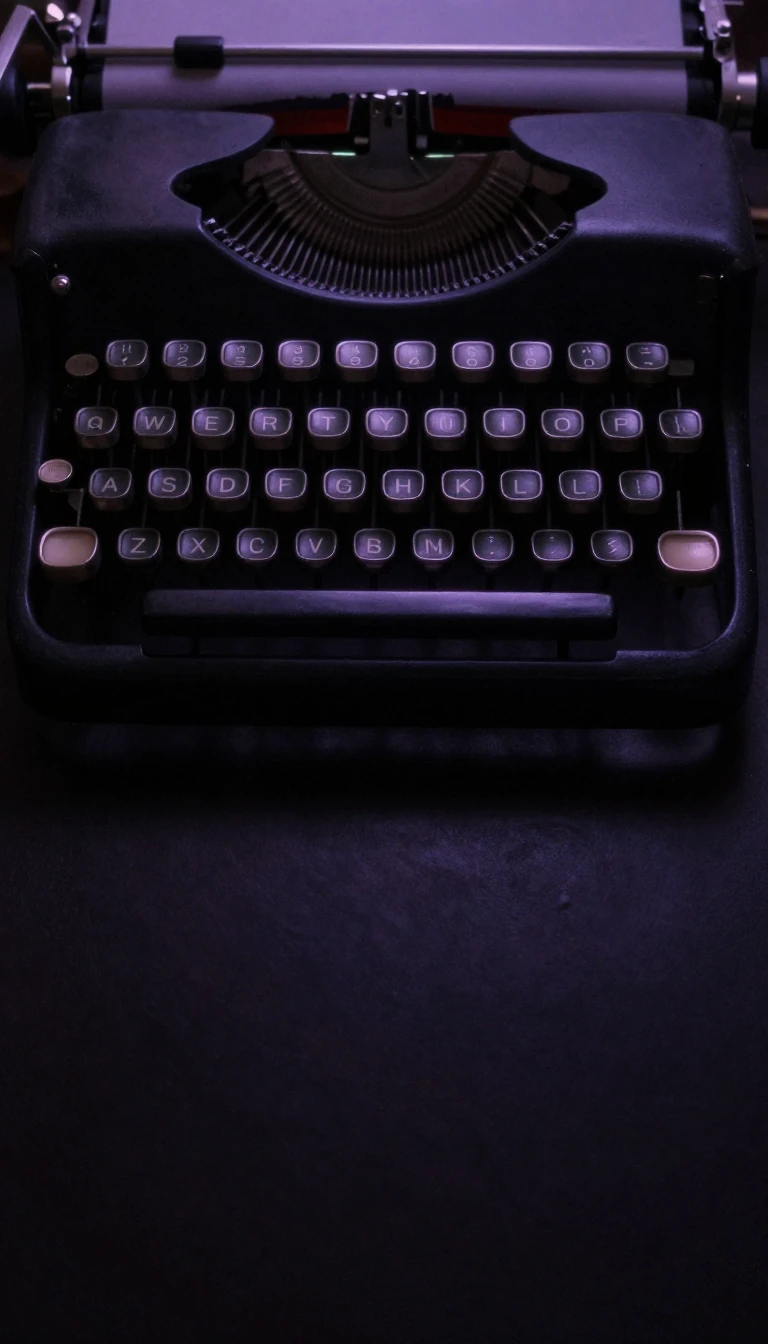 How desktop publishing transformed the personal computer from a typewriter into a printing pressBefore the mid-1980s, professional document design required expensive, proprietary hardware. The arrival of desktop publishing software and laser printers democratized this power,…
 Device drivers are the invisible translators that allow your software to command physical hardware.Without device drivers, your computer would be a collection of disconnected parts. These specialized software components act as translators, converting high-level application requ…
 Why your phone needs a specialized brain to process the real worldDigital signal processors are the unsung heroes of modern electronics. Unlike general-purpose microprocessors, these specialized chips are engineered to handle continuous streams …
 How digital signatures mathematically guarantee that your electronic documents have not been tampered withA digital signature is more than just an electronic image of your handwriting. It is a sophisticated mathematical scheme that binds a document to its sender, making forgery comput…
- How a 1999 video standard bridged the gap between analog and digital worldsBefore high-definition streaming, the Digital Visual Interface (DVI) emerged as a vital bridge. By integrating both analog and digital signals into a single connector, it became t…
 How Microsoft’s Graphics API Evolved from Awkward Beginnings to Industry StandardDirect3D began as a clunky, misunderstood experiment that developers once begged Microsoft to abandon in favor of OpenGL. Today, it is the backbone of Windows gaming, having survi…
 Why your computer treats a folder like a file and a list like a treeA directory is more than just a digital folder. It is a sophisticated cataloging structure that organizes files into hierarchical trees. While your desktop interface uses icons to…
 How a rebellious trio of Microsoft engineers saved PC gaming from total irrelevanceIn 1994, Microsoft was losing the gaming war. Developers hated the Windows environment, preferring the direct hardware access of MS-DOS. To fix this, three rogue employees launche…
- Why your computer’s hard drive is actually a collection of virtual slicesDisk partitioning turns a single physical storage device into multiple logical segments. By creating these distinct regions, you can isolate system files from user data, run multi…
 Why modern computing relies on a network of machines that never truly agreeDistributed computing powers everything from global web services to peer-to-peer networks. By coordinating autonomous computers through message passing, these systems achieve scal…
- Why your computer speaks a dozen languages just to open a simple text file.Digital documents are not just text; they are complex data structures stored in specific formats. While we expect seamless compatibility, the reality is a fragmented landscape of …
 Why your website address is a lease, not a piece of propertyA domain name is not something you own; it is an exclusive right of use granted for a set duration. Behind the familiar strings of text lies a complex hierarchy managed by ICANN, …
 DOS was never meant to be a permanent operating system for the personal computer.Microsoft originally viewed DOS as a temporary, throw-away product designed to satisfy IBM. It was a stopgap intended to keep the tech giant happy until more advanced systems like…
 Why your computer's memory is constantly forgetting and rewriting itself to stay aliveDynamic random-access memory is the backbone of modern computing, yet it is inherently unstable. Each bit of data is stored as a tiny electric charge that naturally leaks away. To…
- Before modern software, Cambridge researchers built a machine that treated programs as mere data.In 1949, the EDSAC became the first stored-program computer to enter regular service. By housing both instructions and data in the same electronic memory, it moved beyond the rigi…
 The massive machine that defined how modern computers store and execute their programsBefore your laptop could run diverse software, engineers had to solve a fundamental hardware problem. The EDVAC, a room-sized behemoth from the late 1940s, pioneered the stored-pr…
 Born from ice cream myths and macro hacks, Emacs is computing's ultimate extensible editor.Emacs began in 1976 as a collection of macros for a dated text editor at MIT. Today, it is a self-documenting, extensible powerhouse capable of running everything from email clien…
 Emulators allow modern computers to act like machines from the past or present.An emulator is a system that enables one computer to behave like another. By mimicking hardware and software environments, these tools allow modern devices to run classic arcade g…
 Encapsulation: Why hiding your code's internal workings makes your software significantly more robustEncapsulation is the practice of bundling data with the methods that manipulate it, while shielding internal details from external interference. By restricting direct access to an…
 Why your code crashes: understanding the logic behind exception handlingException handling is the process of managing anomalous conditions that disrupt a program's normal execution flow. While often viewed as error management, these mechanisms are act…
 Beyond the code: How your computer turns static files into active behaviorAn executable is more than just a file; it is a specialized resource that dictates a computer's behavior. While we often think of software as simple source code, the journey from …
 How expansion cards transformed rigid computers into modular, customizable machines for every userBefore modern plug-and-play, upgrading a computer required manual configuration and a deep understanding of hardware. Expansion cards evolved from bulky cabinet-sized peripherals …
- The short-lived interface that promised to revolutionize how we expanded our laptop capabilities.Before Thunderbolt and ubiquitous USB-C, the ExpressCard was the industry's answer to laptop expansion. Designed to replace the aging PC Card standard, it offered faster speeds an…
 Why the Linux file system that powers your world is a master of delayThe ext4 file system is the backbone of modern Linux, from Debian servers to Android devices. It achieves high performance by intentionally delaying data writes to disk. While thi…
 How computers learned to recognize the human face, from 1960s manual labor to modern AI.Facial recognition has evolved from a slow, manual process requiring human intervention to a sophisticated biometric technology capable of real-time identification. While it now p…
- The humble file system that powered the personal computer revolution for decadesDeveloped in 1977 for floppy disks, the File Allocation Table (FAT) became the backbone of early personal computing. Despite being replaced by NTFS in modern Windows, its simplici…
- Your computer identifies files using everything from hidden name suffixes to internal magic numbers.A file format is simply a method for encoding information, but how your operating system knows what to do with that data is a complex, often invisible, battle. From simple filenam…
- Does file sharing democratize culture or destroy the livelihoods of struggling artists?The rise of peer-to-peer networks transformed how we distribute digital media, sparking decades of legal battles and economic debate. While proponents argue that file sharing leve…
- Why your computer relies on a simple dot to identify your digital filesFilename extensions are more than just a suffix; they are a legacy of 1960s time-sharing systems. While modern operating systems often treat them as mere text, these tiny markers …
- A firewall is a digital gatekeeper, but its name comes from physical architecture.Long before they protected your data, firewalls were physical barriers designed to stop flames from spreading between buildings. Today, these systems act as the primary sentinels …
 FireWire was the high-speed serial standard that almost defined the digital multimedia eraBefore Thunderbolt and USB-C, FireWire promised a seamless world of interconnected devices. Developed by Apple and partners, this serial bus allowed cameras and storage to talk di…
- Firmware is the hidden, low-level software that bridges the gap between hardware and intelligence.Firmware is the silent operator inside your devices, from microwaves to smartphones. It provides the essential instructions that hardware needs to function, often running entirely…
 How the humble math coprocessor evolved into the engine of modern computingBefore floating-point units were standard, computers struggled with complex math. Early machines relied on slow software libraries, while scientific systems used expensive, option…
 Can we mathematically prove that our most critical software and hardware systems are perfect?Formal verification moves beyond traditional testing by using mathematical proofs to guarantee a system behaves exactly as specified. While standard testing checks if a product wo…
 Before bold text existed, we used underscores and asterisks to emphasize our digital words.Modern digital text is rich with color, size, and style, but this convenience hides a complex history. Before we had WYSIWYG word processors, early computer users relied on clever…
- The front-side bus was the critical bottleneck that defined computer performance for two decades.Before modern point-to-point connections, the front-side bus acted as the primary highway between your CPU and the rest of your computer. While it enabled flexible, low-cost desig…
 The subroutine: how early programmers turned physical tape into modular software logicBefore modern software, programmers manually spliced paper tape to reuse code. This early modularity evolved into the function, a fundamental unit of logic that allows complex pro…
- From a 50-ton behemoth to handheld power, the evolution of the gaming PCWhat defines a gaming computer? It is more than just a fast processor. Today, these machines range from massive, overclocked desktops to portable handhelds. While the industry has…
- How Apple turned a professional studio engine into a global music education toolGarageBand began as a simplified offshoot of the professional-grade Logic Pro, designed to democratize music production. Since its 2004 debut, it has evolved from a basic recordin…
 Why your graphics card is actually a supercomputer in disguiseGraphics processing units were once strictly for rendering pixels. Today, they power the world's most demanding scientific simulations and artificial intelligence. By shifting mas…
- The GIF was designed for slow modems, yet it remains a digital cultural staple.Released by CompuServe in 1987, the Graphics Interchange Format was built to make large images downloadable over slow connections. Despite being limited to 256 colors and facing c…
 How a student project inspired by Pulp Fiction became a professional graphics powerhouse.Born in 1995 as a semester-long experiment at UC Berkeley, GIMP evolved from a simple image editor into a sophisticated, open-source alternative to industry standards. Today, this…
 Why a printer jam in 1979 sparked a global movement for software freedomIn 1983, Richard Stallman launched the GNU Project to reclaim computing for the user. Frustrated by proprietary software he could not modify, he created a system where code remain…
- How Google turned its internal search engine infrastructure into a global cloud utilityGoogle Cloud is more than just storage; it is the commercial engine powering the same systems that run Google Search and Gmail. From its origins as a simple web application host, …
- Modern graphics cards are essentially powerful, independent computers living inside your desktop machine.Originally designed to simply output images to a monitor, the graphics card has evolved into a multifunctional powerhouse. Today, these components handle everything from complex 3…
 Grid computing treats the world's idle computers like a massive, shared power plant.Imagine tapping into the unused processing power of millions of desktop computers worldwide to solve complex scientific mysteries. By networking loosely coupled machines into a si…
 Haskell: The Purely Functional Language That Redefined How We Handle Computational Side EffectsBorn from a committee seeking an open standard for lazy functional programming, Haskell is a statically typed language known for its mathematical rigor. By isolating side effects …
- How a single cable revolutionized home entertainment by merging video, audio, and control data.Introduced in 2003, HDMI transformed consumer electronics by replacing bulky analog standards with a streamlined digital interface. Beyond carrying high-quality video and audio, t…
 How Apple's HFS Plus managed the transition from classic Mac OS to modern UnixIntroduced in 1998, HFS Plus served as the backbone of Apple's computing ecosystem for nearly two decades. While it brought essential improvements like Unicode support and better …