 Intellect Plus
Computing and information technology
457 cards. Each one is a 40-second story with a five-minute read behind it. Page 4 of 8.
 Why high-level programming languages are the ultimate abstraction for human-readable codeHigh-level programming languages allow developers to write code detached from the messy details of hardware. By replacing registers and memory addresses with intuitive variables a…
 Why the home computer era vanished, leaving only the office machine behindIn the 1980s, home computers were distinct, affordable machines marketed for personal use. Unlike today's uniform devices, these systems were often incompatible, required manual p…
 Why the home page remains the most critical real estate on the internetThe home page is the digital front door of any website, serving as the primary point of entry for visitors. Beyond its role as a site directory or landing page, it acts as a vital…
 HTML5 was the final major version of the web's foundational language before evolving forever.Before HTML5, the web was fragmented by rigid standards and proprietary plugins like Flash. HTML5 arrived to unify the internet, introducing native multimedia support and semantic…
 The IBM 7030 Stretch was a commercial failure that defined modern computing architectureKnown as Stretch, the IBM 7030 was intended to be the world's fastest supercomputer. It famously missed its performance targets, leading to a massive price slash and its withdrawa…
 How IBM accidentally surrendered control of the personal computer market to its own imitators.When IBM launched its personal computer in 1981, it relied on commodity hardware and a standard operating system. This openness invited a wave of clones that could run the same so…
 How a failed telephone project birthed the architecture that beat a chess grandmasterIBM's POWER architecture began as an ambitious attempt to build a high-capacity telephone switch. When the project was canceled, its core design philosophy—a streamlined approach …
 Why your digital photos are a constant trade-off between quality and file sizeEvery image on your screen is a mathematical compromise. Whether you are browsing the web or editing a professional photograph, the format you choose dictates how data is compress…
 Imperative programming is the art of telling a computer exactly how to act.Unlike declarative styles that focus on desired outcomes, imperative programming provides a step-by-step recipe for execution. By mastering state changes, loops, and modular desig…
 The 1980s computer bus that refuses to die, even in modern industrial systems.Industry Standard Architecture, or ISA, was once the backbone of the IBM PC. Though consumer desktops abandoned it decades ago, this 16-bit interface persists in specialized indus…
 Information systems are the invisible architecture powering every aspect of modern organizational life.From the simple act of swiping a bank card to the complex logistics of global supply chains, information systems are the backbone of modern operations. They are not merely compute…
 Why inheritance is the most misunderstood tool in object-oriented programmingInheritance allows developers to build new classes upon existing ones, creating hierarchies that reuse code and define relationships. While it is a cornerstone of object-oriented …
 How your computer translates physical movement and touch into digital commandsEvery interaction with a computer relies on input devices, the hardware bridges that convert physical actions into digital signals. From the mechanical click of a keyboard to the …
 Why your computer's definition of input and output is entirely a matter of perspectiveIn computing, input and output are not fixed labels but relative roles. A keyboard is an input device to your processor, but it outputs signals based on your physical movements. T…
 From Government Emergency Tools to Global Chat: The Evolution of Instant MessagingInstant messaging began as a specialized government tool for managing crises, not a social convenience. Long before the smartphone era, early systems like EMISARI helped officials…
 Why your internet speed is rarely as fast as the advertisement promisesYou pay for a specific speed, but your actual connection often falls short. From physical terrain and network bottlenecks to the way ISPs aggregate users, your bandwidth is rarely…
 From Roman assemblies to digital threads: how online forums structure human collective intelligenceInternet forums are more than just message boards; they are sophisticated, tree-like architectures designed to manage human discourse. Evolving from 1970s bulletin board systems, …
- Why your email stays synced across every device you ownThe Internet Message Access Protocol, or IMAP, transformed email from a static download into a dynamic, server-based experience. By keeping messages on the server rather than pull…
 Why modern intranets are far more than just a digital filing cabinet for employeesAn intranet is a private network using internet technology to connect an organization. While once simple repositories for static documents, they have evolved into complex, interac…
- Born in a Finnish university, this text-based protocol once connected millions across the globe.Created in 1988 to replace a simple bulletin board program, Internet Relay Chat evolved into a sprawling, decentralized network. Despite a massive decline since its early 2000s pe…
 How a 1980s hotel meeting created the universal language for optical discsBefore ISO 9660, every CD-ROM maker used incompatible formats, turning early digital storage into a chaotic mess. In 1985, industry leaders gathered at a Nevada hotel to standardi…
 Why simple repetition is the engine driving both complex mathematics and modern software developmentIteration is more than just doing the same thing twice. It is a fundamental mechanism where the output of one process becomes the input for the next. Whether you are calculating s…
 The Java Virtual Machine is an abstract computer that defies simple hardware categorization.The Java Virtual Machine is not a physical device but a rigorous specification for an abstract computer. By decoupling software from underlying hardware, it allows code to run any…
- The kernel is the silent, all-powerful conductor of your computer's hardware and software.Every time you click a button or open a file, a hidden program called the kernel acts as the ultimate gatekeeper. It manages your memory, controls your hardware, and ensures that …
 Why your password is not a cryptographic key, and why that matters for security.A password is a human-readable string, but a cryptographic key is a machine-generated sequence of bits. While passwords rely on memory, keys rely on entropy. Understanding the dif…
 Why Kotlin became the preferred language for building modern Android applicationsDesigned by JetBrains to solve the verbosity and safety issues of Java, Kotlin has transformed mobile development. With its concise syntax, null-safety features, and seamless inte…
 Before the DVD, a massive analog disc promised a revolution in home cinema.LaserDisc was the first commercial optical storage medium, offering superior audiovisual quality that outshone VHS and Betamax. Though it never achieved mass-market dominance, its…
 A library is the silent engine of modern software, enabling reuse through modular code.In computing, a library is a collection of resources—executable code, data, or classes—that programs use to avoid reinventing the wheel. By abstracting complex system calls behind…
- Can you program a computer by simply stating facts instead of giving instructions?Logic programming treats computation as logical reasoning rather than a sequence of commands. By defining rules and facts, you allow a system to derive answers automatically. This…
 Why low-level programming languages offer total control over your computer's physical hardwareLow-level languages provide minimal abstraction, allowing programmers to interact directly with a processor's instruction set and memory. By bypassing the layers that shield users…
- How Apple abandoned its original software to build the modern macOS foundationThe Mac operating system evolved through two distinct eras. The classic Mac OS defined the 1980s with its iconic desktop metaphor, but its monolithic architecture eventually hit a…
 Why machine translation struggles to replace human experts despite decades of rapid progressMachine translation has evolved from simple rule-based systems to sophisticated neural networks and large language models. While these tools can process massive volumes of text, t…
 A macro is a simple rule that transforms a small input into a larger output.Derived from the Greek word for long, a macro acts as a shortcut in computing. By mapping a single command to a complex sequence of instructions, macros automate repetitive tasks,…
 How magnetic fields store your digital life using tiny, invisible, spinning magnetic domains.Magnetic storage relies on the precise manipulation of magnetic polarities to represent binary data. By using read-write heads that hover nanometers above a spinning platter, mode…
 Why the most advanced data centers still rely on humble magnetic tapeWhile disk drives revolutionized random access, magnetic tape remains the backbone of long-term digital preservation. From the 1950s to modern 50-terabyte cartridges, this sequent…
 Why the mainframe is the indestructible backbone of the modern global economyOften dismissed as a relic of the 1990s, the mainframe remains the world's most reliable computing platform. While personal computers handle our daily tasks, mainframes quietly po…
- How a small team in Manchester built the foundation of modern computing architecture.Between 1947 and 1977, a modest university team led by Tom Kilburn transformed computing. They pioneered the first stored-program machine, the first transistorized computer, and t…
 How a hobbyist matrix calculator became the backbone of global engineering and researchBefore it was a powerhouse for four million users, MATLAB began as a simple interactive matrix calculator for students. Invented by Cleve Moler in the 1970s, it evolved from a cla…
- Beyond the Play Button: How Modern Media Players Transform Your Digital Viewing ExperienceMedia players are more than just digital tape recorders. From real-time 3D anaglyph processing to sophisticated audio visualization and frame-accurate snapshot extraction, these a…
 Metadata is the invisible architecture that makes the digital world searchable and usableData is useless if you cannot find, interpret, or manage it. Metadata acts as the essential structured information that describes and explains raw data, transforming scattered fil…
 How do we define the rules of a language without using the language itself?To build a computer language, you need a language to describe it. This is metasyntax: a formal system of symbols that defines the structure and composition of programming code. Fr…
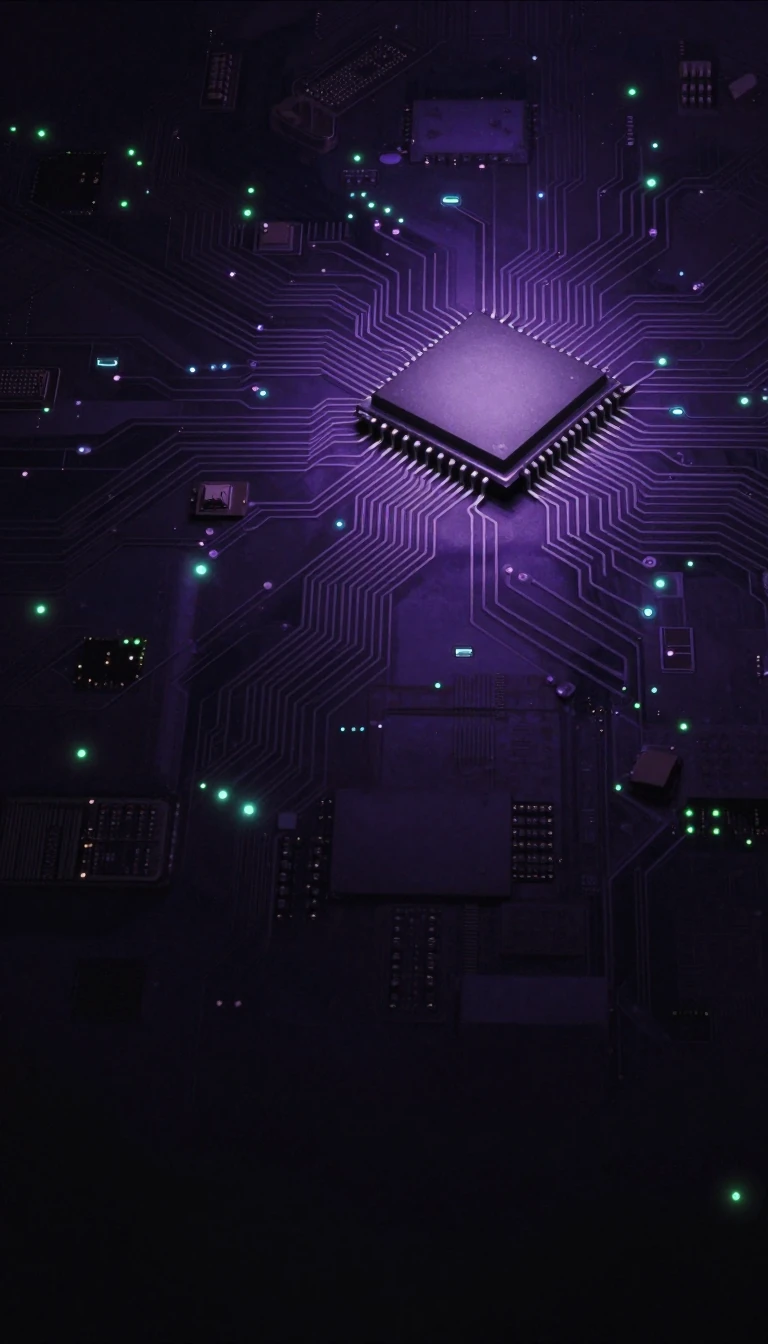 How a tiny silicon chip triggered the revolution of the personal computerBefore the 1970s, computers were massive, expensive machines reserved for large organizations. The invention of the microprocessor—a central processing unit on a single chip—chang…
 How a simple drawing tool survived four decades of digital evolution and corporate whimsMicrosoft Paint began as a licensed clone of a DOS program in 1985. Despite being marked for death in 2017, it remains a staple of the Windows experience. From its humble monochro…
- How a failed startup product became the world's most ubiquitous presentation toolBorn as a niche tool for overhead transparencies, PowerPoint was initially a flop that Bill Gates wanted to bury inside Microsoft Word. Today, it commands an estimated 95 percent …
- The RISC architecture that powered the Nintendo 64 and PlayStation is now history.MIPS, a foundational reduced instruction set computer architecture, shaped decades of computing from workstations to game consoles. Once a dominant force in high-performance proce…
 Your smartphone is actually running two distinct operating systems at the same timeWhile you interact with a sleek, user-facing interface, a hidden, low-level proprietary system quietly manages your device's radio and hardware. This dual-layer architecture is st…
- Before the internet was everywhere, the modem was the bridge to a digital world.The modem evolved from a specialized military tool into a household essential. By converting digital data into audible tones, these devices allowed computers to communicate over s…
 Why breaking your code into independent pieces makes software easier to build and maintainModular programming organizes code into self-contained units that interact through defined interfaces. By shifting from monolithic designs to independent, reusable modules, develo…
 How computer threads avoid chaos when accessing the same shared data simultaneouslyIn concurrent programming, multiple threads often compete for the same resources. Without proper management, this leads to race conditions and corrupted data. Monitors provide a s…
- The motherboard is the silent conductor orchestrating every interaction within your computer system.Far more than a simple circuit board, the motherboard is the central nervous system of a computer. It hosts the processor, manages memory, and bridges communication between every …
 MPEG-4 is not a single format but a vast, evolving toolkit for digital mediaYou likely encounter MPEG-4 daily, yet it is rarely what you think. Rather than a simple file type, it is a massive, modular collection of international standards for compressing …
- Why your computer stopped getting faster and started getting more cores insteadFor decades, engineers boosted performance by cranking up clock speeds. But they eventually hit a wall of heat and power consumption. The solution was to stop building one faster …
 Why your phone might be the weakest link in your digital security chainMulti-factor authentication is designed to keep intruders out by requiring more than just a password. While it significantly reduces the risk of compromise, relying on your smartp…
 The memory card that failed to conquer the world became the heart of your phone.The MultiMediaCard was designed to unify a fragmented market of proprietary storage formats. While it lost the battle for removable memory to the SD card, its architecture survive…
- Why modern computers use multiple brains to handle your daily digital workloadMultiprocessing is the engine room of modern computing, moving beyond single-processor limitations by coordinating two or more CPUs to share the load. Whether through tightly inte…
 Why modern processors juggle multiple tasks to keep their internal pipelines from running dry.Modern CPUs often struggle to speed up single tasks, so they turn to multithreading. By running multiple instruction streams simultaneously, processors can fill idle computing slo…
 How a database named after a daughter became the backbone of the modern webBorn in 1995 to replace slow, inflexible predecessors, MySQL evolved from a personal project into the world's most ubiquitous relational database. Powering giants like Facebook an…
 How a college student’s music sharing app triggered a global legal revolution in copyrightCreated in 1999 by Shawn Fanning, Napster transformed how the world accessed music. By enabling peer-to-peer file sharing, it sparked a massive legal battle over digital rights. T…
- The unsung hardware bridge that connects your computer to the digital worldEvery time you connect to the internet, a specialized piece of hardware works behind the scenes to translate digital data into physical signals. Known as a network interface contr…
 The digital envelope: how network packets move the world's information across the internetEvery piece of data you send online is chopped into tiny, formatted units called packets. Like a postal letter, each packet carries a payload inside a header that contains routing…