 Intellect Plus
Computing and information technology
457 cards. Each one is a 40-second story with a five-minute read behind it. Page 7 of 8.
 Why your browser is the most powerful piece of software you own todayWeb applications have quietly replaced the traditional desktop software of the past. By running on remote servers and accessed through a browser, these programs eliminate the need…
 From static pages to intelligent apps: the rapid evolution of web developmentSince the public release of the World Wide Web in 1993, the craft of building websites has transformed from simple static HTML files into complex, interactive ecosystems. Today, d…
- A web page is more than just text; it is a complex digital assembly.When you visit a website, your browser is doing far more than displaying a simple document. It is orchestrating a sophisticated retrieval process, pulling together scripts, styles…
 From CERN experiment to global backbone: how web servers evolved to power the internet.A web server is more than just a host for files; it is the silent engine of the internet. Born from a 1989 proposal at CERN, these programs have evolved from simple document retri…
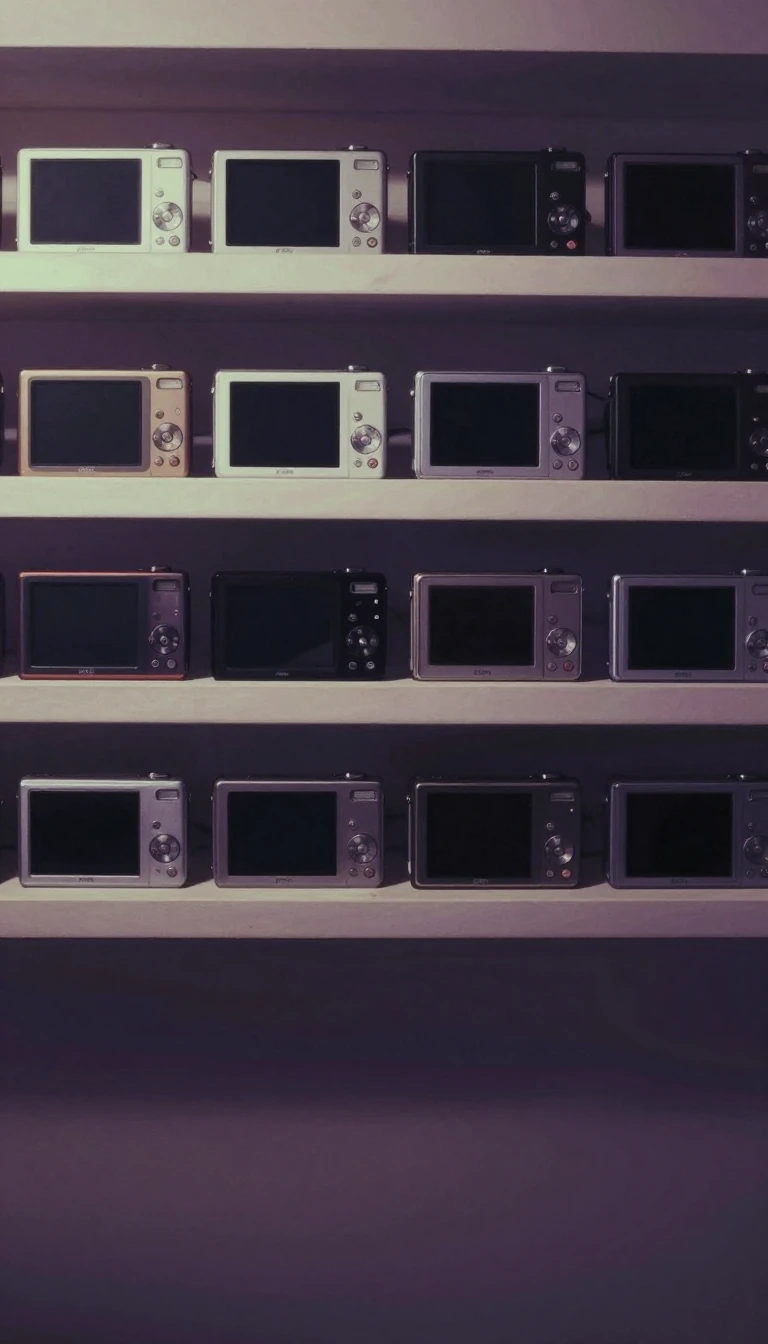 The first webcam was a low-tech solution for a lazy coffee-drinking researcher.Born in 1991 to monitor a coffee pot at Cambridge University, the webcam evolved from a niche tool for stationary internet shots into a global necessity. Today, these devices powe…
 Before the browser became our inbox, webmail was a radical experiment in connectivityToday, checking email in a browser feels mundane, but it began as a technical test at CERN in 1993. Within two years, a wave of developers raced to build the first web-based inter…
 How a failed flight simulator project birthed the foundation of modern digital computing.Developed at MIT in the late 1940s, Whirlwind I was the first digital computer designed for real-time operation. While its original mission to simulate bomber aerodynamics faltere…
 How a 1992 operating system became the ghost in the machine of modern infrastructure.Released in 1992, Windows 3.1 was a massive commercial success that defined the early graphical user interface. Yet, long after its official retirement in 2001, the system refused…
 The Windows 9x era: How Microsoft bridged the gap between DOS and modern computingBefore Windows XP unified the consumer and business lines, Microsoft relied on the Windows 9x series to power home desktops. Spanning from 1995 to 2000, these operating systems ba…
 Why the Windows API is the invisible engine powering decades of desktop softwareThe Windows API is the foundational interface allowing programs to tap into the Microsoft Windows operating system. From managing files and memory to rendering buttons and windows…
 Windows NT: The hidden engine powering almost every modern Microsoft operating system todayWhile the name vanished from consumer marketing decades ago, Windows NT remains the bedrock of Microsoft's software empire. Originally a high-end workstation project designed to r…
 How Wine runs Windows software on Linux without using any actual Windows codeWine is a compatibility layer that allows Windows applications to run on Unix-like systems like Linux and macOS. Rather than using emulation or virtualization, it acts as a transl…
 How a decades-old file archiver became a permanent fixture of the digital landscapeWinRAR has been a staple of Windows computing since 1995, evolving from a simple utility into a powerhouse of data compression and security. While its trialware model is legendary…
 Wireless mesh networks turn individual devices into a resilient, self-healing web of connectivity.Imagine a network that grows stronger as you add more devices. Wireless mesh networks allow laptops, sensors, and routers to act as cooperative nodes, passing data along like a di…
 Wireless networks are not just invisible signals; they are complex, self-healing, multi-layered digital architectures.We take Wi-Fi and cellular data for granted, but these systems rely on sophisticated hardware like MOSFETs and intricate routing protocols. From self-healing mesh networks to sate…
 Why your computer slows to a crawl and how the working set prevents itEver wondered why your computer suddenly freezes when you have too many apps open? It is likely thrashing, a state where your system spends more time moving data than actually pro…
 Why the high-performance workstation evolved from a specialized tool into a commodityBefore personal computers dominated our desks, workstations were the elite machines of the technical world. These powerful systems pioneered 3D graphics, networking, and multitask…
- Why the X Window System calls your computer a server and your apps clientsIn the world of the X Window System, your local computer is the server, while the applications you run are the clients. This reversal of standard terminology reflects X's design: …
 The first programmable computer was built in a Berlin apartment during the Second World War.While the world focused on the war, German engineer Konrad Zuse quietly completed the Z3 in 1941. It was the first program-controlled processor, a machine that used binary logic a…
- How a legal battle over file compression gave us the ubiquitous ZIP formatBorn from a 1989 lawsuit, the ZIP format was designed to outpace existing technology. By releasing the specification into the public domain, its creators ensured it became the uni…
 How a rubber-keyed British computer sparked a revolution in home gaming and software.Developed by Sir Clive Sinclair in 1982, the ZX Spectrum was an inexpensive, 8-bit marvel that brought computing to the British masses. Despite its quirky rubber keyboard and tech…
 The programming language designed to never turn offMost software eventually crashes or requires a reboot for updates. Erlang was engineered for the opposite goal: perpetual uptime. Originally built for massive telephone exchanges,…
- How your devices automatically find their place on the networkManually configuring every device on a modern network would be an impossible task. Instead, a silent handshake occurs the moment you connect. This protocol manages the complex dan…
 Why feeding AI its own output could lead to a digital collapseAs generative models increasingly scrape the web, they are beginning to train on the outputs of their predecessors. This recursive loop creates a degenerative process known as mod…
 Does 'Correct' Mean Anything Without a Formal Specification?Software reliability is paramount, yet declaring a system 'correct' is impossible without a rigorous standard. Formal specifications provide the mathematical scaffolding to define…
 Why Did the 15-Pin VGA Connector Lose the Display Wars?The VGA port once dominated the visual output of PCs, standardizing the connection for decades. Yet, it has been largely superseded by digital interfaces like HDMI and DisplayPort…
 From room-sized vacuum tubes to 5nm transistors: the shrinking giants of logicModern processors are marvels of density, packing billions of transistors into tiny chips. But the journey from the first general-purpose computers to today's AI accelerators invo…
 From 24-digit memorybanks to the modern smartphone on your wristLong before they were sleek extensions of our smartphones, smartwatches were experimental tools. From Seiko's 1980s computers with external keyboards to Microsoft's subscription-b…
 The architectural revolution that ended the era of manual rewiringBefore the 1940s, changing a computer's task meant physically rearranging cables and plugs. The invention of the stored-program computer changed everything, allowing instructions …
 The 16-bit revolution that moved the brain of the hard drive to the diskBefore 1986, your computer had to manually manage every mechanical movement of a disk drive. Then came Integrated Drive Electronics. By moving the controller onto the drive itself…
 From Roman tablets to digital hashes: the evolution of the secret wordFor centuries, soldiers relied on verbal watchwords to secure their ranks. Today, we juggle hundreds of digital credentials, struggling to balance the ease of memorization against…
 The invisible battle against heat: why your computer might be slowing downModern computing is a constant struggle against physics. As processors become more powerful, they generate intense waste heat that can cause permanent hardware failure or forced p…
 How do search engines find one needle in a digital haystack?Every time you type a query, you trigger a complex dance of bots, indices, and algorithms. From the theoretical 'memex' of 1945 to modern giants like Google, the quest to navigate…
 The invisible dance of the fetch-decode-execute cycleWhen you launch a program, you aren't just opening an app; you are triggering a complex mechanical ballet. Behind every click, a processor is relentlessly cycling through instruct…
- The mathematical origins of the digital parasiteLong before the first malware hit the internet, the blueprint for self-replicating code existed in pure mathematics. What began as a theoretical study of complex automata has evol…
 Assembly language speaks almost directly to the processor, one instruction at a timeBeneath every app sits machine code, raw numbers a processor understands. Assembly language is the thinnest human-readable layer over those numbers, usually one written line per m…
- An infamous art forger's son faked his father's paintings, complete with certificatesHan van Meegeren became notorious for forging art. Then his son went one layer deeper, producing fakes of his father's own work and supplying provenance certificates to go with th…
 Every letter you type is secretly a number, and agreeing on which number was hardA computer cannot store the letter g, only numbers. Character encoding is the agreement about which number stands for which symbol. Getting everyone to share one scheme proved sur…
 Calculator salesmen reportedly fled Russia after watching skilled abacus operators at workAccording to the writer Yakov Perelman, some businessmen who tried to sell mechanical calculators in the Russian Empire gave up in despair once they saw how fast a practised abacu…
 The world's most used operating system began as software for digital camerasWhen Andy Rubin and Chris White founded Android Inc. in Palo Alto in October 2003, they were building an operating system for digital cameras. Investors were unimpressed, the offi…
- Early AI mastered logic puzzles but stumbled over everyday common senseThe first researchers in artificial intelligence taught machines to reason step by step, the way people work through a puzzle. It turned out humans rarely think that way. Most of …
 Computer networking began in 1940 with a teletype and a very long cableIn 1940 George Stibitz sat a teletype at Dartmouth and had it drive his calculator at Bell Labs in New York, the first time anyone used a computer remotely in real time. From that…
 Programmers spend more time reading code than writing itProgramming sounds like writing, but most of a programmer's day goes to reading: working out what existing code does, reusing it and changing it. That is why readability matters s…
 Even a sealed-off computer can leak secrets through faint radio emissionsCutting a machine off from every network does not make it private. Its circuits give off weak electromagnetic signals, and a listener nearby can reconstruct what it is doing. The …
- The transistor was imagined in 1925, two decades before anyone built oneJulius Lilienfeld described a field-effect transistor in 1925, but the device that finally worked came from Bell Labs in 1947, and the silicon version that made modern chips possi…
- Before the 1970s, every secret message relied on a shared keyFor thousands of years, sender and receiver had to agree a secret beforehand, and anyone who stole it could read everything. Then asymmetric systems let people publish one key ope…
- C began as a tweak to a failed language so two men could rewrite UnixHalf a century after Dennis Ritchie created it at Bell Labs, C still runs underneath much of computing, in operating system kernels, device drivers and tiny embedded chips. It beg…
 Computer architecture borrowed its name from building design, and its logic tooIn 1959 an IBM researcher writing about the Stretch supercomputer decided that machine organization sounded too dull, and called his subject system architecture instead. The label…
 Deleting a file usually just cuts a thread that points to itOn Unix-like systems, the command to remove a file does not erase any data. It snips one named link to the file; only when every link is gone does the system mark that space as fr…
 Heat, not cleverness, now sets the limit on how fast computers getFor nearly two decades, from 1986 to 2003, computer hardware got more than 50 percent faster every year. Then the gains slowed. The binding constraint became getting power into ch…
- Your keyboard's ancestors sent stock prices down telegraph wiresThe keyboard on your desk descends less from the typewriter than from two workhorses of the telegraph and census era: the teleprinter, which relayed stock prices as early as the 1…
- The first computer monitor was a panel of light bulbsEngineers on early computers watched rows of bulbs, each showing whether one bit inside the machine was on or off. That panel let them monitor the computer, and the name stuck to …
- The mouse was nearly beaten by a knee pedal and a bowling ballBefore settling on the mouse, Douglas Engelbart's lab tried pointers worked by the chin, the nose and a knee under the desk. An earlier Canadian navy tracker rolled a standard fiv…
 The word digital began with fingers and an anti-aircraft gunDigital shares its root with digit and the Latin digitus, finger, because people counted on their hands. Its modern sense arrived in 1942, when George Stibitz of Bell Telephone La…
- From an Egyptian tomb to the internet: four thousand years of secret writingAround 1900 BC, the tomb of an Egyptian named Khnumhotep II used inscriptions that swapped ordinary symbols for unusual ones, one of the earliest known examples of encryption. The…
 Ethernet is named after a substance physicists no longer believe existsIn a memo dated 22 May 1973, Robert Metcalfe of Xerox PARC called his new office network The Ether Network. The name recalled the old idea of a luminiferous aether filling space a…
- File system meant a way of organising paper long before computersAround 1900, a file system was a method for arranging paper documents in an office. By 1961 the phrase was being borrowed for computers, and by 1964 it was everyday jargon. The jo…
- A 1930s theory of pure functions became a whole way of programmingDuring the 1930s Alonzo Church devised a formal system of computation built from nothing but functions and their application. Alan Turing showed in 1937 that it was as powerful as…
 The first hard drive was as big as two refrigerators and held under four megabytesIBM's first production hard disk, the 350, shipped in 1957 as part of the 305 RAMAC computer. Roughly the size of two large fridges, it spun a stack of 52 platters to hold five mi…
- The first public guide to HTML listed only eighteen tagsWhen Tim Berners-Lee first mentioned a document called HTML Tags online in late 1991, it described a mere 18 elements. Most were borrowed from an in-house documentation format use…