 Intellect Plus
Cards starting with W
29,907 cards. Page 296 of 499.
 Why modern medicine is moving past race to map human variationTraditional racial boundaries often fail to explain why certain populations are predisposed to specific diseases. This video explores how researchers are shifting toward a more pr…
 Why modern medicine is retreating from the once-miraculous fluoroquinolone class of antibioticsFluoroquinolones were once hailed as broad-spectrum powerhouses, but they now carry warnings for severe, disabling, and potentially permanent side effects. From tendon ruptures to…
 Why modern medicine still relies on nature's billion-year-old evolutionary inventionsIn this episode of Particles of Thought, evolutionary biologist Sean B. Carroll explores how the natural world provides the blueprints for life-saving medical breakthroughs, from …
 Why modern medicine still relies on the ancient practice of using medical leechesMedical leeches remain a legitimate tool in contemporary healthcare. This video explores the surprising persistence of these creatures in modern clinical settings, explaining why …
 Why modern metro stations are increasingly sealed behind glass and steel barriersPlatform screen doors do more than prevent falls. By physically isolating tracks from passenger areas, these systems enable climate control, reduce noise, and allow for fully auto…
 Why modern military defense against catastrophic threats has evolved from ABC to CBRNECBRN defense protects against chemical, biological, radiological, and nuclear hazards. Unlike standard hazardous material incidents, these events are treated as intentional, malic…
 Why modern monarchs are increasingly ditching the crown for simpler inauguration ceremoniesA coronation is more than just a fancy hat; it is a historic ritual designed to bridge the gap between a ruler and the divine. Yet, as secularism and democracy reshape the world, …
 Why modern monster hunting is less about biology and more about human beliefCryptozoology promises to uncover hidden beasts, yet it operates outside the scientific method. While mainstream biology discovers new species regularly, this subculture fixates o…
 Why modern moral philosophy failed and how we might recover a sense of purposeAlasdair MacIntyre argued that Enlightenment thinkers destroyed moral rationality by trying to detach ethics from human nature. By reviving Aristotelian virtue and Thomistic tradi…
 Why modern musical notation relies on a mathematical system of fractional powers of twoMusical notation is a visual language of duration. By manipulating noteheads, stems, and flags, composers communicate precise timing. While today we rely on a rigid system of bina…
 Why modern nation-states must invent myths to survive and maintain their internal stabilityFrench philosopher Étienne Balibar argues that no nation-state possesses a true ethnic foundation. To mask internal conflicts like class struggle, states fabricate fictive ethnici…
 Why modern nations consolidated their military oversight into a single ministry of defenceBefore the mid-twentieth century, most nations managed their armed forces through fragmented departments, often separating army, navy, and air operations. The shift toward a unifi…
 Why modern negative political campaigns are more effective at influencing your vote than everNegative political advertising has been a staple of elections for decades. However, the rise of social media has fundamentally changed the game, providing new data streams that ma…
 Why modern networks use labels instead of addresses to move your data packetsMultiprotocol Label Switching, or MPLS, revolutionized telecommunications by directing data through networks using simple labels rather than complex address lookups. Originally de…
 Why modern observers struggle to comprehend the construction of the Great Pyramid of GizaModern theories often attribute the pyramids to aliens or advanced lost technology, driven by a false sense of superiority over our ancestors. Yet, historical accounts from the 5t…
 Why modern orthodontics is less about brute force and more about precise engineering.Orthodontics has evolved from primitive 1000 BC appliances to sophisticated systems that manipulate teeth in three dimensions. While once reliant on painful, manual wire-bending, …
 Why modern philanthropy is moving from writing cheques to demanding proofIn a business-oriented world, the era of passive giving is fading. New philanthropists are applying corporate rigor to social good, shifting the focus from merely funding charitie…
 Why modern physics abandoned the dream of finding the ultimate, indivisible building block.For centuries, philosophers and scientists chased the idea of an indivisible atom. Today, we know that atoms are mostly empty space, and their constituents are not solid objects b…
 Why modern physics education is shifting from passive lectures to active student discoveryPhysics teaching is evolving beyond the traditional lecture hall. By integrating evidence-based research, educators are moving away from teacher-centric models toward active learn…
 Why modern physics is stuck and how thought experiments might finally break the deadlockFor a century, physics has relied on two conflicting pillars: quantum mechanics and general relativity. While scientists chase decimal points, Vlatko Vedral argues we need a radic…
 Why modern Polish political parties rarely call themselves "parties"In a country with deep historical roots in organized politics, most major organizations now avoid the word "party" entirely. This branding shift reflects a profound public disillu…
 Why modern political philosophers turned to ancient lawgivers to define the future of societyFrom Machiavelli to Nietzsche, great thinkers have looked to ancient figures like Moses, Solon, and Lycurgus to solve the paradoxes of political change. By examining how these law…
 Why modern political philosophy remains obsessed with the ancient figure of the lawgiverFrom Machiavelli to Nietzsche, the lawgiver has served as a vital model for founding civic identity. These thinkers debated whether social transformation requires force or persuas…
 Why modern pound cake recipes have strayed from the original four-ingredient traditionMost modern pound cake recipes rely on extra ingredients like milk or sour cream to alter the texture. This video returns to the original four-ingredient method, providing a versa…
 Why modern power converters rely on both voltage and current to stay stableIn this lecture from MIT's Power Electronics course, instructor David Perreault explains current-mode control. This method regulates power converters by monitoring both inductor c…
 Why modern power plants use two engines to squeeze more energy from one fuelCombined-cycle power plants dramatically boost efficiency by reusing the scorching exhaust from a gas turbine to power a second steam engine. By capturing heat that would otherwis…
 Why modern processors juggle multiple tasks to keep their internal pipelines from running dry.Modern CPUs often struggle to speed up single tasks, so they turn to multithreading. By running multiple instruction streams simultaneously, processors can fill idle computing slo…
 Why modern products are designed to be impossible to fixMany manufacturers actively block consumers from repairing their own devices. This video explores the mechanics behind these restrictions and the growing movement fighting to recl…
 Why modern psychiatry might be missing the point of brain functionCurrent psychiatric drugs target the chemistry of the entire brain, but new research suggests a more nuanced approach. This video explores how neurobiologist David Anderson uses f…
 Why modern psychology has largely abandoned the idea of distinct personality typesWe love to label ourselves as introverts or extraverts, but science suggests personality is not a collection of discrete boxes. While type theories offer simple categories, they o…
 Why modern psychology is shifting from treating mental illness to fostering human flourishingFor decades, psychology was almost entirely consumed by the study of dysfunction and disease. In 1998, a new movement emerged to flip this script. By focusing on strengths, virtue…
 Why modern quarterbacks dominate the college football record booksIf you look at the all-time passing leaders, the list is overwhelmingly populated by recent players. It isn't just a matter of better athletes; it is a byproduct of shifting rules…
 Why modern railroad tracks no longer require expansion jointsTraditional railway tracks often feature gaps to manage thermal expansion. This video explores the engineering shift that allows modern rails to function without these breaks, exa…
 Why modern relationships often fail to meet our deepest needsSocial psychologist Eli J. Finkel examines why so many people struggle to remain authentic within their partnerships and identifies the specific behaviors that distinguish the hap…
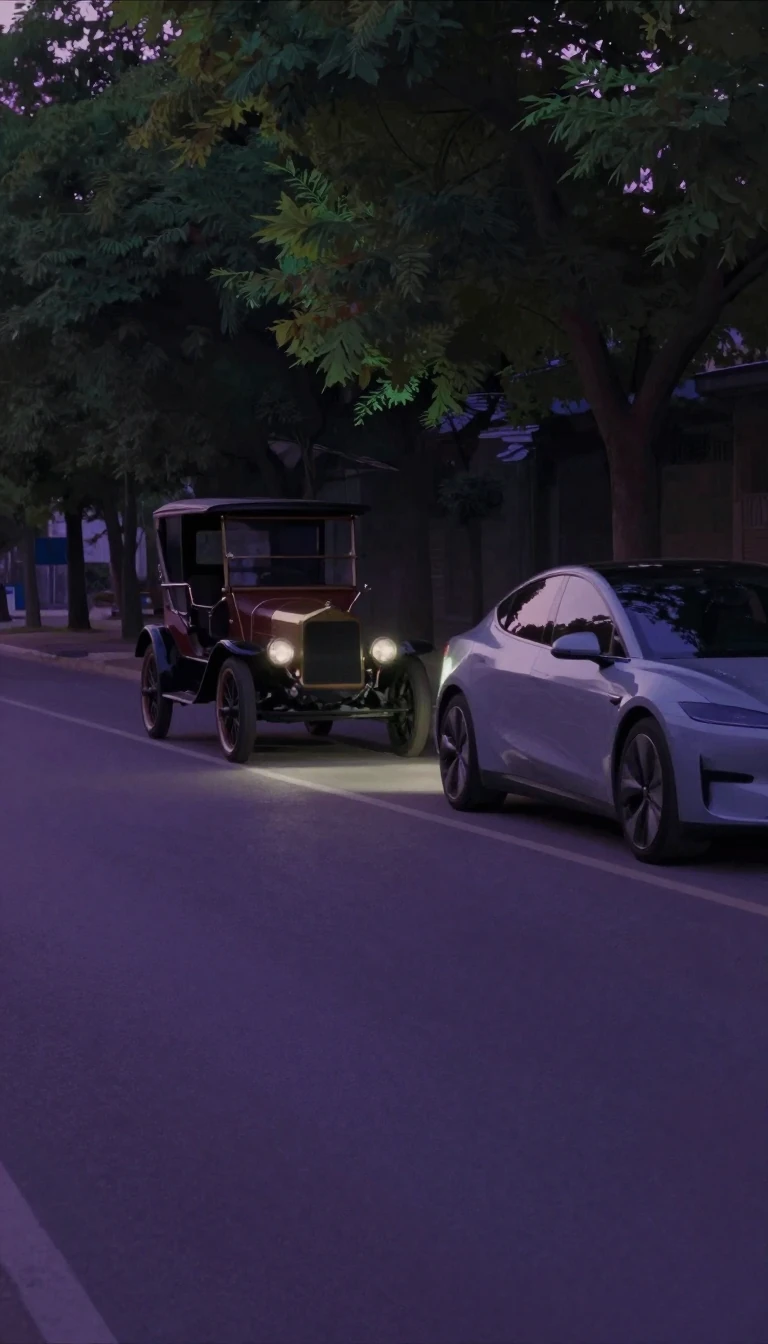 Why modern roads are engineered to be flexible or rigid to survive heavy trafficHighway engineering is a complex discipline that balances human safety, environmental impact, and structural longevity. By choosing between flexible asphalt or rigid concrete, eng…
 Why modern sailboats are essentially aircraft designed to navigate the surface of the seaSailboats are defined by more than just their sails. The divide between traditional monohulls and modern multihulls represents a fundamental shift in physics. While monohulls rely…
 Why modern self-adhesive house wrap outperforms traditional rosin paper for home protectionThe This Old House team demonstrates how to replace deteriorating siding and outdated rosin paper underlayment with advanced self-adhesive house wrap. This video provides a practi…
 Why modern skyscrapers and bridges are increasingly built in factories, not on site.Precast concrete transforms construction by moving production from chaotic job sites to controlled factory environments. By casting components like wall panels and beams in reusab…
- Why modern skyscrapers and bridges rely on concrete that is intentionally squeezed under pressure.Concrete is incredibly strong under compression but brittle when pulled. Prestressed concrete solves this by pre-loading the material with internal tension, effectively squeezing …
 Why modern skyscrapers are engineered to trick the wind before it hits themTall buildings face intense wind forces that can compromise structural integrity and pedestrian comfort. This video explores how engineers use cloud-based simulation technology to…
 Why modern society feels like a fake world designed to keep us stableIn his 2016 documentary, filmmaker Adam Curtis argues that governments and corporations have abandoned the complex real world for a simplified, artificial one. By managing our per…
 Why modern society is a risk machine that constantly undermines its own foundationsSociologist Ulrich Beck argued that the industrial age has birthed a new era where progress creates uncontrollable global side effects. From climate change to financial instabilit…
 Why modern society is weaponizing embarrassment to police authentic self-expression and creative effortCringe culture has evolved from a niche internet reaction to a social force that stifles creativity and dictates behavior. By labeling earnest effort as embarrassing, this phenome…
 Why modern society relies on the mandatory contribution of taxes to function effectivelyTaxes are a fundamental component of every global economy, acting as the primary mechanism for funding essential public services. This video explores why taxation is an unavoidabl…
 Why modern society treats risk like witchcraft: the enduring legacy of Mary DouglasAnthropologist Mary Douglas argued that our modern obsession with risk is not purely rational. Instead, it functions exactly like ancient witchcraft accusations: a way to name, bl…
- Why modern soldiers had to relearn the brutal art of close-quarters combatClose-quarters battle is a high-intensity, short-duration conflict defined by sudden violence. While special forces mastered these tactics in the 1970s to handle hostage crises, r…
 Why modern soldiers still train for brutal, ancient hand-to-hand combat encountersDespite the dominance of high-tech weaponry, physical confrontation remains a persistent reality of modern warfare. From the trenches of the past to contemporary urban skirmishes …
 Why modern spacecraft choose long, winding paths to reach the Moon instead of direct.Spacecraft are increasingly trading speed for efficiency by using complex, circuitous routes to reach the Moon. This video explains how modern missions leverage weak stability bou…
 Why modern spacecraft rely on two distinct types of electric propulsion enginesElectric propulsion has transformed space travel, offering capabilities far beyond traditional chemical thrusters. This video explains the two primary engine types currently domin…
 Why modern speech technology is leaving millions of speakers behindWhile thousands of languages thrive globally, modern speech technology supports just over a hundred. This video explores the digital divide created when languages are omitted from…
 Why modern speech technology leaves millions of speakers behindWhile thousands of languages thrive globally, digital speech technology supports just over a hundred. This video explores how computational linguist Kalika Bali works to prevent t…
 Why modern states are shifting from direct control to steering through complex networksGovernance is no longer just about the state holding the reins. Since the 1980s, a shift toward market-based reforms has transformed how societies function. Today, the state incre…
 Why modern states prefer shadows, subversion, and sabotage over traditional open battlefield combatUnconventional warfare avoids the blunt force of traditional combat, favoring infiltration, propaganda, and guerrilla tactics. By targeting civilian morale and empowering local in…
 Why modern statistics are failing and how AI tries to fill the gapStatistician Arthur Turrell examines the fragility of our data-driven world. As traditional survey methods collapse, he demonstrates how artificial intelligence is being deployed …
- Why modern steel is a masterpiece of atomic engineering and precise thermal timingSteel is far more than simple iron and carbon. By adding precise amounts of elements like manganese or nickel and manipulating its microstructure through exact heating and cooling…
 Why modern storytelling shifted from repeating loops to evolving, permanent character changeFor decades, popular media like comic books kept characters in a static loop, ensuring they never truly grew or changed. Today, the story arc has become the industry standard, tra…
 Why Modern Supercars Are Switching to Compact Axial Flux Electric MotorsEngineering Explained breaks down the technical shift toward axial flux motors in high-performance vehicles. By comparing these to traditional radial designs, the video reveals wh…
- Why modern superheroes are actually the new gods of ancient mythologyThis video explores how contemporary superheroes function as modern mythologies, evolving from the ancient gods of Greece, Rome, and Egypt into the spandex-clad icons of today.
 Why modern superheroes are the new incarnations of ancient godsThis video explores how contemporary comic book characters function as modern mythologies, drawing parallels between today's spandex-clad icons and the enduring legacies of the go…
- Why modern systems fail and Indigenous storytelling offers a way forwardTai Simpson explores how current political, social, and ecological behaviors are failing us. She argues that the solution lies in returning to Indigenous wisdom, specifically thro…