 Intellect Plus
Cards starting with W
29,907 cards. Page 299 of 499.
 Why mouth blisters turn into ulcers so quickly, and when one is worryingThe lining of your mouth sits at the border between gut and skin, and it is thinner than either, so the slightest scrape from a broken filling can open a sore. Most mouth ulcers a…
 Why moving a rose bush requires a radical pruning strategyTransplanting a rose bush is a high-stakes operation because of its fragile root system. If you simply move the plant, the root ball will likely disintegrate, leaving the bush una…
 Why moving at light speed doesn't make you younger than everyone elseIf you traveled to a distant star at near-light speeds and returned, you would find your twin aged significantly more than you. Yet, relativity suggests that from your perspective…
 Why moving electric charges create the invisible forces that guide usEvery magnet has two poles: north and south. While opposites attract and like poles repel, the true magic lies in the motion. From electrons spinning in atomic orbitals to massive…
 Why moving electricity across vast distances is an engineering marvel, not just simple wiring.Electric transmission lines act as superhighways for power, connecting distant plants to cities. While they might look like basic cables, the engineering required to move electric…
 Why moving fish at the Houston Zoo is a surprisingly complex logistical challengeTransporting fish between tanks at the Houston Zoo involves more than just a net and a bucket. This look at zoo operations reveals the technical and careful planning required to m…
 Why moving forward does not mean moving on from lossNora McInerny challenges the common narrative that grief is something to be overcome. In this talk, she explores how we can integrate profound loss into our lives without letting …
 Why moving forward doesn't always mean getting further awayUnderstanding the difference between distance and displacement is a fundamental pillar of physics. This video uses one-dimensional number lines to help you visualize how an object…
 Why moving objects appear to shrink as they approach the speed of lightLength contraction is a fundamental relativistic effect where an object in motion is measured as shorter than its proper length. While negligible at everyday speeds, this phenomen…
 Why moving people directly into homes is a homelessness solutionMost systems require people to 'earn' housing by first overcoming addiction or mental health hurdles. This video explores why reversing that logic—providing permanent housing with…
 Why moving together doesn't mean one thing causes anotherThis video explores how to interpret relationships between variables using scatter plots. You will learn why observing two data sets moving in tandem is not sufficient evidence to…
 Why much of what we call scientific fact is failing to repeat itselfThe cornerstone of the scientific method is reproducibility, yet a growing wave of failures to replicate published results is shaking the foundations of modern knowledge. From psy…
 Why Muhammad is widely considered the most popular given name on the planetDerived from the Arabic root for praise, the name Muhammad and its countless spelling variations are held by an estimated 150 million people worldwide. From its linguistic origins…
- Why mulch is the most versatile tool for a healthier, more productive gardenMulching is a fundamental practice for any gardener looking to improve soil quality and plant health. This guide explains how selecting the correct material for your specific envi…
 Why mulching is the easiest way to build healthy soil without breaking a sweatMulching is a simple, effective technique for organic gardening that improves soil health and boosts vegetable growth. This video demonstrates how to apply organic material to you…
 Why multi-step binomial trees offer a more flexible approach to valuing complex financial optionsValuing options requires navigating uncertainty. While the famous Black-Scholes formula provides a standard, the multi-step binomial tree offers a more adaptable alternative. By b…
 Why multicultural representation is a vital engine for democratic strengthImmigration scholar Sayu Bhojwani argues that a democracy's health depends on reflecting its actual diversity. This talk explores how the unique dedication of immigrants can serve…
 Why multihull vessels are rewriting the rules of speed and stability on the oceanMultihulls, from ancient Austronesian outriggers to modern foil-borne racers, defy traditional maritime limits. By ditching heavy ballast and utilizing slim, multi-hull configurat…
 Why multiple drugs work together by offering patients more chances to succeedResearchers reviewing the history of oncology found that many effective cancer treatments work through a principle called independent drug action. Instead of every drug in a cockt…
 Why multiplication and division rules for significant figures differ from additionPrecision in scientific calculation depends on the measurement with the least certainty. This video explains how to correctly round results when multiplying or dividing, ensuring …
- Why multiplying probability by trials reveals the long-term averageUnderstand how to calculate the expected value of a binomial random variable. This video breaks down the mathematical derivation and practical application of finding the mean in s…
 Why multivariable derivatives are more than just a collection of partial rates of changeIn single-variable calculus, a derivative measures a simple rate of change. When moving to multiple variables, the concept expands into a sophisticated tool for optimization and a…
 Why Muncie, Indiana, became the most studied city in the United StatesKnown as the quintessential American town, Muncie has been the subject of intensive sociological research for a century. From the famous Middletown studies of the 1920s to modern …
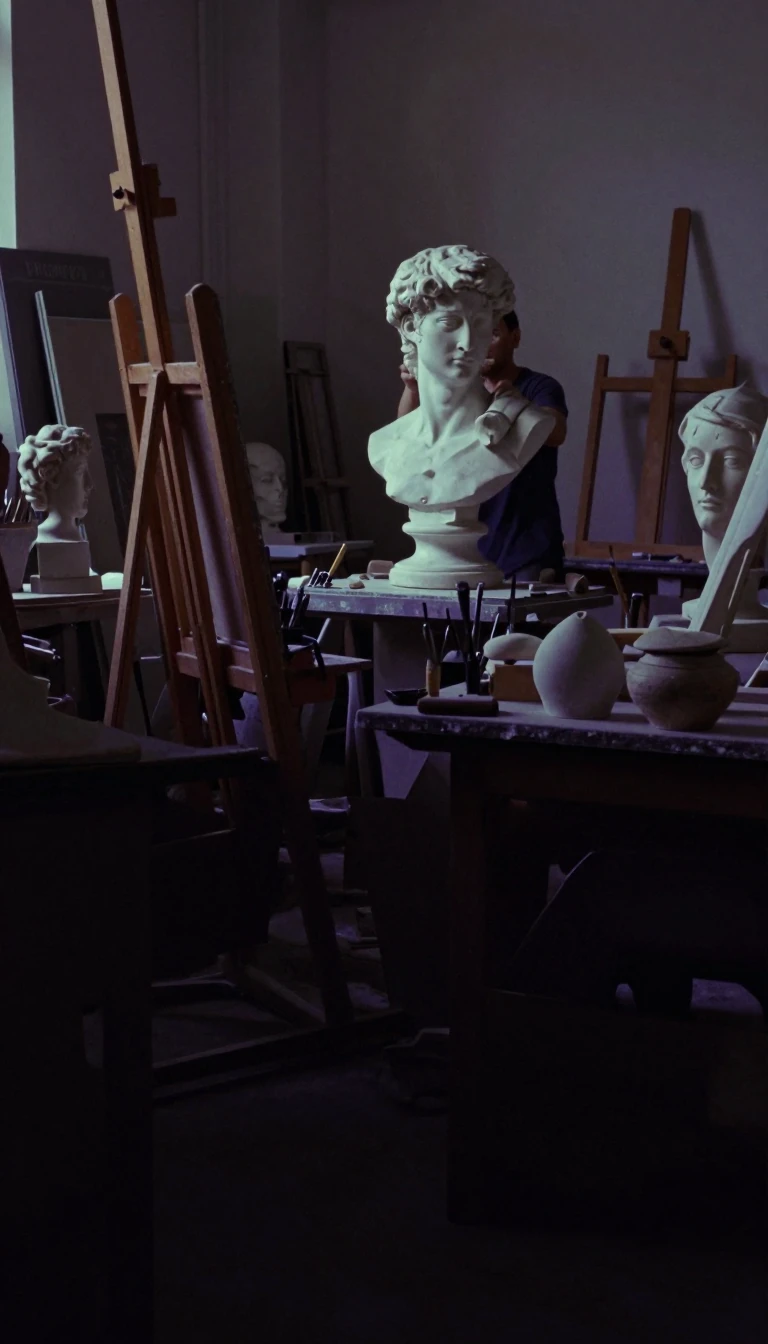 Why Muscular Dystrophy Is Not One Disease but a Group of Thirty Genetic ConditionsMuscular dystrophy is not a single diagnosis but a collection of over thirty distinct genetic disorders. While they all share the hallmark of progressive muscle weakness, the age …
 Why museum scientists rely on flesh-eating beetles to preserve delicate animal skeletonsDermestid beetles are nature's most efficient cleaners, capable of stripping a carcass to the bone in mere days. While these voracious insects are essential tools for museum scien…
 Why museums are finally returning stolen cultural treasures to their original communitiesArchaeologist and curator Chip Colwell examines the shifting landscape of museum ethics. He discusses how institutions are beginning to confront legacies of pillaging ancient grav…
 Why museums often ignore the ordinary lives that shape our worldFor centuries, museums have served as shrines to the exceptional. We celebrate the first, the famous, and the history-making. But what happens to the billions of people who lived,…
 Why museums preserve the fragile paper ephemera we keep in our pocketsPaper objects like comic books and valentines often hold deep personal meaning. This episode explores the challenge of preserving these handheld items within a museum setting and …
 Why museums should look beyond the famous to find historyMuseums are often filled with artifacts from the 'first and the famous.' This video explores how curator Ariana Curtis envisions a more inclusive approach to historical representa…
 Why Music Gives You GoosebumpsBrain-imaging and drug studies link music-evoked chills to the brain's reward system and to expectation, though a large systematic review says their basis remains obscure.
 Why musical limitations might be the key to unlocking your creative imaginationImprovising on the keyboard can feel overwhelming and intimidating for many beginners. However, restricting your options might actually be liberating. By using only a single note,…
 Why musical mastery might depend more on play than practiceWe are taught that excellence requires rigorous repetition. But for Grammy winner Jacob Collier, the secret to profound creativity lies elsewhere. By prioritizing curiosity and jo…
 Why mussels, clams, and oysters are becoming the next frontier for human health research.Bivalves are typically associated with dining rather than scientific discovery. However, researchers are increasingly looking to these creatures to unlock new insights into human …
 Why Mussolini's invasion of Greece became a strategic failureThis documentary examines the geopolitical tensions between Italy and Greece prior to 1940, followed by a detailed analysis of the Italian military invasion during the early stage…
 Why Mussolini’s original fighting bands were a chaotic mix of radical and nationalist ideasFounded in 1919, the Fasci Italiani di Combattimento began as a volatile political experiment. Far from the rigid dictatorship that followed, the movement’s early program was a co…
 Why must a continuous function on a closed interval reach its highest point?If you draw a continuous line on a closed, bounded interval, you are guaranteed to hit a peak and a valley. This isn't just intuition; it is the extreme value theorem. It ensures …
 Why must astronomers launch telescopes into space to study the high-energy universe?Earth's atmosphere is a protective shield, but it is also an opaque barrier to the most energetic phenomena in the cosmos. Because our air absorbs X-rays with extreme efficiency, …
 Why mustard gas is not actually a gas, but a persistent, skin-rotting liquid.Technically a misnomer, mustard gas is a viscous liquid that acts as a potent alkylating agent. It does not kill instantly but causes agonizing, delayed blistering that can leave …
 Why mutation is the fundamental engine of biological diversityMutation is often framed as a biological error, but it is actually a primary driver of life's variety. University of Oxford lecturer Alison Woollard explores how these genetic shi…
 Why Myanmar's modern flag echoes a controversial wartime design from 1943The current flag of Myanmar, adopted in 2010, features a simple tricolor background and a central white star. While it appears minimalist, its design is a deliberate revival of a …
 Why Namibia's ancient rock art site is named after a farmer's doubtful springTwyfelfontein, a UNESCO World Heritage Site in Namibia, holds one of Africa's largest concentrations of rock engravings. While the name implies an uncertain water source, the vall…
- Why naming a board game is more difficult than designing the rules themselvesPlanet Money collaborates with Exploding Kittens to develop a mass-market board game based on the economics paper The Market for Lemons. This episode reveals the high-stakes proce…
 Why naming Istanbul Constantinople remains a radical political actThe architecture of Istanbul serves as a physical record of conquest. This video explores how the city's pre-Ottoman past functions not as a foundation for modern identity, but as…
 Why naming your cow might actually increase your daily milk productionMilk has a surprisingly peculiar history that goes beyond the dairy aisle. This video explores the oddities surrounding human consumption of milk and reveals a strange psychologic…
 Why Nancy Meyers' 2009 romantic comedy became a surprising box office successWritten and directed by Nancy Meyers, It's Complicated stars Meryl Streep as a bakery owner caught between her ex-husband and a new architect. Despite mixed critical reviews, the …
 Why Napoleon allowed his most elite soldiers to openly grumble and complain to him.Known as the Immortals, Napoleon's Old Guard were the elite of the elite, hand-picked for their stature and combat experience. While strictly disciplined in appearance, they held …
 Why Napoleon Bonaparte offered a massive prize for food preservationDiscover how the logistical challenges of the Napoleonic Wars led to a revolutionary breakthrough in food technology, and why the tools we use today arrived much later than expect…
 Why Napoleon bypassed tradition to crown himself emperor inside Notre-Dame Cathedral in 1804Napoleon Bonaparte’s coronation was a masterclass in political theater. By rejecting the traditional Reims venue and forcing the Pope to travel to Paris, he sought to legitimize h…
- Why Napoleon called the Peninsular War his own personal VietnamThe Peninsular War turned into a strategic nightmare for Napoleon, draining his empire of nearly 250,000 soldiers. This video examines how a combination of popular insurgency and …
 Why Napoleon called Venice's Piazza San Marco the finest drawing room in EuropeNapoleon famously dubbed this vast, arcaded square the finest drawing room in Europe. Beyond its elegant cafes and historic clock tower, the piazza served as the political and soc…
 Why Napoleon's momentum stalled at the bloody Battle of EylauAfter crushing Austria and Prussia, Napoleon faced a new challenge in 1807. This documentary examines the Battle of Eylau, where a coalition of Russian and Prussian forces confron…
 Why Napoleon’s 1812 invasion of Russia stalled at the gates of sacred SmolenskNapoleon Bonaparte entered Russia with over half a million soldiers, seeking a swift, decisive victory to force a surrender. Instead, he found himself bogged down in a brutal, att…
 Why Napoleon’s official coronation painting is a masterpiece of carefully curated political fictionJacques-Louis David’s monumental canvas of Napoleon’s 1804 coronation is a triumph of Neoclassical art, yet it is far from a literal record. Napoleon personally directed the compo…
 Why Napoleon’s victory at Bautzen was a strategic failure that cost him the warIn May 1813, Napoleon commanded 144,000 troops against a retreating Prusso-Russian force of 96,000. Despite his overwhelming numerical advantage, a series of tactical errors and c…
 Why Napoleonic soldiers stood shoulder-to-shoulder in the face of enemy fireThis guide examines the tactical logic behind the rigid infantry formations of the Napoleonic era. It explains how repetitive drill allowed armies to balance the competing needs o…
 Why narrowing a laser slit eventually makes the light beam spread out widerWe usually assume that restricting a beam of light makes it more precise. However, physics dictates a fundamental limit to how much we can define a particle's location and movemen…
 Why NASA almost sent 100 tampons into orbit in 1983Comedian Marcia Belsky uses musical parody to lampoon a bizarre historical decision. This video explores the absurdity of NASA's suggestion to provide astronaut Sally Ride with an…
 Why NASA and ESA scientists are hunting for ancient pond scum in AustraliaTo prepare for the search for life on Mars, mission teams from NASA and the European Space Agency traveled to the Australian Outback. By studying the oldest fossilized microbial m…
 Why NASA believes diversity is the key to space explorationThis video explores the real-life history behind the film Hidden Figures, focusing on how NASA's commitment to data and talent reveals a critical truth about progress.
 Why NASA broke its own tradition to name a spacecraft after a living physicistIn 2017, NASA made history by naming a mission after a living person for the first time. The Parker Solar Probe honors Eugene Parker, the University of Chicago physicist who first…