 Intellect Plus
Cards starting with W
29,907 cards. Page 301 of 499.
 Why national sports teams are rarely just the best players from a countryA national team represents a country, but it is rarely a simple collection of the best available athletes. Success, popularity, and eligibility rules create a complex landscape wh…
 Why national wealth is a poor measure of how well people actually liveFor decades, economists measured progress by national income alone. The Human Development Index changed that by prioritizing human well-being. By tracking life expectancy, educati…
 Why nations are racing to destroy the satellites that keep our modern world connectedSatellites are the invisible backbone of modern life, from GPS to global communications. Yet, they are also prime targets for hostile states. Anti-satellite weapons, or ASATs, hav…
 Why nations bind themselves to others despite the persistent risk of betrayal and entrapment.Military alliances are formal agreements designed to bolster national security, yet they create complex dilemmas for member states. While these pacts often deter aggression and fo…
 Why nations cannot simultaneously control their exchange rate, capital flows, and monetary policyThe Mundell-Fleming model reveals a rigid economic constraint known as the impossible trinity. It dictates that a country can only achieve two of three goals: a fixed exchange rat…
 Why nations cannot simultaneously control their money, their borders, and their currency value.In international economics, the impossible trinity dictates that a country can only achieve two of three goals: free capital movement, a fixed exchange rate, or independent moneta…
 Why nations choose to clone foreign firearms instead of designing their ownDeveloping domestic weapons is a costly, time-consuming, and complex endeavor. This video explains why many countries opt to manufacture copycat firearms rather than investing in …
 Why nations choose to trade instead of making everything themselvesThis video explores the economic principles that govern global production. You will learn how countries determine what to manufacture and what to import based on specific economic…
 Why nations import goods they already produce and how trade deficits are misunderstoodInternational trade is more than just shipping crates across borders. It is a complex web of ownership changes, digital service flows, and strategic supply chain management. While…
 Why nations prioritize copying enemy technology over inventing their own during wartimeDuring the urgency of war, nations often bypass innovation to replicate enemy advancements. This video explores the strategic necessity of espionage and reverse engineering, expla…
 Why nations rich in natural resources often struggle to achieve lasting economic prosperityThe resource curse suggests that countries blessed with abundant natural wealth often suffer from slower economic growth, increased corruption, and higher rates of conflict. While…
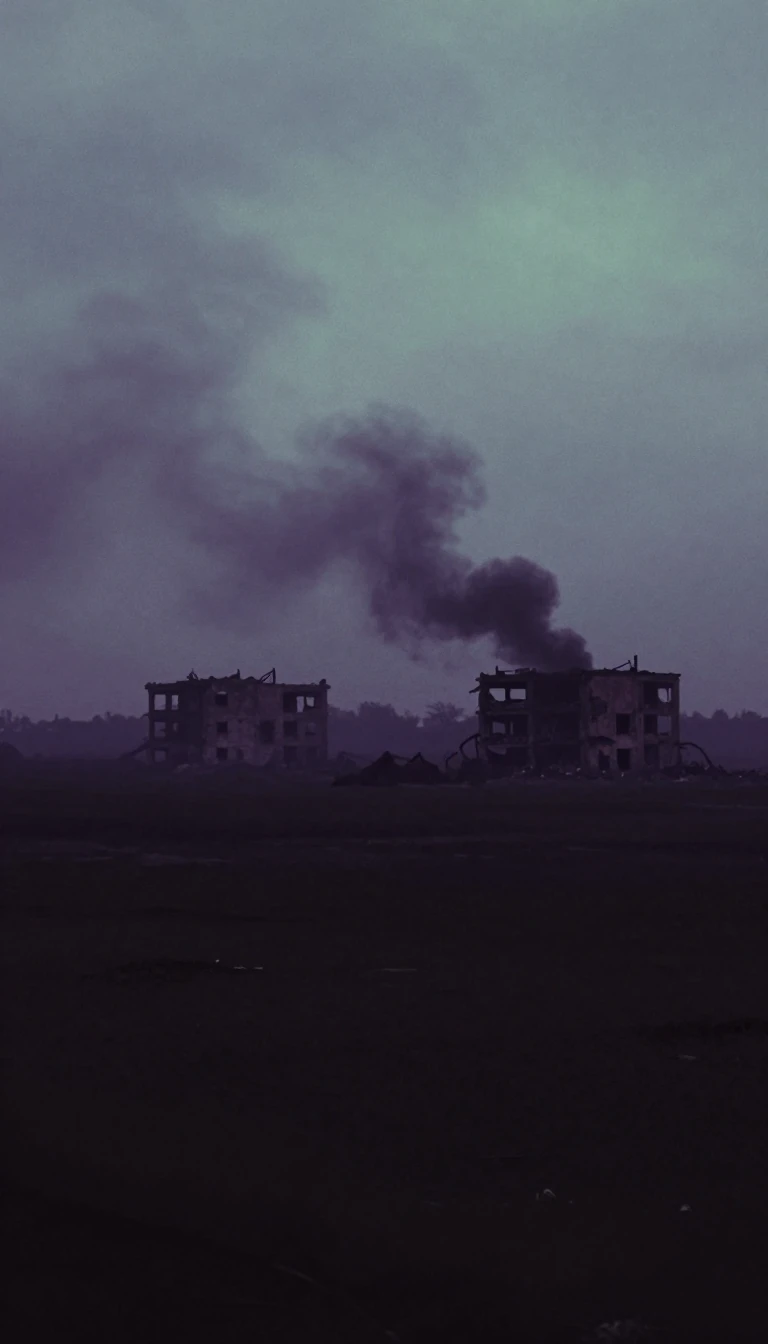 Why nations stopped declaring war even when they are actively fightingFor centuries, a formal declaration of war was the standard opening move for any conflict. Today, these proclamations have become nearly extinct. While modern nations still engage…
 Why nations thrive by specializing in what they are relatively best at producingEver wonder why countries trade even when one is more efficient at everything? The secret lies in comparative advantage. By focusing on what they produce at the lowest opportunity…
 Why nations turn to prison populations to bolster their military ranks during wartimeWhen nations face the desperation of war, they often look to criminal populations to increase their military numbers. This exploration examines the historical and modern practice …
 Why nations use ancient architecture to manufacture a sense of identityArchitecture has long celebrated the glory of kingdoms, but using specific historical styles to signal national character is a modern invention. From the mid-18th century, archite…
 Why nations use false flags to stage attacks and manipulate public perceptionA false flag is a calculated deception where an actor disguises their identity to pin blame on an enemy. While the term originated as a naval ruse to approach ships, it has evolve…
- Why nations wage war over raw materials, from nineteenth-century guano to modern blood goldResource wars are conflicts driven by the desire to seize or control vital materials. Whether it is nutrient-rich bird droppings, strategic oil, or precious minerals, the struggle…
 Why Native American cuisine is missing from our modern menusChef Sean Sherman explores why Indigenous culinary traditions are largely absent from the North American food landscape. It is a look at how reclaiming these foods can lead to bet…
 Why NATO militaries use a grid system that identifies areas instead of pointsThe Military Grid Reference System is the standard for NATO operations, yet it never points to a single spot. Instead, it defines a square on the Earth's surface. By adjusting the…
 Why NATO uses made-up names for foreign military hardwareIn the heat of operational conditions, precise proper names can be easily confused. To prevent errors, NATO uses a system of short, distinctive code names for equipment from post-…
 Why natural disasters are becoming a more frequent threat to our global societyNatural hazards are physical processes like earthquakes and cyclones, but they only become disasters when they cause significant human harm. While these events have always occurre…
 Why natural fatty acids almost always have an even number of carbonsCells build fatty acids two carbon atoms at a time, adding pairs in a repeating cycle, so nearly every natural chain ends up even-numbered. The kinks in those chains matter as muc…
 Why natural selection alone cannot explain the rapid speed of biological innovationDarwin’s theory of natural selection explains how traits are filtered, but it fails to explain how life creates such vast diversity so quickly. With billions of years of history, …
 Why nature almost never builds a three-legged animal for walkingWhile bipedal and quadrupedal movement dominate the animal kingdom, true tripedalism is an evolutionary rarity. Bilateral symmetry became a fundamental biological blueprint long b…
 Why nature builds with hexagons: the secret behind volcanic rock columnsThe Giant's Causeway features striking hexagonal rock columns that appear supernatural. This video explains how volcanic activity naturally produces these geometric shapes, demons…
 Why nature builds with rings: the hidden geometry of life and chemistryChemical compounds are not just linear chains. By looping atoms into rings, nature creates the structural complexity required for life, drugs, and materials. These cyclic structur…
 Why nature constantly fights to return objects to their original stateWhen you stretch a spring or swing a pendulum, an invisible hand seems to pull back. This is the restoring force, a fundamental mechanism that drives everything from simple vibrat…
 Why nature eventually puts the brakes on population explosionsIn a world of infinite resources, populations would grow forever. But Earth has limits. From the rapid surge of exponential growth to the stabilizing curve of logistic growth, bio…
 Why nature evolved the art of flight and gliding through independent pathwaysTrue flight and gliding are distinct evolutionary strategies for mastering the air. While powered flight requires massive physiological investment, gliding offers a clever, low-en…
 Why nature favors the 'messy' math of multi-partner matingIn the wild, mating is rarely a simple 1-to-1 transaction. Polygynandry—where both males and females have multiple partners—is a sophisticated evolutionary strategy. It balances t…
 Why nature fights back: the hidden rule governing every magnetic interaction you seeWhen you move a magnet near a wire, you trigger a silent, invisible resistance. This isn't just friction; it is Lenz's law, a fundamental principle of electromagnetism that ensure…
 Why nature forbids certain mixtures from ever reaching a state of perfect equilibriumThe Gibbs phase rule dictates how many variables, like temperature and pressure, you can independently control in a chemical system. It reveals why you cannot have four phases of …
 Why nature forces organisms to choose between quantity and quality of offspringEvolutionary theory once divided the living world into two camps: r-strategists, which flood environments with cheap, expendable offspring, and K-strategists, which invest heavily…
 Why nature has mastered propellers but failed to build wheelsWheels are a staple of human engineering, yet they are virtually non-existent in the animal kingdom. While we see them everywhere from bicycles to carts, biology seems to have hit…
 Why nature insists that every forward process must have a perfect reverse pathIn thermodynamics, the principle of detailed balance dictates that at equilibrium, every energy transfer process must be matched by its exact reverse. This elegant symmetry govern…
 Why nature is more than just scenery: the hidden value of ecosystem servicesNature does not just exist; it works. From pollinating our crops to buffering us against floods, ecosystems provide essential outputs that sustain human welfare. Because these ser…
- Why nature is not a simple chain but a complex, interconnected web of lifeA food chain is a linear path, but nature is a tangled web. Most organisms eat multiple species, and many shift their diets throughout their lives. This complexity means energy do…
 Why nature is the ultimate blueprint for sustainable businessErin Meezan explores how mimicking biological systems can revolutionize industrial design. From gecko-inspired adhesives to carbon-positive factories, she reveals how looking towa…
 Why nature keeps multiple versions of the same species in the same placePolymorphism is not just about variety; it is a deliberate evolutionary strategy. When a single species maintains distinct, stable forms within the same interbreeding population, …
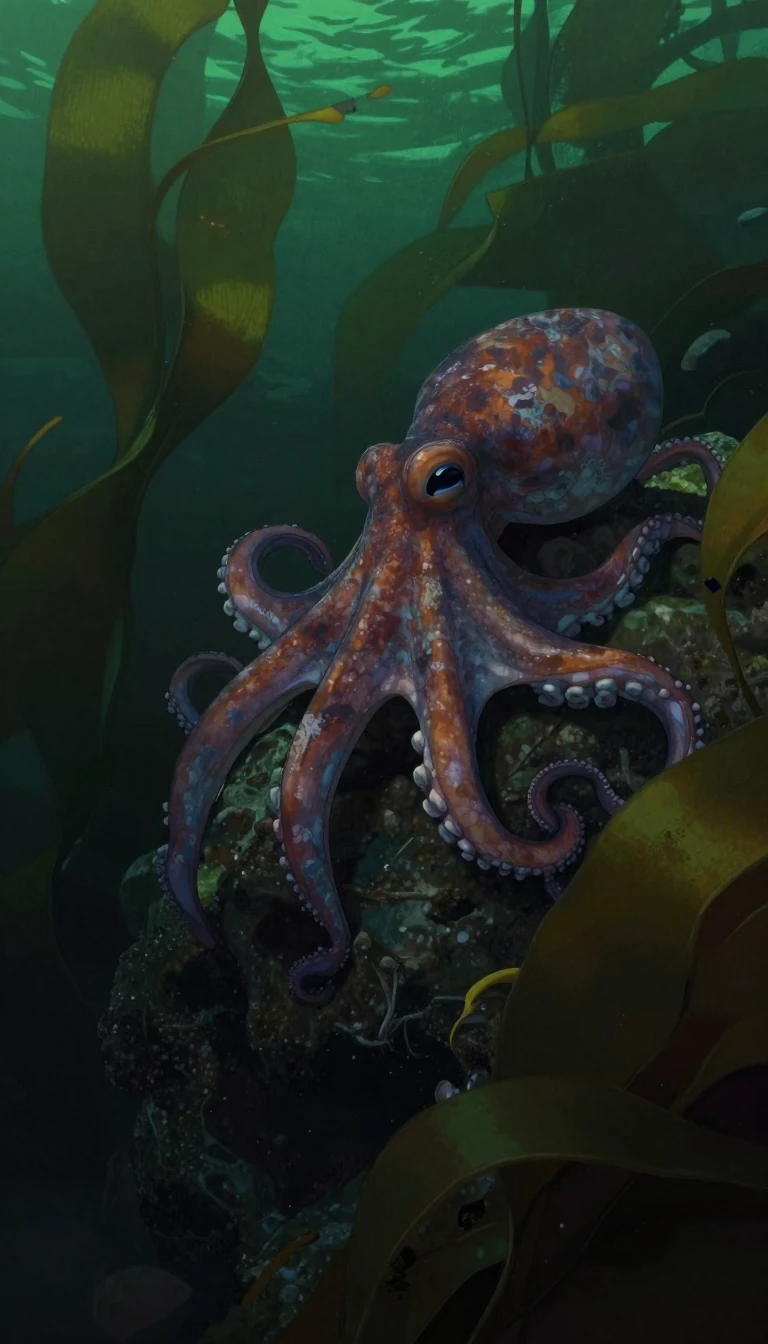 Why nature keeps reinventing the crab: the strange evolutionary phenomenon of carcinisationIf you see a crab with only eight visible legs, you are likely looking at an Anomuran. While true crabs belong to the Brachyura, Anomurans are a diverse group that repeatedly evol…
 Why nature keeps reinventing the giant, skin-shelled sea turtleThe largest turtle ever recorded was not a direct ancestor of modern leatherbacks, yet it shared their unique physical traits. This video explores why the giant, skin-shelled body…
 Why nature keeps species apart through the rigid clockwork of time and behaviorSpecies do not always need mountains or oceans to stay separate. Sometimes, the barrier is as simple as a calendar or a dance. By timing their reproduction to different seasons, d…
 Why nature limits how many individuals can live in one placeUnderstanding population regulation is key to grasping how life balances itself. This video explores the specific environmental pressures that dictate where organisms can thrive a…
 Why nature looks the same whether you zoom in or zoom outScale invariance describes systems that remain unchanged when their dimensions are stretched or compressed. From the cosmic microwave background to the patterns of fractals, this …
 Why nature needs disaster: how fire, storms, and death reset the ecological clockAn ecological disturbance is any force—biological or not—that kills organisms and reshapes their environment. While often viewed as destructive, these events are fundamental to li…
 Why nature prefers cooperation over constant competitionMost people assume nature is a brutal, constant battle for survival. This video explores why that isn't the whole story, explaining how species often avoid direct conflict by find…
 Why nature prefers curves over sharp cornersIn this Oxford Mathematics Public Lecture, Gábor Domokos explores the geometric preference for rounded edges and non-flat surfaces. Discover how these principles manifest in every…
 Why nature prefers irregular patterns over perfect geometric tilesWhile human design often relies on precise, straight-edged shapes, the natural world operates differently. This lecture explores the mathematical principles behind how both rigid,…
 Why nature prefers the path of least resistance: the mystery of action in physics.In physics, action is not just movement; it is a precise numerical quantity that reveals the hidden logic behind how objects travel. By viewing a system's entire history at once, …
 Why nature prefers to linger in temporary states rather than settle for the bottomMetastability describes systems that remain trapped in high-energy states, resisting the pull toward their lowest energy configuration. From the complex firing patterns of the hum…
 Why nature refuses to rewind: the hidden physics of irreversible processesIn our world, you cannot unscramble an egg or un-cool a cup of coffee. While the fundamental laws of physics are time-reversible, complex systems inevitably march toward entropy. …
 Why nature rejects perfect ratios in the solid-state chemistry of transition elementsWe are taught that chemical compounds follow neat, whole-number ratios. Yet, many vital materials defy this rule entirely. These non-stoichiometric compounds contain structural de…
- Why nature remains the ultimate architect of the world's most complex chemical structuresNatural products are small molecules produced by living organisms, ranging from simple urea to intricate structures like Taxol. Because they are often difficult to isolate and pos…
- Why nature remains the ultimate factory for the world's most complex medicinesTotal chemical synthesis is a marvel, but it often struggles to replicate the intricate structures found in nature. Semisynthesis bridges this gap by using natural compounds as st…
 Why nature repeats its favorite shape: the power of the bell curveFrom human heights to industrial quality control, the normal distribution is everywhere. It is the mathematical backbone of our understanding of randomness, allowing us to find or…
 Why nature repeats the same patterns from zebras to sand dunesNature's recurring designs are rarely aesthetic accidents. This video explores how distinct physical processes create identical patterns across unrelated phenomena, revealing the …
- Why nature sometimes paints its creatures in the deepest shades of blackMelanism is a congenital condition resulting in high levels of melanin, creating dark pigmentation across diverse species. While often confused with other pigment disorders, this …
 Why nature's most complex rhythms are solved by simultaneous equationsWhen predator and prey populations shift, they do not move in isolation. Their fates are linked, requiring us to solve multiple differential equations at once. This coupled approa…
 Why nature's most efficient hydrofoils have bumpy, irregular leading edgesFlippers are not just simple paddles; they are sophisticated, evolved control surfaces that allow marine giants to navigate the ocean with startling precision. While engineers onc…
 Why nature's most potent medicines are often hidden in the deep oceanMany life-saving drugs originate in nature, but their purpose within the organisms that produce them is often misunderstood. This video explores how chemicals like trabectedin, fo…