 Intellect Plus
Cards starting with W
29,907 cards. Page 270 of 499.
 Why India’s historic Millennium City is reclaiming its original name of KatakaKnown as the Millennium City, Cuttack has served as a vital capital and cultural hub for over a thousand years. Now, the city is shedding its colonial-era anglicised name to embra…
 Why India’s massive year-long farmers' protest forced a historic government U-turnIn September 2020, India passed three agricultural laws aimed at modernizing the sector. Instead of progress, they triggered the largest mass protests in decades. For over a year,…
 Why Indian astrology tracks nine celestial bodies, including two that are entirely invisible.The navagraha are nine celestial entities believed to shape human destiny. While seven correspond to the Sun, Moon, and visible planets, two are shadow planets—Rahu and Ketu—that …
 Why Indian classical dancers use their entire bodies to tell ancient, sacred storiesUnlike Western ballet, which prioritizes height and speed, Indian classical dance is a narrative art form rooted in religious ritual. By combining intricate hand gestures, rhythmi…
 Why Indian cuisine relies on dried green mango powder for that perfect acidic punchAmchoor, a staple spice across India, is essentially dried, unripe green mangoes ground into a fine, pale-beige powder. It provides a distinctively tart, fruity acidity to dishes …
 Why Indian film music dominates the subcontinent and increasingly captures the global stageIndian film music is a massive cultural force, accounting for 72% of the nation's music sales. It relies on a unique system where playback singers record tracks that actors lip-sy…
 Why Indian philosophy challenges the inevitability of Western logical and metaphysical distinctionsSurendranath Dasgupta, author of the monumental five-volume A History of Indian Philosophy, argued that Indian thought offers more than just historical curiosity. By examining pro…
 Why Indian reservations are sovereign enclaves with their own complex legal systemsAn Indian reservation is not merely a plot of land; it is a legally designated area held by a federally recognized tribe, operating with limited sovereignty. These autonomous regi…
 Why Indian revolutionaries robbed a British train to fund their fight for independenceOn 9 August 1925, a group of Indian revolutionaries stopped a train near Kakori to seize tax money destined for the British treasury. This daring heist was intended to finance the…
 Why Indiana Jones and the Temple of Doom became a dark, controversial cinematic experimentReleased in 1984, the second Indiana Jones film was a deliberate departure from its predecessor. Driven by the personal turmoil of its creators, the film traded Nazi villains for …
 Why Indiana Jones is more than just a professor with a bullwhipGeorge Lucas conceived this iconic archaeologist as a tribute to 1930s pulp action heroes. Beyond his signature fedora and leather jacket, the character evolved from a cinematic t…
 Why Indiana Jones traded Nazis for Cold War aliens in the 1950sAfter nearly two decades, Indiana Jones returned to the screen in 2008. To capture the spirit of the era, the filmmakers swapped the familiar threat of the Third Reich for the par…
 Why Indiana Jones’s Final Adventure Took Forty-Four Years to Reach the ScreenThe fifth and final Indiana Jones film, Dial of Destiny, concludes a journey that began with a 1979 production deal. After decades of development, script rewrites, and a pandemic-…
 Why Indiana’s identity is a complex blend of Northern industry and Southern traditionKnown as the Crossroads of America, Indiana defies simple categorization. While geographically part of the Midwest, its early settlement patterns created a unique cultural duality…
 Why Indigenous groups are fighting fire with fire to save the American WestFor decades, government policy focused on total fire suppression, famously championed by Smokey Bear. Today, as climate change intensifies wildfire seasons, Indigenous tribes in t…
 Why Indigenous leadership is essential for a healthier democracyAnathea Chino explores how diversifying political power beyond the status quo can strengthen American governance. She explains why supporting Native American leadership isn't just…
 Why Indigenous leadership is essential for global biodiversity and planetary survivalWhile eighty percent of Earth's biodiversity exists within Indigenous territories, these communities frequently lack decision-making power. Environmental activist Jupta Itoewaki e…
 Why Indigenous storytelling holds the key to a more balanced futureCommunity organizer Tai Simpson argues that our current political, social, economic, and ecological systems are failing. She explores how returning to the 'old ways' through Nez P…
 Why Indigenous territories hold the key to global biodiversityIndigenous communities inhabit regions containing eighty percent of the world's biodiversity, yet they are frequently excluded from decisions regarding their own lands. This video…
 Why Indigenous wisdom is essential for modern climate science effortsIndigenous territories hold a third of Earth's irrecoverable carbon and support most terrestrial mammals. Yet, scientific models often overlook the traditional ecological knowledg…
 Why indirect prompt injection is the most dangerous flaw in generative AIMike Pound from the University of Nottingham breaks down the mechanics of indirect prompt injection. This video explains why this vulnerability is a critical security concern for …
 Why individual actions matter in the fight for global climate justiceThis episode of the Overheard at National Geographic podcast explores the impact of grassroots activism, specifically highlighting climate justice movements. By examining organize…
 Why Indonesia is abandoning its sinking capital to build a city in the jungleJakarta is drowning, sinking up to 15 centimeters annually as its 30 million residents struggle with pollution and floods. In response, Indonesia is carving a new capital, Nusanta…
 Why Indonesia is building its new capital city in the heart of East KalimantanEast Kalimantan is a vast, resource-rich province on the island of Borneo, historically defined by ancient kingdoms and dense rainforests. Now, it is becoming the site of Nusantar…
 Why Indonesia is moving its capital city to escape a sinking futureIndonesia is one of the world's most climate-vulnerable nations, facing a dual crisis of rising seas and rapid land subsidence. With Jakarta sinking by up to 10 centimeters annual…
- Why Indonesia's favorite condiment is a syrupy, molasses-infused transformation of standard soy sauceKecap manis is the backbone of Indonesian cooking, accounting for nearly 90 percent of the nation's soy sauce production. This dark, viscous liquid balances deep umami with intens…
- Why Indonesia's Steel City is a vital industrial powerhouse on the edge of JavaKnown as the Steel City, Cilegon is a critical industrial hub on the northwest coast of Java. Producing millions of tons of steel annually, it serves as a cornerstone of the Indon…
 Why Indonesia’s currency bears a Sanskrit name and a history of extreme revaluationThe Indonesian rupiah, derived from the Sanskrit word for wrought silver, has navigated a turbulent economic history. From the hyperinflation of the 1960s to the 1997 Asian financ…
 Why industrial expansion triggers thousands of local battles over land and resources worldwideEnvironmental conflicts arise when industrial growth clashes with local livelihoods. From mining to deforestation, these struggles pit communities against corporations over the un…
 Why industrial giants use vacuum pressure to boil liquids without extreme heatDistilling complex mixtures often risks thermal damage, as high temperatures can cause unwanted chemical reactions or decomposition. By lowering the atmospheric pressure inside a …
- Why industrial parks are the hidden engines of modern global manufacturing and commerceIndustrial parks are far more than mere clusters of factories. They are meticulously planned zones designed to concentrate heavy infrastructure, reduce operational costs, and shie…
 Why industrial waste might be the secret to better, more sustainable hand sanitizerHand sanitizer is a staple of modern hygiene, but its production often relies on virgin ingredients. Recent research suggests that crude glycerol, a byproduct of industrial proces…
 Why infant stars are forbidden from existing in certain regions of spaceYoung stars are not just glowing balls of gas; they are governed by strict physical boundaries. When a protostar forms, it must navigate the Hayashi track, a nearly vertical path …
 Why infectious disease specialists are the detectives of the modern medical worldInfectious disease specialists bridge the gap between clinical care and laboratory science. They tackle complex, often mysterious infections caused by bacteria, viruses, fungi, an…
 Why infidelity is often a search for self rather than a lack of loveRelationship therapist Esther Perel challenges the idea that cheating only happens in failing relationships. This talk explores why even happy couples stray and offers a new frame…
 Why infinite dimensions break the rules of convergence we learn in finite spacesIn this lecture from the Oxford Mathematics third-year Functional Analysis course, Melanie explains why standard convergence arguments fail in infinite-dimensional spaces. You wil…
 Why inflation targeting might be failing the UK economyFor three years, the UK has faced a strange economic paradox: inflation has remained stubbornly above target, while economic growth continues to underperform. Professor Douglas Mc…
- Why influencer marketing is fundamentally incompatible with the serious world of investment managementFinancial influencer marketing is increasingly pervasive, but it poses significant risks to individual investors. This video examines why the influencer model lacks the necessary …
 Why information alone cannot fix our unhealthy habitsWe often know which choices are bad for us, yet we make them anyway. This talk explores why human behavior is predictably irrational and how we can use that insight to improve hea…
 Why information can become true simply by being repeatedDiscover how the rapid speed of modern information sharing creates the perfect environment for circular reporting, a phenomenon where misinformation gains credibility through endl…
 Why Infrared Astronomy Is the Key to Unlocking the Universe's Hidden SecretsNASA scientists explain how infrared observations reveal unseen cosmic phenomena. This talk explores the missions designed to map the universe in new ways, providing a deeper look…
 Why infrared telescopes are the only way to see the universe's hidden historyVisible light is easily blocked by cosmic dust, hiding the birth of stars and the dawn of time. Infrared telescopes pierce through these opaque clouds, revealing the heat of young…
 Why infrared telescopes must be kept colder than the objects they observe in spaceInfrared astronomy reveals the hidden universe, from forming stars to distant, redshifted quasars. Because objects at room temperature emit thermal energy in infrared wavelengths,…
 Why infrastructure repairs are not enough to solve the climate crisisPakistan contributes less than 1% of global emissions but suffered devastating floods that displaced millions. Huma Yusuf argues that true resilience requires moving beyond simple…
 Why Ingmar Bergman considered this stark 1963 drama his favorite film of all timeIngmar Bergman’s Winter Light is a haunting exploration of faith, existential dread, and the silence of God. Inspired by a real-life clergyman’s struggle, the film strips away rel…
 Why Ingmar Bergman invented an Irish proverb to frame a comedy about SatanIn 1960, Ingmar Bergman directed a fantasy comedy centered on a bizarre premise: Satan suffers from a painful eye infection caused by the purity of a young woman. To cure his ailm…
 Why Ingmar Bergman’s most famous film was rejected by every major studioIngmar Bergman’s 1972 masterpiece Cries and Whispers was a commercial gamble that major distributors refused to touch. After being rejected for a modest advance, the film found a …
 Why Ingmar Bergman’s most haunting film is named after a mythical hour of deathIn the darkest stretch between night and dawn, the sleepless are said to be haunted by their deepest anxieties. Ingmar Bergman’s 1968 psychological horror film, Hour of the Wolf, …
 Why inheritance in the Kingdom of Jerusalem was far from stableIn the Crusader states, the typical European pattern of father-to-son succession rarely held. Constant warfare and high mortality rates among male lords meant that lordships frequ…
- Why inheritance is the most misunderstood tool in object-oriented programmingInheritance allows developers to build new classes upon existing ones, creating hierarchies that reuse code and define relationships. While it is a cornerstone of object-oriented …
 Why inheritance taxes vary wildly across the globe and what they actually taxInheritance tax is often misunderstood as a single global concept, but it functions differently depending on where you live. While some nations treat it as a levy on the deceased'…
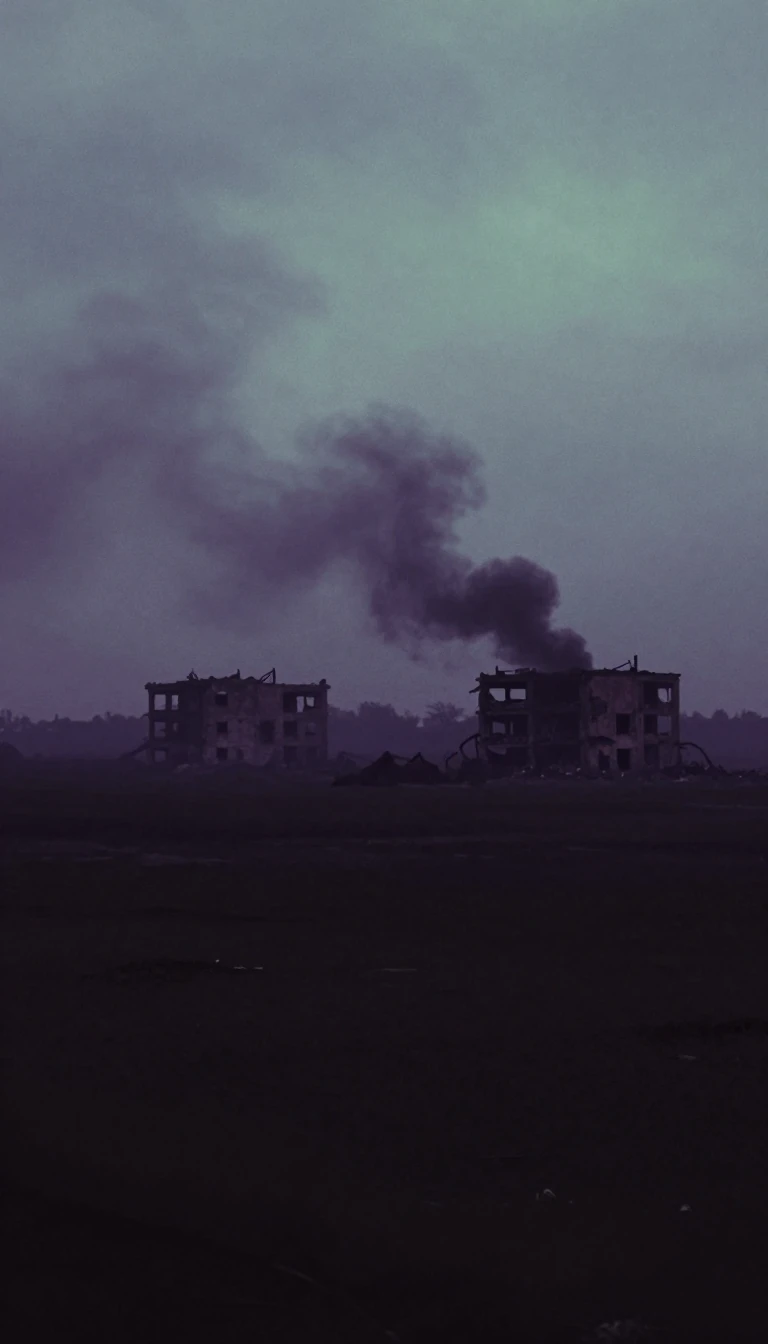 Why initiating a war of aggression is considered the supreme international crimeA war of aggression is a conflict launched without the legal cover of self-defense or UN authorization. Once viewed as a tool of statecraft, it is now classified as the ultimate i…
 Why injecting pure water into your veins can be dangerousWater for injection is not just water; it is a high-purity substance engineered for pharmaceutical use. While it is essential for creating life-saving medications, injecting it in…
 Why inline skates are essentially ice skates adapted for the dry pavementInline skates are more than just roller skates with a different wheel layout. By arranging wheels in a single line, they emulate the gliding motion of ice blades on dry land. This…
 Why inline speed skaters prioritize aerodynamic posture and specialized equipment for maximum velocityInline speed skating is a high-performance pursuit where athletes push physical limits to minimize wind resistance and energy loss. Beyond the specialized boots and wheels, succes…
 Why innovation follows a pattern of sudden, dramatic leapsTheoretical biologist Stuart Kauffman explores how the 'adjacent possible' explains the sudden bursts of growth seen from the Cambrian explosion to the modern computing revolution.
 Why insects are the ultimate thermometers of the natural worldInsects don't just endure the summer; they are physically governed by it. Because they lack internal temperature control, every aspect of their lives—from the speed of their fligh…
 Why insects once ruled the Earth as true giants of the Carboniferous period.Insects vastly outnumber humans, yet we often assume dominance due to our size. This video explores a time when arthropods were not small, but truly enormous, challenging our pers…
 Why insects see the world in slow motion and ultraviolet lightForget the myth of the kaleidoscope eye. This video explores how insect compound eyes actually function, revealing why these creatures perceive motion faster than humans and how t…
 Why installation art turns the viewer from a passive observer into a participantInstallation art abandons the pedestal, transforming entire rooms into immersive, sensory experiences. By placing you inside the work, these pieces dissolve the boundary between a…