 Intellect Plus
Cards starting with W
29,907 cards. Page 457 of 499.
 Why was this brilliant Tang dynasty poet known as the Poetry Ghost?Li He, a mid-Tang dynasty prodigy, earned the nickname Poetry Ghost for his haunting, supernatural imagery and morbid style. Despite his immense talent, a bureaucratic technicalit…
 Why was this industrial heartland of England once described as a fiery, dark wasteland?The Black Country, a sprawling industrial hub in the West Midlands, earned its name from the soot and pollution of its coal-rich landscape. Once the engine room of the Industrial …
 Why was this Italian city once known as the granary of the entire nation?Foggia sits at the heart of the Tavoliere plain, a region historically vital to Italy's food supply. From its origins as a storage site for wheat to its transformation into a stra…
 Why Was Zero Such a Big Deal?How zero grew from an empty space and a placeholder dot into a number with its own rules, and why parts of its history are still debated.
 Why washing your hands with soap remains our most effective defense against germs.Handwashing with soap is a fundamental practice for personal health, serving as a primary defense against both everyday illnesses and global pandemics. This video explores the und…
 Why Washington's premier college football rivalry is named after a piece of fruitThe Apple Cup is more than a gridiron clash between the University of Washington and Washington State University. Born in 1900, this storied rivalry evolved from a simple contest …
 Why Washington's second-highest peak is known as the forgotten giant of the Cascades.Mount Adams is a massive stratovolcano in Washington, yet it often lives in the shadow of its more volatile neighbors, St. Helens and Rainier. Despite its impressive scale and geo…
 Why watching a video about procrastination is the ultimate act of procrastinationProcrastination is a universal experience, even for those creating educational content. This guided meditation offers a brief pause to help you reset your focus, acknowledging the…
 Why watching birds might be a natural remedy for your anxietyThis video explores the connection between observing birds and mental well-being, investigating whether birdwatching serves as an effective tool for reducing stress and managing a…
 Why watching the blade on a table saw is a safety mistakeIn woodworking, the most dangerous instinct is often the most natural one. When using a table saw, focusing on the spinning blade can actually compromise your safety. To master th…
 Why watching wild birds in winter offers a vital seasonal escapeHuw Richards explores the simple pleasure of observing wild birds during the cold, dark nights of January. This video highlights how connecting with local wildlife provides a mean…
 Why water always finds its own level regardless of the container's shapeEver wonder why water in connected containers always settles at the same height? It is not magic, but a fundamental principle of physics. Whether the vessels are wide, narrow, or …
 Why water behaves unexpectedly when flowing through open channelsEngineers must predict fluid behavior to design effective water management structures. This video examines the hydraulic jump, a fascinating phenomenon in open-channel flow that d…
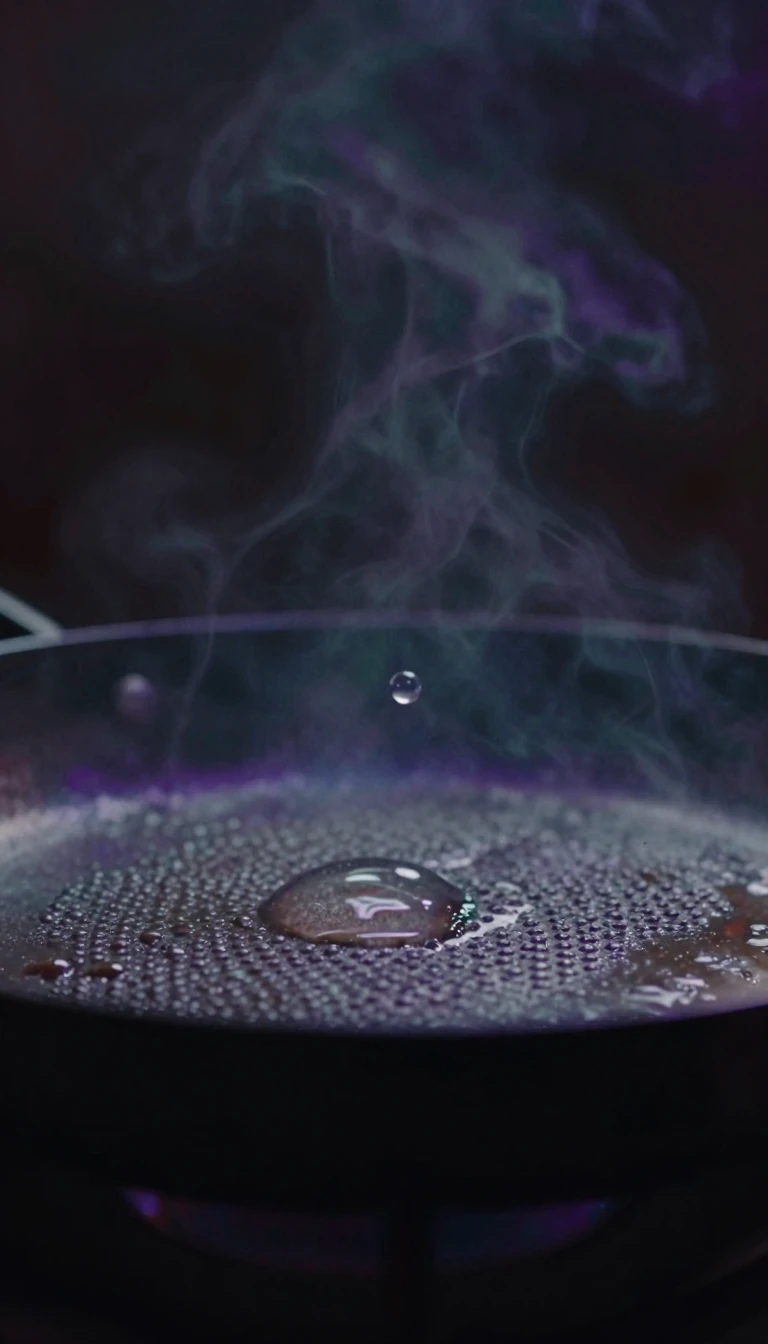 Why water boils at different temperatures depending on where you stand on Earth.Boiling is not a fixed property of a substance, but a dynamic dance between internal vapor pressure and external environmental force. When these two pressures equalize, a liquid t…
 Why water exists in one of the universe's hottest placesAt 5,500 degrees Celsius, liquid water seems impossible. This video explores the scientific debate over how H2O survives within our Sun's extreme environment.
 Why water freezes at exactly 32 degrees FahrenheitThe numbers on your thermometer aren't random accidents. This video explores the deliberate logic behind the Fahrenheit scale, revealing how its inventor chose specific fixed poin…
 Why water is the essential solvent for life and laundryWater is far more than just a liquid; it is the medium for nearly every chemical reaction on Earth. This video explores how water's unique properties, such as polarity and its die…
 Why water is the essential solvent that makes life on Earth possibleWater is far more than a simple liquid. This video explores how the unique chemical properties of water, specifically its polarity and hydrogen bonding, create the foundation for …
 Why water is the indispensable foundation for all known lifeFrom the smallest organisms to humans, every living thing requires water to survive. Its unique chemical properties—like its ability to act as a solvent and its high heat capacity…
 Why water is the ultimate solvent for the chemistry of life and industryWater is more than just a drink; it is the universal medium for chemical reactions. By understanding how substances dissolve, dissociate, or resist mixing in water, we unlock the …
 Why water is the universe's most essential universal solventFrom the cells in your body to the vast oceans, aqueous solutions are everywhere. But what actually happens at a molecular level when a substance dissolves in water, and how do ch…
 Why water is uniquely suited to foster life on EarthUnderstanding why certain substances mix while others repel requires looking at molecular symmetry. This video breaks down the chemistry of polarity, explaining how charge and geo…
 Why water might be the most practical fuel for exploring our solar systemWhile rarely considered a traditional propellant, water is a central component in serious research regarding space exploration and orbital refueling. This video examines why water…
 Why water polo is often described as the most physically demanding team sportWater polo is a high-intensity aquatic battle where players cannot touch the pool floor. Originating as a form of water rugby in the 1870s, it requires elite swimming, tactical aw…
 Why water remains one of science's most complex and strange substancesDespite its abundance and vital importance to life on Earth, water continues to baffle researchers. This video explores why water's behavior is far more erratic and complex than s…
- Why water runs straight through your pots and how to fix itWhen soil becomes hydrophobic, water bypasses the roots entirely. This video demonstrates a simple dunking technique using organic wetting agents and fish emulsion to restore mois…
 Why water scarcity triggers intense conflict among hippos in ZambiaAs the dry season reaches its peak along Zambia's Luangwa River, shrinking water sources force hippos into violent confrontations to secure survival.
 Why water slides effortlessly off a duck's backWe often use the phrase "like water off a duck's back" to describe things that don't stick, but for these birds, it is a vital biological mechanism. This video explores the scienc…
 Why water streams can hold objects in mid-air without the Bernoulli effectYou might assume the Bernoulli effect explains how water streams levitate objects, but the physics is more intuitive. By observing how water flows around a ball, we can see a stab…
 Why water waves of different sizes travel at different speeds across the oceanWater is a dispersive medium, meaning waves of varying lengths don't move in unison. While gravity waves typically speed up as their wavelength increases, the rules shift entirely…
 Why watercolor painting is the secret training ground for tattoo artistsMastering a tattoo isn't just about steady hands; it is about mastering color theory and composition before ever touching skin. Professional artists use flash sheets as a laborato…
 Why watering your vegetable garden less can actually lead to better resultsOverwatering is a common mistake that can hinder your garden. This video explains two lesser-known strategies for reducing water intake to improve plant resilience, productivity, …
- Why we are biologically and culturally drawn to tragic downfallsFrom ancient Greek theater to modern cinema, the narrative of a great person's ruin remains one of our most enduring obsessions. This video explores the specific structural compon…
 Why we are biologically hardwired to project emotions onto non-living machinesRobot ethicist Kate Darling explains why humans naturally form emotional bonds with robots. Even though current technology lacks real feelings, our instinct to project life onto m…
 Why we are biologically wired to adore certain animalsExplore the evolutionary psychology behind our fascination with 'cute' creatures. This episode follows wildlife photographer Edwin Towler as he captures rare moments of mountain h…
 Why we are biologically wired to seek out storiesTelevision titan Shonda Rhimes joins Cyndi Stivers to discuss why humans have a fundamental need for narrative. The conversation explores how storytelling serves as a tool for con…
 Why we are building telescopes larger than any ever seenAstronomy is a passive science; we cannot build a lab to test the universe. We can only study what light happens to reach us. Because cosmic objects are so distant, they appear in…
 Why we are drawn to characters who lack every heroic qualityThe traditional hero is noble, high-born, and beloved. But the antihero is different: an outsider, often a criminal, driven by personal motives rather than a calling to do good. F…
 Why we are drawn to people who look, act, and think like usInterpersonal attraction is more than just a spark; it is a complex social force that draws us toward specific individuals. While we often credit chemistry or mystery, research su…
 Why we are failing to solve global hunger in a world of wasteDespite unprecedented levels of food waste, one in nine people still faces hunger every night. Jasmine Crowe argues that our current methods are insufficient and calls for a radic…
 Why we are increasingly pronouncing words exactly as they are written on the pageSpelling pronunciation occurs when we read a word and pronounce it based on its letters rather than its traditional sound. Driven by universal literacy and schooling, this phenome…
 Why we are irresistibly drawn to the lives of criminalsFrom 18th-century autobiographies to modern psychological thrillers, fiction has long obsessed over transgression. This lecture explores why stories of crime remain so compelling …
 Why we are moving from systemic chemotherapy to precision immune hackingChemotherapy is often a blunt instrument, damaging healthy tissue alongside tumors. This talk explores a shift toward using nature's own design to target cancer with surgical prec…
 Why we are obsessed with building, fixing, and creating things without any professional helpThe do-it-yourself movement is more than just a weekend home improvement project. It is a cultural pushback against modern specialization, where individuals reclaim agency by mast…
 Why we are rationalizing animals rather than rational ones, according to Elliot AronsonElliot Aronson is the only psychologist to win all three major American Psychological Association awards for research, teaching, and writing. His work reveals that humans are not …
 Why we are running out of physical space for faster computersModern transistors are already so small that thousands fit across a single human hair. To power the next generation of augmented reality and facial recognition, we need a radical …
 Why we are still obsessed with building impossibly large rocketsWhy do we keep building bigger and better rockets even when they are impractical? This video explores the psychological pull of the Kerbal Space Program and the human drive to pus…
 Why we are winning the war against child mortalityHans Rosling uses spectacular visuals to reframe a decade of UN data, revealing an astonishing and mostly unreported piece of good news regarding global health trends.
 Why we avoid the social connections that actually make us happierBehavioral scientist Nicholas Epley explains why humans are naturally wired for connection yet frequently shy away from it. By examining decades of research on well-being and lone…
- Why We Believe Language Is Always Getting Worse, Even When It Is NotWilliam Labov, the father of variationist sociolinguistics, identified the Golden Age Principle: the universal human tendency to view language change as a decline from a perfect p…
 Why we believe we are the exception to every ruleOptimism bias is the psychological tendency to overestimate positive outcomes and underestimate negative ones. It is a universal human trait, appearing across all cultures and age…
 Why we blame others' character but our own circumstancesWhy do we assume a stranger's mistake is a personality flaw while our own failures are just 'bad luck'? This cognitive shortcut, known as the fundamental attribution error, shapes…
- Why we blame owners for property crimes but ignore their successesImagine your robot dog bites someone; you're held responsible. Now imagine it saves a life—the hero is the robot, not you. This asymmetry in moral credit suggests a deep-seated co…
- Why we blame people for their actions while ignoring the situation they faceWe often judge others by their character while excusing ourselves with circumstances. This tendency, known as the fundamental attribution error, suggests we are wired to see perso…
 Why we blame personalities instead of circumstances for others' mistakesWhen a driver cuts you off, you rarely think they are having a bad day; you assume they are a rude person. This isn't just a personal quirk—it is a systematic cognitive shortcut. …
 Why we blow out candles to send our secret wishes to the heavensWe see it at every birthday: the glowing candles, the shared song, and the silent wish. But this common party ritual began not as a celebration, but as a sacred attempt to ward of…
 Why we buy insurance might be about magic, not mathIs your decision to purchase insurance a calculated financial move or a psychological trick? Behavioral psychologist Orit Tykocinski explores how our brains use 'magical thinking'…
 Why we call friends family: the hidden logic of fictive kinshipAnthropologists once dismissed non-biological bonds as mere fiction. Today, we recognize these chosen relationships—from godparents to military brotherhoods—as vital social mechan…
 Why we can give perfect advice to others but fail ourselvesKing Solomon was legendary for his wisdom, yet his own reign ended in personal ruin. This irony describes a cognitive bias where we excel at solving others' problems while remaini…
- Why we can never truly see an atom, yet still know they exist.Eric M. Rogers opens his 1979 Royal Institution Christmas Lectures by exploring the invisible world of atoms. Through classic demonstrations, he explains why light is too large to…