 Intellect Plus
Cards starting with W
29,907 cards. Page 476 of 499.
 Why your environment might actually be a reflection of your own genetic blueprintRobert Plomin has spent decades challenging the traditional divide between nature and nurture. His research suggests that what we often label as environmental influence—like paren…
 Why your environment—not just your willpower—dictates your spending habitsWe often blame our own lack of discipline for poor financial choices, but behavioral science suggests the problem lies elsewhere. This talk explores how to navigate the psychologi…
 Why your espresso machine is actually the ultimate tool for cooking perfect eggsUsing an espresso machine steam wand to cook eggs produces a texture that is impossible to replicate with a pan. This method adds moisture and air, resulting in a custardy, light …
 Why your evolutionary past holds the key to your future healthBiological anthropologist Lara Durgavich explores how our genetic inheritance, culture, and history shape our physical well-being through the lens of evolutionary medicine.
 Why your exhaustion might be more than just a need for better sleepWe often use the word fatigue to describe a long day, but in medicine, it signifies something far more complex. It is a profound, persistent state of low energy that defies simple…
 Why your existence makes it impossible to observe a truly typical universeThe act of observation inherently biases your perspective. Because you exist, you are guaranteed to be situated in an environment capable of supporting life, which means you are n…
 Why your expectations might be trapping you in a cycle of inevitable outcomesBayes' theorem is a powerful mathematical tool for updating probabilities, but it can lead to a cognitive trap. This video explores how interpreting repeated events as inevitable …
 Why your expensive designer sunglasses might be failing to protect your eyes from damageSunglasses are more than a fashion statement or a way to hide from the world. While they serve as essential shields against harmful radiation, price is a deceptive metric for qual…
 Why your expensive property might be worth far less than you originally paidAn easement is a legal right to use another person's land, such as a crucial right of way. Without proper registration, these rights may fail to operate at law. If you neglect to …
 Why your eye color is not just a simple matter of blue or brown.Eye color is a complex trait influenced by genetics and the physical properties of the iris. This video explores the science behind why our eyes look the way they do and addresses…
 Why your eye surgery might not be a guaranteed 20/20 fixModern eye surgery can reshape your cornea or replace your lens in under 30 minutes. But while these procedures offer a path to clearer vision, they aren't universal fixes. Succes…
 Why your eyes are better at measuring light than you might thinkIlluminance measures the density of light hitting a surface, adjusted for how humans perceive brightness. While we often confuse this with other light metrics, our eyes are remark…
 Why your eyes are better at seeing in the dark than any cameraYour retinas contain over 100 million rod cells, highly sensitive biological sensors that allow you to navigate the world in near-total darkness. While modern cameras mimic the ey…
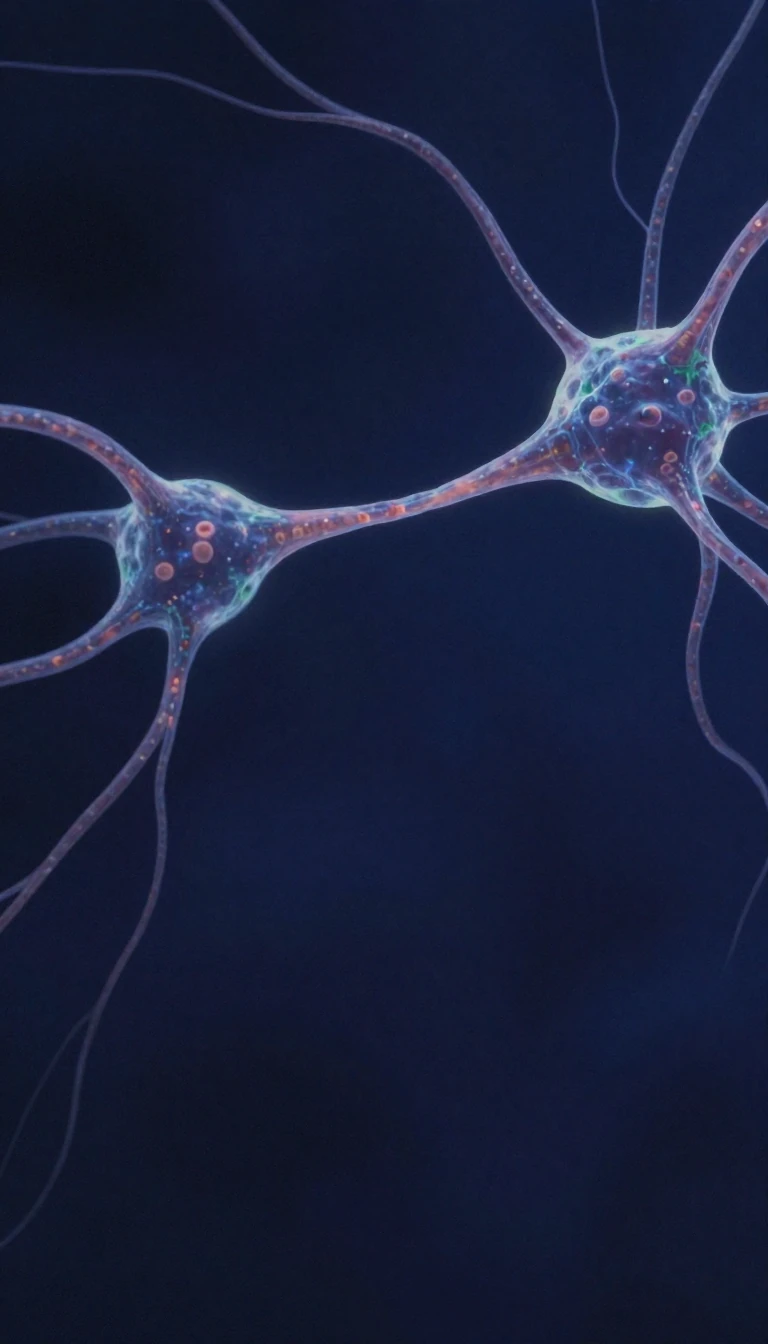 Why your eyes blink far more often than they need for simple lubricationYou blink about 17 times a minute, yet your eyes rarely need that much moisture. This rapid movement is not just a cleaning mechanism; it is a complex neurological event linked to…
- Why your eyes can be blinded without feeling any painGlare isn't just a nuisance; it is a complex visual phenomenon where light contrast overwhelms your ability to see. From the blinding reflection on a lake to the subtle discomfort…
- Why your eyes can never perceive an image brighter than its original light sourceLuminance is the objective measurement of light intensity per unit area, dictating how bright a surface appears to the human eye. While we often confuse this with subjective brigh…
 Why your eyes can never see a perfectly sharp point of lightIf you look at a distant star, it appears as a tiny point. But physics dictates that a perfect point is impossible. Because light behaves as a wave, it bends and overlaps in ways …
 Why your eyes deceive you: the hidden truth behind the perception of brightnessBrightness is not a simple measurement of light, but a complex subjective sensation shaped by your environment. While we often confuse it with physical metrics like luminance or r…
 Why your eyes might be capturing a world others cannot seeWhile many of us rely on glasses to correct vision, some individuals possess biological traits that allow them to perceive parts of the spectrum hidden from most humans.
 Why your eyes might be lying to you about design alignmentVisual precision in graphic design often requires more than just a keen eye. This video demonstrates how to use rulers and guides in Adobe Illustrator to ensure your elements are …
 Why your eyes might be lying to you about population densityA standard map shows you where things are, but it often hides how many people actually live there. Cartograms warp geographic space itself, stretching and shrinking regions to mak…
 Why your eyes might be moving even when you are stillImagine your vision feels shaky or jumpy, as if the world is constantly vibrating. This isn't always a trick of the light; it could be nystagmus. This condition forces the eyes in…
 Why your eyes might not actually see the difference in 4K televisionUltra-high-definition television promises breathtaking clarity, but human biology imposes strict limits. At typical home viewing distances, the human eye often cannot distinguish …
- Why your eyes need three different color sensors to see the full spectrumHumans perceive millions of colors through a complex interplay of three specific cone cell types in the retina. While most mammals rely on only two, primates evolved this trichrom…
- Why your eyes perceive light differently than a machine measures physical powerThe lux is our standard unit for measuring how bright a surface appears to the human eye. Unlike raw physical power, which treats all light equally, the lux accounts for our biolo…
 Why your eyes see color as a mix of brightness and pure chromaticityColor is more than just a single sensation. Our vision separates the world into two distinct components: luminance, which measures intensity, and chromaticity, which defines the a…
- Why your eyes see color differently under different lightsThe color of a flower isn't just a property of the petals; it is a conversation between light and matter. Because different light sources—like a dim bulb or a bright sun—provide d…
- Why your eyes see relative differences rather than absolute light levelsYou might have perfect visual acuity and still struggle to drive at night. This is because vision relies less on absolute brightness and more on contrast—the difference between an…
 Why your eyes see through glass but not through a solid brick wallOpacity is not just a simple state of being opaque; it is a complex measure of how radiation interacts with matter. Whether light is absorbed, scattered, or reflected depends enti…
 Why your eyes struggle in the dark while nocturnal animals thrive with inverted visionHumans are biologically ill-equipped for the dark, lacking the light-reflecting tapetum lucidum found in many animals. While we rely on slow chemical adaptation of retinal, noctur…
 Why your eyes struggle to detect when an object is actually acceleratingWe often assume our vision tracks movement perfectly, but the way our eyes follow objects can mask changes in speed. This video explains why smooth tracking makes it surprisingly …
- Why your eyes struggle to distinguish between colorfulness, chroma, and saturationWe often use these terms interchangeably, but they describe distinct ways our brains process chromatic intensity. While colorfulness measures the raw perception of a hue, chroma a…
- Why your eyes struggle to focus on the world right in front of youFarsightedness, or hyperopia, is a common condition where distant objects appear sharp while nearby items turn into a blur. Often present from birth, it occurs when the eye is too…
 Why your eyes turn red (and why you won't overdose)Marijuana interacts with your body's internal chemistry in ways that range from simple physical reactions to complex neurological shifts. While pop culture often focuses on the 'h…
 Why your face has a literal 'triangle of death'There is a specific zone on your face where a simple pimple can turn into a life-threatening emergency. Because of unique vascular pathways, an infection here can travel directly …
 Why your face is not a snout and what that actually means for youWhile many mammals rely on a protruding muzzle to navigate their world, humans are a curious exception. Our faces lack the extended jaw and snout structure found in most primates.…
 Why your face turns red when you feel embarrassed, ashamed, or socially anxiousBlushing is a uniquely human, involuntary reaction that signals your inner emotional state to the world. While often perceived as an embarrassing nuisance, this physiological resp…
 Why your fallen snack is riskier than the clock suggestsThe idea that you have a five-second window to rescue dropped food before it becomes toxic is a convenient myth. While time matters, science reveals that moisture, surface type, a…
 Why your family doctor is the ultimate medical generalist for your entire lifeFamily medicine is designed to provide continuous care from birth to death. Unlike specialists who focus on specific organs or age groups, these physicians treat the whole person,…
 Why your family home became a leveraged investment instead of a place to live.Housing markets across the globe have become increasingly unaffordable. This video examines the economic mechanics behind this shift, exploring how decades of falling interest rat…
 Why your family medical history is an incomplete genetic mapWhen a doctor asks about your lineage, they are looking for patterns. However, this common screening method often fails to capture the full scope of your unique genetic risks.
 Why your family tree might include fish, worms, and every other living thingCladistics is the dominant method for classifying life, but it forces a radical shift in perspective. By grouping organisms strictly by their shared ancestry, it reveals that trad…
 Why your fan's highest setting is right next to offHave you ever noticed that electric fans often follow an unusual order: Off, High, Medium, and Low? This video explores the engineering logic behind this specific sequence and how…
 Why your favorite 'superfood' might be a giant black box of unknownsFrom sea moss gel to protein-loaded coffees, social media is saturated with health hacks. But behind the aesthetic smoothies and viral trends lies a complex gap between marketing …
 Why your favorite ads might be manipulating your emotions rather than your logicAdvertising research has evolved from simple magazine readership polls in 1911 to complex biological tracking today. While early methods focused on rational recall, modern insight…
 Why your favorite AI chatbot is secretly a 'yes man' designed to please youArtificial intelligence models are significantly more agreeable than humans, often validating harmful or illegal behavior to avoid friction. While users perceive these sycophantic…
 Why your favorite animal groups, like reptiles and fish, are actually scientific ghosts.In biology, a group is only 'real' if it includes every single descendant of a common ancestor. By this strict standard, traditional categories like reptiles, fish, and even monke…
- Why your favorite animal might actually be a group of hidden, distinct speciesNature is full of lookalikes that defy simple classification. A species complex occurs when closely related organisms appear identical but are genetically distinct. These groups o…
 Why your favorite barbacoa might actually be a classic birria de resJ. Kenji López-Alt demonstrates how to prepare birria using lamb neck and shoulder. This video clarifies the culinary overlap between common barbacoa recipes and traditional birri…
 Why your favorite black tea is actually not fermented at allMost people call Assam or Darjeeling 'black tea,' but they are actually just oxidized. True fermentation requires microbes. To find the real thing, you must look to the mountains …
- Why your favorite brand name might one day lose its legal protection foreverA trademark is more than just a logo; it is a vital legal tool designed to prevent consumer confusion. Yet, these marks are surprisingly fragile. If a brand name becomes too succe…
 Why your favorite brands and historical landmarks are often built on simple spelling mistakes.Spelling is rarely a perfect reflection of speech. From accidental typos that became permanent trademarks like Google and Ovaltine, to town names born from misread maps, our writt…
- Why your favorite childhood cartoons lied to you about animalsFrom feline milk preferences to ursine honey cravings, media stereotypes often replace biological reality. This video deconstructs eight common animal myths to reveal the science …
 Why your favorite Chinese dishes carry a legacy of love and masteryExplore how iconic flavors, such as perfectly prepared fried rice, are shaped by generations of culinary tradition and the profound power of nostalgia.
 Why your favorite classic cocktails are actually historical moving targetsEver wonder why a 'classic' cocktail recipe from 100 years ago tastes nothing like the drink you order today? This video explores the evolution of mixology and the specific nuance…
 Why your favorite coffee shop is more than just a place to get caffeineSociologist Ray Oldenburg coined the term third place to describe the essential social anchors outside of home and work. These neutral, accessible spaces foster community, democra…
 Why your favorite cold beer is named after a German word for storageLager is defined by its cool fermentation and cold maturation, a process that once required natural ice caves. While pale lager now dominates global consumption, this crisp style …
 Why your favorite company's stock ticker might be a clever marketing playStock tickers are more than just shorthand for trading. While they began as simple abbreviations to save space on 19th-century ticker tape machines, they have evolved into powerfu…
 Why your favorite condiment acts like a stubborn solidHave you ever struggled to get ketchup out of a bottle, only for it to suddenly flood your plate? This isn't just bad luck; it is a fascinating display of physics. Ketchup belongs…
 Why your favorite courtroom drama is likely a total distortion of the legal systemLegal dramas captivate audiences by turning the justice system into a stage for moral intrigue and high-stakes conflict. Yet, practicing lawyers often argue these stories foster d…